Stage 02 · Older buildings
Frames that settled, roofs to match
Where a farm or cottage carries massive timber, the frame beneath sets the rules for the covering, not just the tile on top.
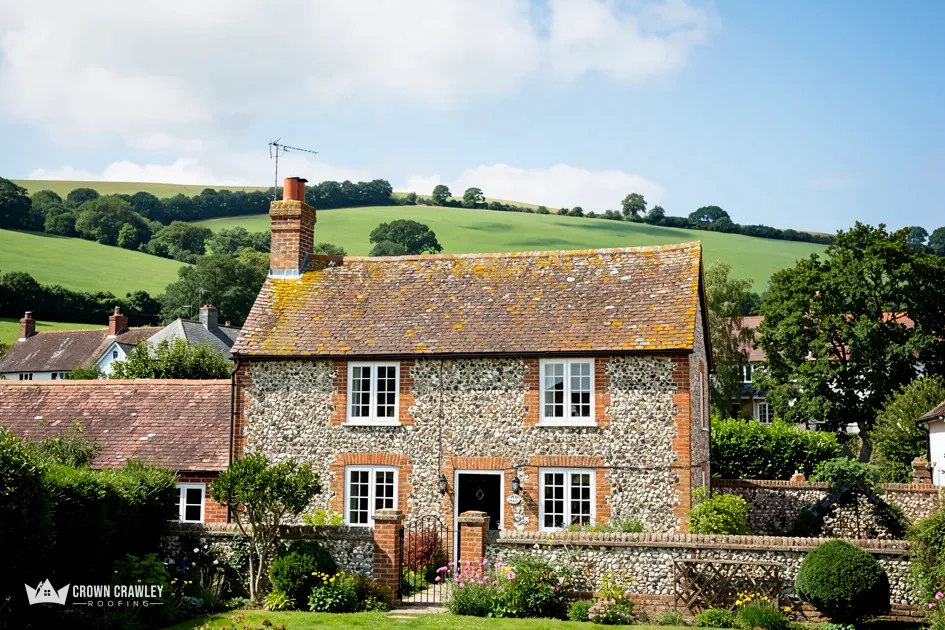
The county history notes 'much massive timber-work' in Newdigate's older farms and cottages. A frame like that has had centuries to settle, so the roof above it is seldom a true flat plane. Our approach is to follow the shape that is there. Before any tile comes off we tell you what the rafters and the wall plate look like, and we point out any sag, rot or movement the photos reveal.
Will a new covering be too heavy for an old frame?
It might be. The Planning Portal lists a new covering that is 15 per cent or more heavier among the changes needing Building Regulations approval, and it suggests the old timbers are checked by an engineer or surveyor before any switch. A heavier covering puts more load on old timbers, so a like-for-like covering is the simpler route. If you want a change, it comes up at the survey and the programme allows for that check.
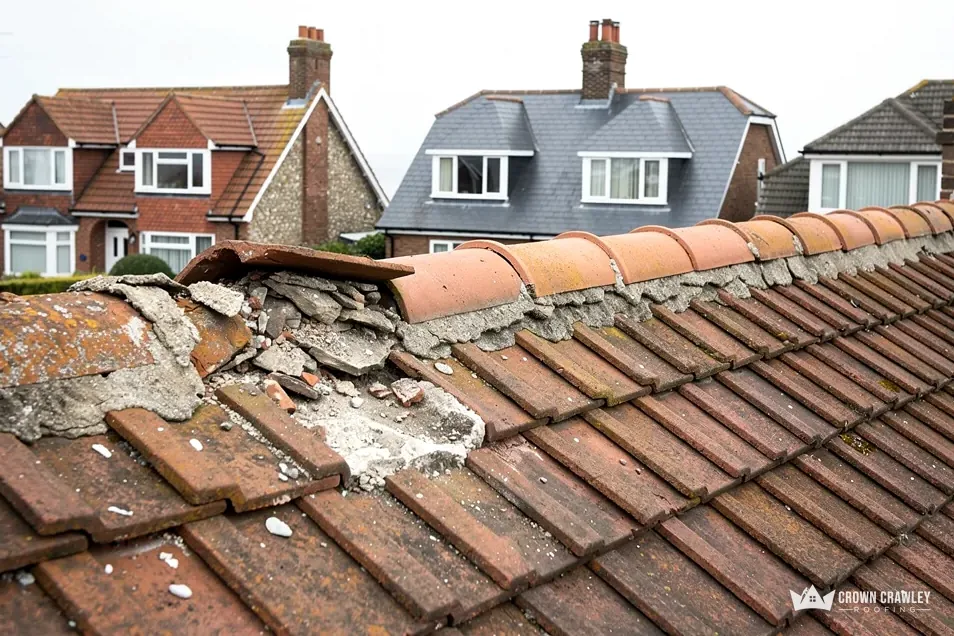
Ridges deserve the same care. Since the 2014 revision of BS 5534, Marley says, mortar's grip alone is no longer to be relied on for ridge or hip tiles, and every bedded tile should also be held by a mechanical fixing. Whatever the age of the house, we check how its ridge is held and repair it to suit.
Old-roof vocabulary
- Rafter
- Sloping timber under the battens
- Batten
- Thin strip the tiles hang from
- Wall plate
- Timber along the wall top
- Flashing
- Waterproofs where roof meets wall
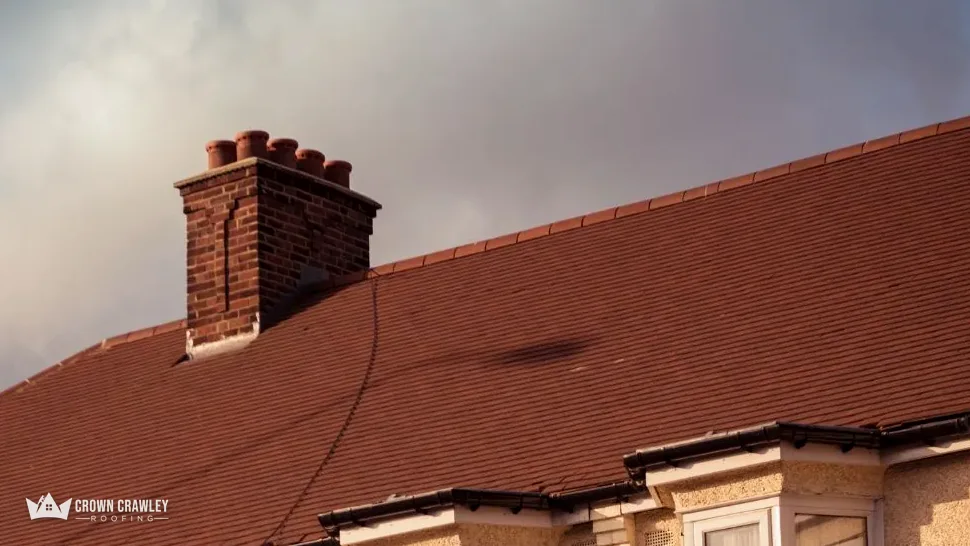
- Flaunching
- Sloped mortar cap round the pots