A green among the Capel commons
The 1911 Victoria County History listed Beare Green among the open commons of Capel parish. That tells us about the place, so we read each roof directly: tiles, ridge, verge and loft.
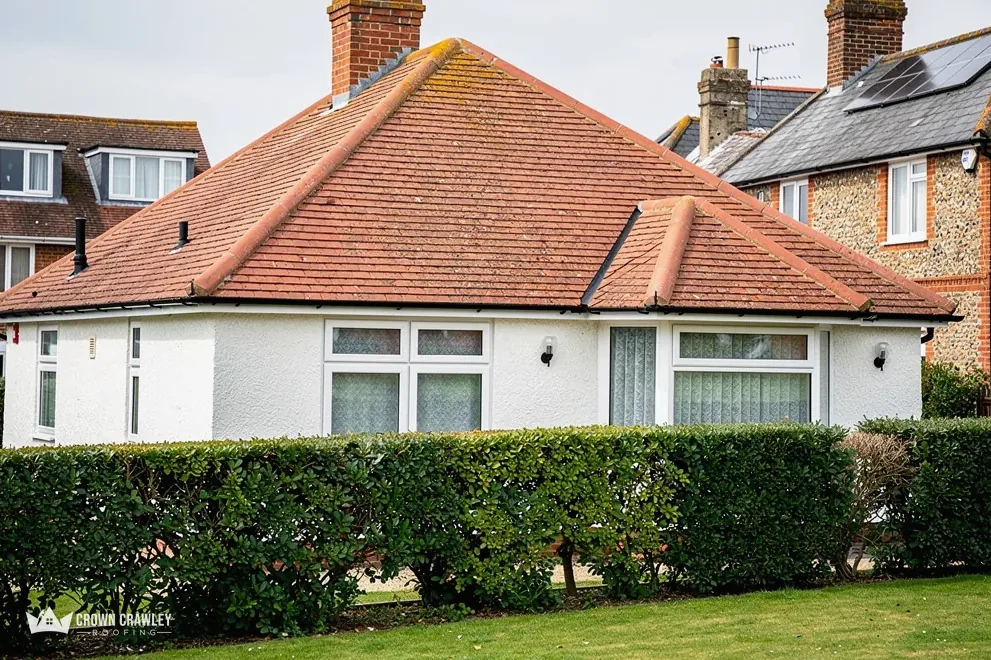
Houses facing a village green
Roofs on a Surrey green in Capel parish, near Holmwood station.
Beare Green is a Surrey village of 1,941 people around a green in Capel parish, near Holmwood station. We survey each roof first, then give one price in writing.

The 1911 Victoria County History listed Beare Green among the open commons of Capel parish. That tells us about the place, so we read each roof directly: tiles, ridge, verge and loft.
Houses facing a village green
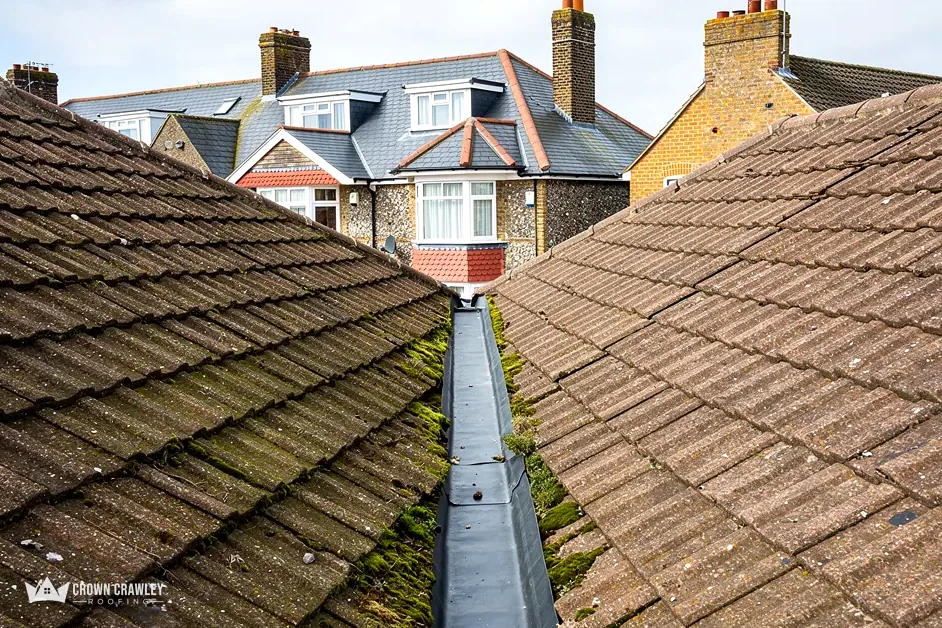
The history sets Beare Green near Holmwood Station, whose Platform Signal Box is listed Grade II. Houses near the line are surveyed like any other, one roof at a time.
Tiled roofs beside a railway line
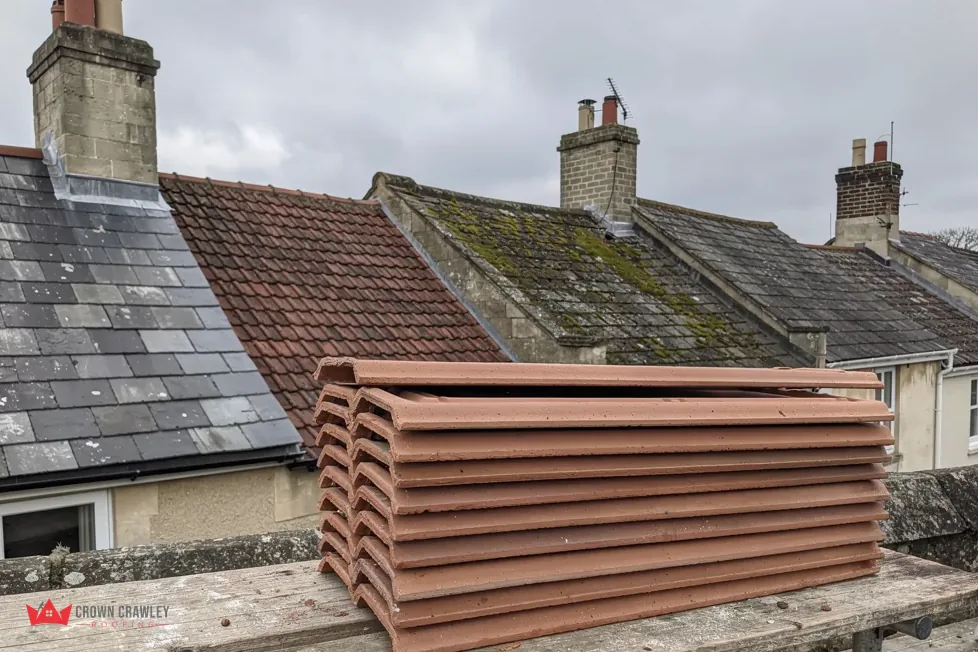
The name Beare appears in the Court Rolls of the 14th century and was widely spread in the area. That is the village's past, not a promise about your tiles, so we identify your own covering.
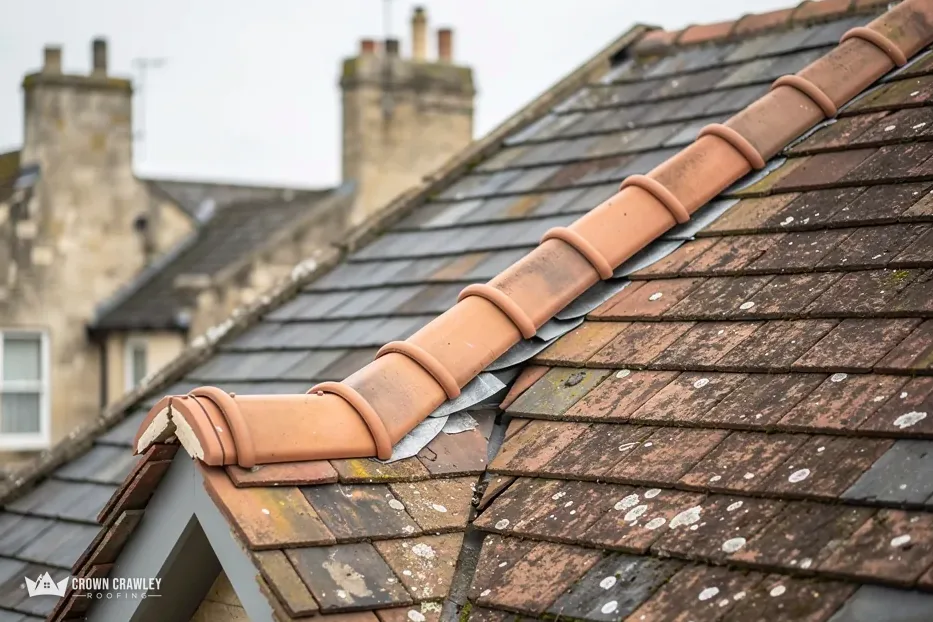
Clay tiled roof with a chimney
Map of Beare Green and the neighbourhoods around it, with Crawley for reference.
Beare Green is a settlement around a green in Capel parish, near Holmwood station and south of Dorking.
From survey to sign-off in Beare Green
Three short chapters on what the village record can and cannot tell you about a roof, how listing and area rules shape planning, and the Surrey steps behind a bigger job.
Stage 01 · Background
Beare Green's recorded history is about commons, a railway stop and a surname, so your roof has to be read directly.
Beare Green is a village around a green in Capel parish. The Victoria County History of 1911 listed it among the open commons of the parish, near Holmwood Station, and noted that the name Beare already appears in the Court Rolls of the 14th century and was widely spread in the area. The 2021 Census counted 1,941 people in the Beare Green built-up area, and Mole Valley District Council is the local authority.
No. The record covers commons and surnames, not roofs, so we start from the covering itself. On a visit we look from the ground and from the ladder at the tile type, the lap, the battens where they can be seen, the underlay at the eaves, the ridge, the verge and any flashings. Concrete tile, clay tile and slate each age in their own way, and a house with an extension may carry two coverings. The photographs go to you, and one total price in writing follows. If a repair is the better buy, we say that instead of selling a new roof.
On a Beare Green survey
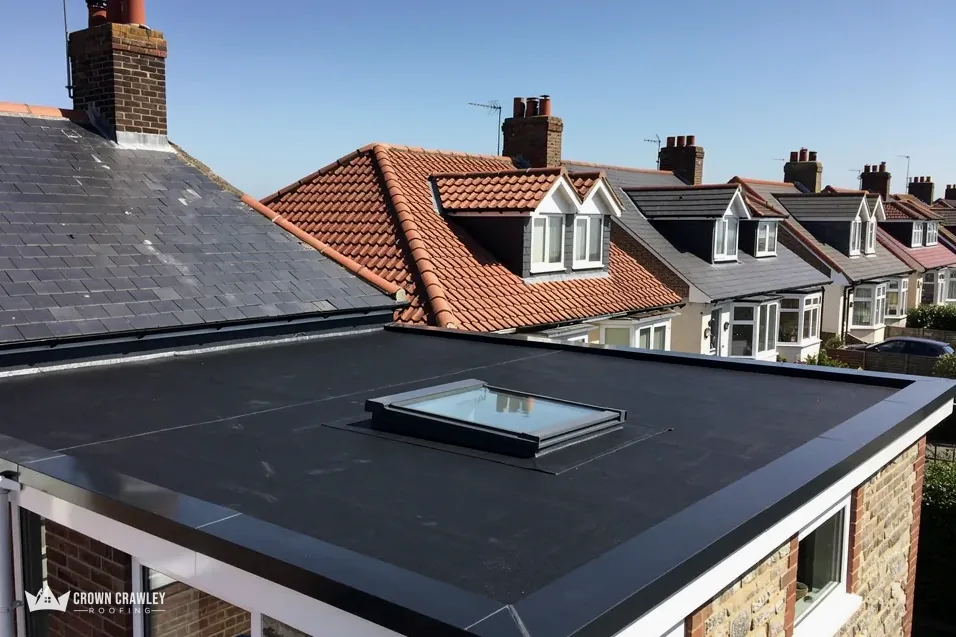
It is often the part of a tiled roof that repays the closest look. Since the 2014 revision of BS 5534, Marley explains, bedded ridge and hip tiles are expected to be held by mechanical fixings as well as by the mortar bed, and dry-fixed systems are tested to BS 8612. BS 5534 is not itself a law, so an older mortar ridge is not automatically wrong. We look for cracks and gaps in the bedding, add mechanical fixings whenever we rebed, and tell you plainly if a dry-fixed ridge would serve the house better. The choice affects the look of the roofline, so we show you both options with the survey photos. Our dry ridge and dry verge page explains how it works and what it changes.
Under the tiles, the loft needs a way for air to move. Where the underlay is non-breathable, Marley's reading of BS 5250 calls for a 25 mm eaves gap on pitches of 15 degrees or less, and 10 mm on steeper pitches. Insulation crammed into the eaves closes it off, leaving moist household air to condense on the timbers. We check the gap while we are up there, and clearing it costs little compared with replacing a rotted batten.
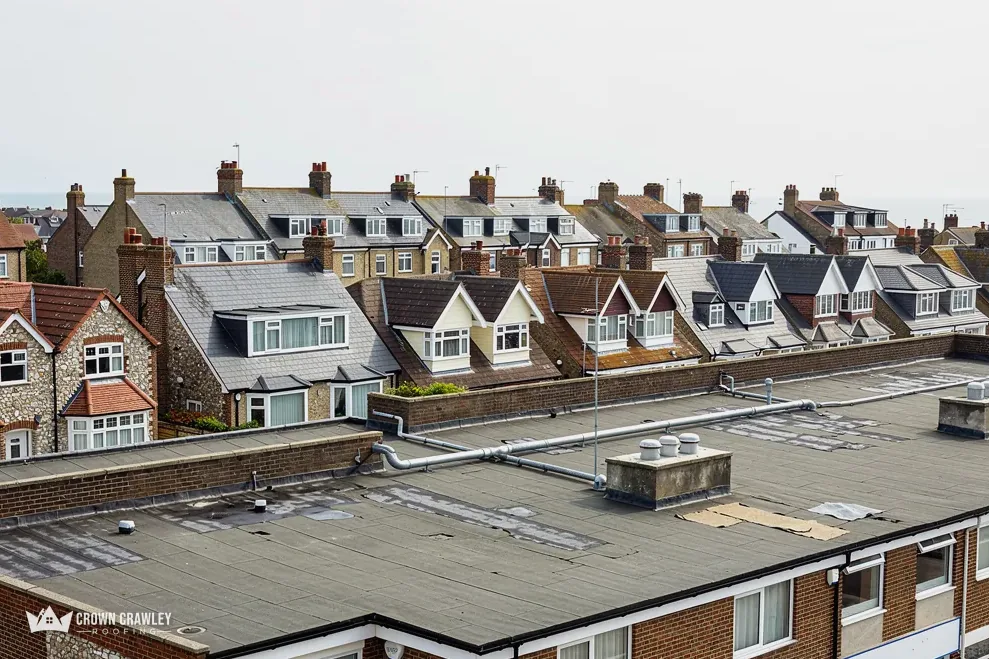
Stage 02 · Heritage
A Grade II signal box stands at Holmwood station, a reminder that heritage rules can reach unexpected buildings in Beare Green.
The Platform Signal Box at Holmwood Station is listed Grade II (National Heritage List entry 1376781, first listed on 13 February 1998). It is a railway building rather than a house, yet it shows how the system works for any listed structure, which is why it earns a mention before we turn to ordinary roofs. The listing is a public record, and anyone can look up an entry number to see exactly what is protected.
Mole Valley District Council will confirm if your house stands in a conservation area, which is one question to settle before a repair. It is not the only question, since planning law covers much more than conservation areas. Under the Town and Country Planning Act 1990, work that leaves a building's outward appearance materially unchanged falls outside the meaning of development, so a matching repair raises no planning question in itself. If you are unsure about your own address, Mole Valley District Council's planning team can say what applies there.
Planning words, plainly
A different tile, a new roof window or a dormer changes how the roof looks, and that is when the council takes an interest. An Article 4 direction lets the Secretary of State or the local planning authority withdraw specified permitted development rights across a defined area, so ask Mole Valley's planning team whether one covers your street before you commit to a change. A short email to them, with your address and a sentence on what you plan, is the quickest route to a clear answer before any money is spent. Keep their reply with the survey photos, because it helps whoever works on the roof later. Dormers and roof windows have limits of their own, and rather than repeat them here we point you to our post on planning permission for roof work, which goes through them.
A matching repair keeps the questions few; a new look adds more of them.
Nothing directly, but the principle carries over. If your own house is listed, work that affects its character needs listed building consent, and a change of covering can do that. Mention it when you contact us, and our survey photos will show the council exactly what is on the roof now, including the tile type, the lead and the state of the pointing. A chimney stack brings flashings and flaunching into play as well, and our chimney repairs page explains what we check there, from the pointing to the cap.
Stage 03 · Permissions
Beare Green sits under Mole Valley and Surrey, so building control, planning and the road each have their own contact.
Three offices matter once a Beare Green job outgrows a repair, and it helps to know their names before the survey. Mole Valley District Council handles planning, Surrey County Council looks after the highway, and the Southern Building Control Partnership, the shared team for Mole Valley, Reigate and Banstead and Tandridge, handles building control.
Approved Document A says a significant change in roof loading is when the loading is increased by more than 15%, while the Planning Portal says approval is needed where a new covering increases the weight by 15 per cent or more. The two figures differ by a hair, so we treat 15 per cent as the line to stay clear of unless an engineer says otherwise, and we note the existing covering at the survey. Neither figure is a reason to avoid a new covering, and both are easy to respect with a little planning. It simply means the tile profile and its weight are written down before anyone orders materials, and that a structural question gets asked early rather than late. For a whole roof, our roof replacement page shows how a re-roof is run.
Who to ask first
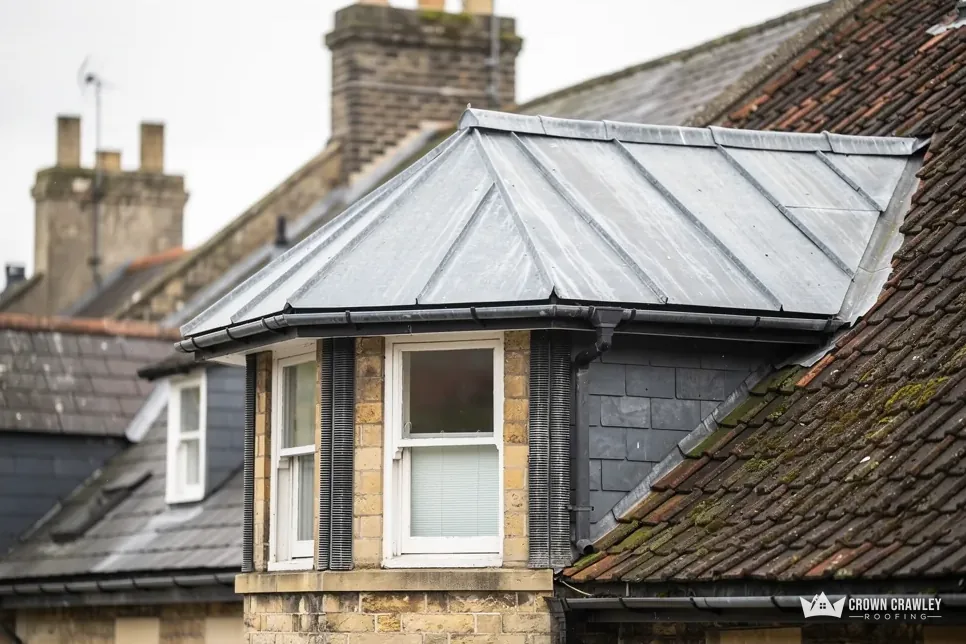
Surrey County Council wants a licence for any scaffolding or hoarding put up on the public highway, pavements included. The charge is £208 per 28 day period, and the council asks for applications at least 10 working days before the start date you want. For an unsafe structure it has an emergency route by phone. A frame kept on private land, a drive or back garden for instance, needs no highway licence. When we survey, we work out with the scaffolder where the frame can stand, which way materials and waste will travel, and whether a licence is likely to be needed at all.
An occupied nest, or one still being built, is protected by the Wildlife and Countryside Act 1981 against intentional taking, damage or destruction, and GOV.UK says no licence exists to permit development. Should we find an active nest, that part of the job waits until the birds have finished with it, and the rest of the programme is shuffled round so nothing is rushed. To start, photograph the doubtful ridge, verge or gutter run and send it with your postcode.
No. The 1911 Victoria County History lists Beare Green among the open commons of Capel parish and records the Beare name in 14th-century Court Rolls. It says nothing about the covering on any house. We identify the tile type, the underlay and the ridge and verge from the roof itself, and the survey photos show you what we found.
It could, depending partly on whether Mole Valley places your address inside a conservation area. A like-for-like repair is a simple matter. A different covering, a new roof window or a change of shape is another thing, so put the plan to Mole Valley's planning team before you commit. Send us photos, and we will say which of those your job is.
The Southern Building Control Partnership is the building control team for Mole Valley, shared with Reigate and Banstead and Tandridge. It matters when a job passes the Planning Portal's limits or the covering gets heavier. We tell you at the survey if your job is near either line, so you can ask the team before any date is fixed.
An occupied nest, or one still being built, is protected against intentional damage or destruction, so any work that would disturb it waits. We look for nests during the survey. Bats have full legal protection as well, and if signs of them turn up in a loft or beneath a tile, we pause and talk to you before going on.
Show us the ridge, verge or gutter line that puzzles you, add your postcode, and a survey date follows.
Message us on WhatsApp