Roofers in Limpsfield

Listed cottages, half-timber frames and brick stacks on the greensand ridge.

Limpsfield has a Grade I church, Grade I and Grade II* cottages and a 15th-century hall house. We find out what covers your roof, say what it needs, then quote one total.

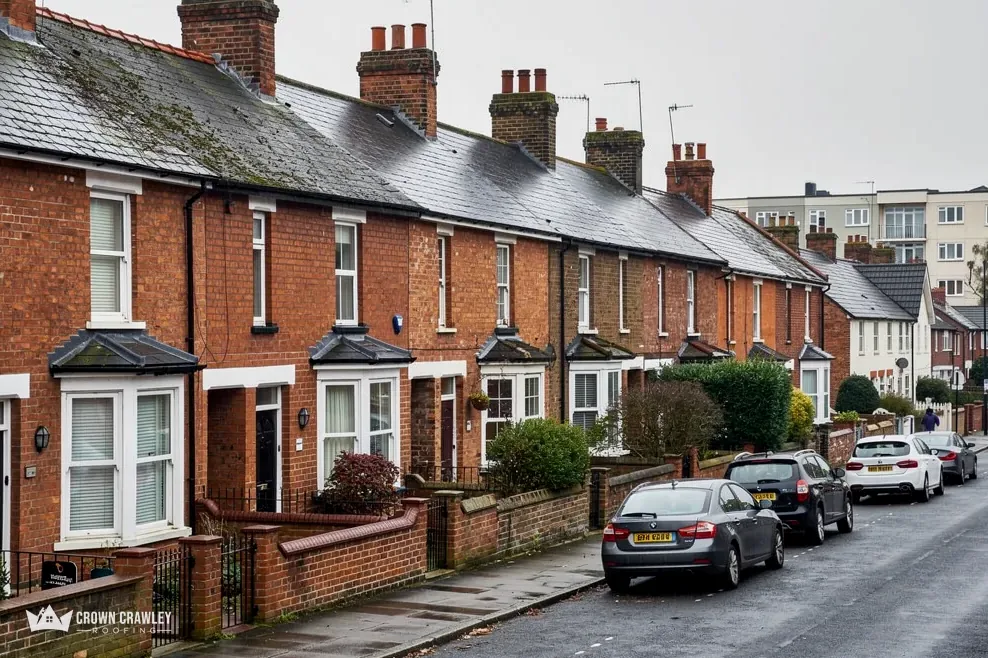
Victorian brick terrace with bay windows and parked cars

Limpsfield roofs, from hall house to church

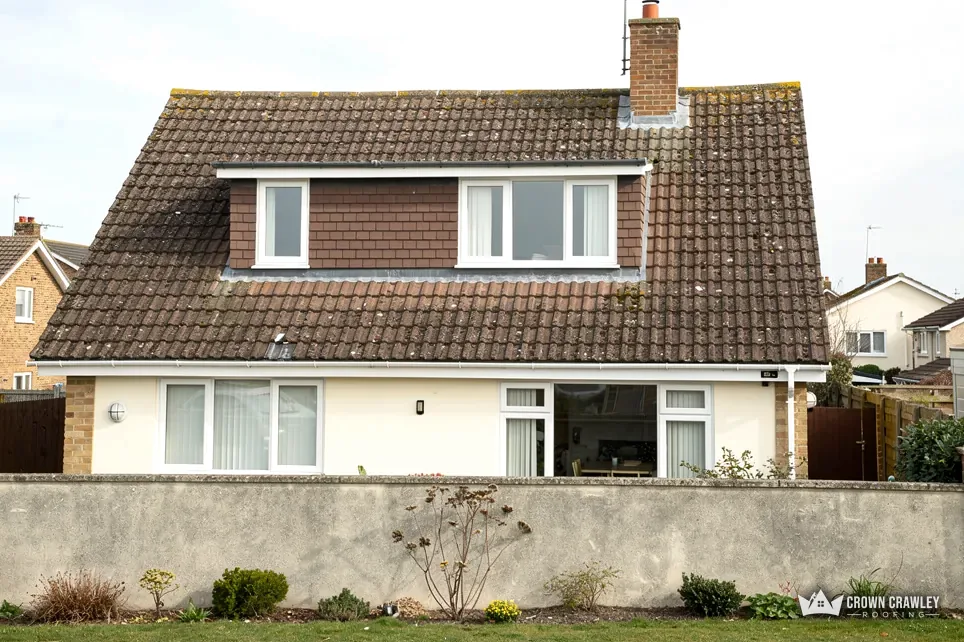
Dormer bungalow with a brown tiled roof and white rendered walls

A hall house from about 1450

Detillens House, opposite the Bull Inn, was built about the middle of the 15th century as a half-timber hall house, and its central roof-truss survives. Roofs like that call for a slow, careful look from the loft.

Old timber roof structure in a loft

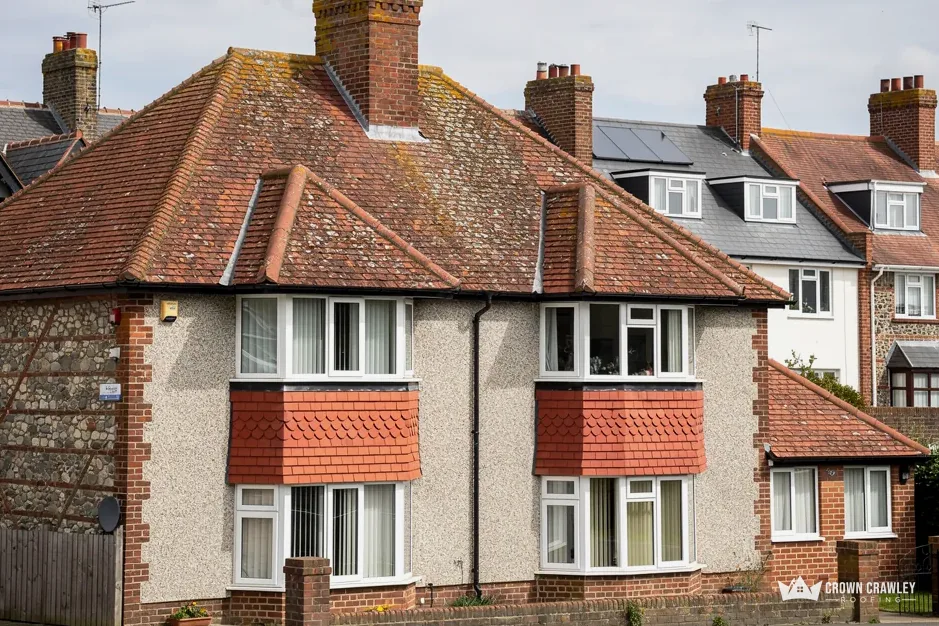
Pebbledash semi-detached house with a red clay tiled roof and bay windows

Half-timber cottages and brick stacks

A row of good half-timber cottages stands north of Detillens, and the village record mentions brick chimney-stacks. Where timber, tile and brick meet, the weak points are the flashings and the stack joints.

Half-timbered cottage with tiled roof

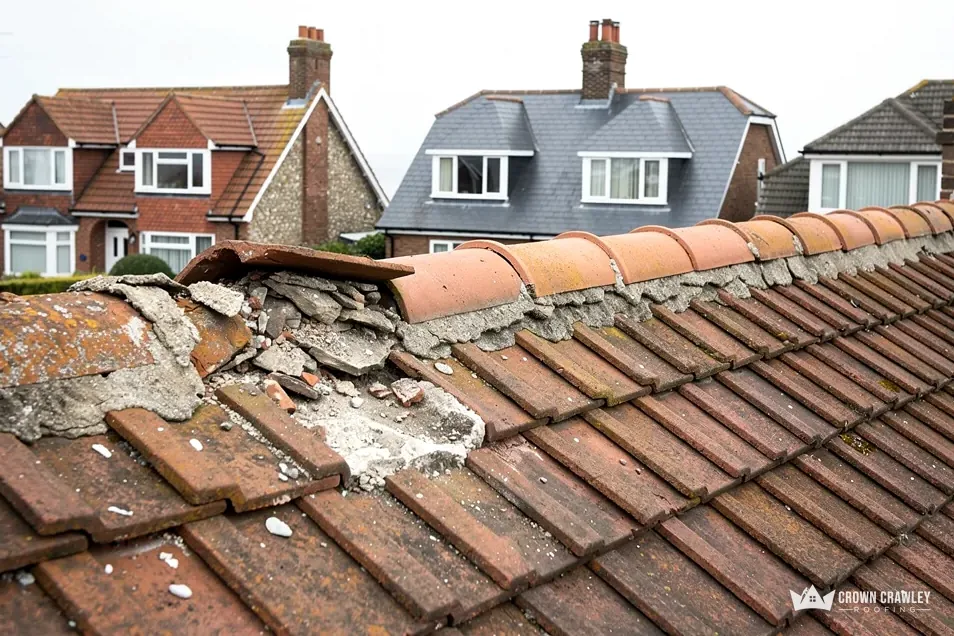
Broken mortar bedding along a clay ridge

Grade I and Grade II* listings

The Church of St Peter and Old Court Cottage are listed Grade I, and Court Cottage is Grade II*. A listed roof is repaired with its character in mind, and consent comes before any change that affects it.

Old tiled roof beside a stone church

Limpsfield, on the Kent border

Map of Limpsfield and the neighbourhoods around it, with Crawley for reference.

Limpsfield sits on the greensand ridge by the Kent border, a mile east of Oxted station and 3 miles west of Westerham.

Distance
19.5 road miles from Crawley, to the north-east
Drive
About 26 minutes
Council
Tandridge District Council and Surrey County Council
Planning authority
Tandridge District Council
Population
2,248 (Census 2021, Limpsfield built-up area)
Open land
Limpsfield Common, Chart Common and Itchingwood Common
Get a free quote

Limpsfield from the scaffold

From the greensand ridge to the loft hatch

Three short chapters on Limpsfield's listed buildings, its old timber roofs and chimneys, and the Tandridge and Surrey arrangements around a larger job.

Stage 01 · Listings

Listed roofs near St Peter's church

The centre of Limpsfield is a conservation area, and St Peter's and the Court Cottages are listed too, so two questions come before any price.

Tandridge District Council's Limpsfield conservation area appears on the national planning dataset, and its boundary takes in St Peter's church and the Court Cottages. Inside it, any roof alteration visible from the lane draws the planning team's attention. Listing adds a second layer: Historic England records the Church of St Peter as Grade I, Old Court Cottage as Grade I and Court Cottage as Grade II*, and other houses in the village may be listed as well, which the National Heritage List will confirm. Before we price any Limpsfield roof, we ask whether the house is listed and whether it sits inside the conservation area.

Does a repair to a listed roof need consent?

It can. Under the Planning (Listed Buildings and Conservation Areas) Act, works that alter a listed building so as to affect its character need listed building consent. A repair that truly matches what was there, with the same material, the same fixings and the same detail, is not the same as a change. The boundary is hard to see on a roof that has been patched over generations, which is why we suggest sending Tandridge District Council's planning team our survey photos and asking before anything starts. Our answer on re-roofing a listed building walks through the process in more detail.

On a listed roof the first conversation is with the council, before a tile is ordered.

Listed in Limpsfield

St Peter's church
Grade I, entry 1188814
Old Court Cottage
Grade I, entry 1029729
Court Cottage
Grade II*, entry 1188723
Roof changes
Consent before the work
Who to ask
Tandridge District Council
Dormer window with white cladding in a clay tiled roof

Who signs off work on St Peter's roof?

St Peter's is an Anglican parish church that is still used for worship. A listed place of worship in an exempt denomination follows that denomination's own consent system, which in the Church of England's case means a faculty rather than the council's listed building consent. Planning permission can still be needed for work that changes its exterior. If you look after St Peter's, the parish and diocese come first. If you own a house, the council does.

What if my Limpsfield house is not listed?

Then putting back what was there is a straightforward job: survey, photos, one written total. A bigger change, a different covering, say, or a new opening in the slope, may raise planning or building control questions, and the quote names them. We still treat the details a listing would force on us as good practice: the tile type, the way the ridge is bedded and the way the roof meets its neighbours. Inside the conservation area, a roof that keeps its original materials also keeps the street as the council expects to see it.

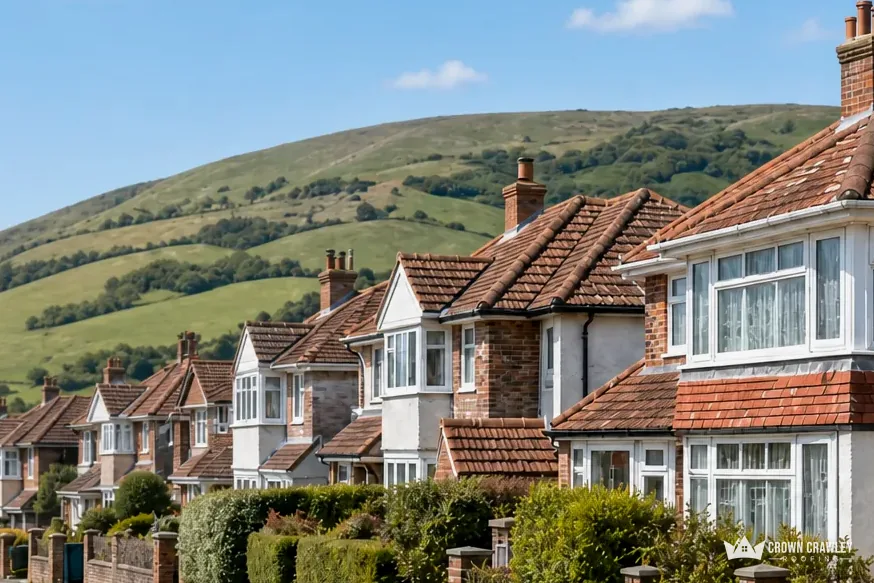
Row of suburban houses with tiled roofs below green downland

Stage 02 · Old roofs

Hall houses, half-timbers and brick stacks

Detillens House, the cottages beside it and the stacks above them show how much of Limpsfield's roofing story sits in the timber and brick.

The Victoria County History describes Detillens House as built about the middle of the 15th century as a half-timber hall house, with a hall that originally had a central hearth and a central roof-truss that survives. A row of good half-timber cottages stands north of it, and brick chimney-stacks belong to the same picture. A roof on a building with that history has been mended many times, and every earlier repair is a clue to what the next one should be.

What do old roof timbers need from us?

Mostly a patient look. We go into the loft and read the timbers from the inside: where the rafters meet the wall, where daylight shows between tiles, where a stain has dried and where it is still damp. A truss that has carried a roof for centuries should not be cut or notched for convenience, so any new batten or sarking is fitted around it. Battens are the thin strips the tiles hang from, and sarking is a board or felt layer beneath the tiles. We tell you which timbers are sound, which section is soft, and whether a repair will hold or a larger job would be the straighter answer.

Terms for an old frame

Hall house
Medieval home built round an open hall
Roof truss
Timber frame that carries the rafters
Half-timber
Visible oak frame with infill panels
Batten
Thin timber strip the tiles hang on

Where do half-timber walls and tiled roofs let water in?

At the meeting points. The eaves, the verges, a lean-to roof against a wall and the lead flashing around a stack are where water gets behind the covering. Our lead work page explains how flashings, soakers and valleys are formed and why the lead code matters. A leaking joint at a stack can mark a ceiling in a room some distance from the chimney, so we follow the water back along its path before we suggest a fix, and we show you the path in the photos.

What does a stack need after a storm?

The Victoria County History records that the Georgian rectory opposite the church was damaged by lightning in 1717, a reminder that tall chimneys take the brunt of weather. If a storm hurts your roof, tell your insurer first, make a temporary repair, and keep photos and receipts. We can make the roof safe and write up the findings, and our chimney repairs page covers the checks we run on a stack. Whether a claim pays is for the insurer to decide, and complaints about the outcome go to the Financial Ombudsman. A written survey with dated photos is useful evidence whichever way it goes.

Stage 03 · Permissions

Tandridge, Surrey and your Limpsfield scaffold

Planning sits with Tandridge District Council, building control with a shared Surrey team, and the highway licence with Surrey County Council.

A larger Limpsfield job brings three bodies into the picture. Planning sits with Tandridge District Council. Building control for Tandridge is carried out by the Southern Building Control Partnership, which the council names as its Local Authority Building Control team and which also serves Reigate and Banstead and Mole Valley. Surrey County Council is the highway authority. We deal with each of them for you, and you are told what has been decided before the work starts.

Do I need building control for a new covering?

The Planning Portal gives a two-part test. Nothing needs submitting to building control while under 25 per cent of the building envelope and under 50 per cent of the roof comes into the work. Approval follows where the replacement covering is 15 per cent or more heavier than what came off, or would behave differently in a fire. On a listed building, listed building consent joins the same conversation. We work out which of these applies at the survey, and a bigger re-roof is priced with the answer in hand.

Who handles what

Planning
Tandridge District Council
Building control
Southern Building Control Partnership
Highway licence
Surrey County Council
Licence fee
£208 per 28 day period
Notice
At least 10 working days
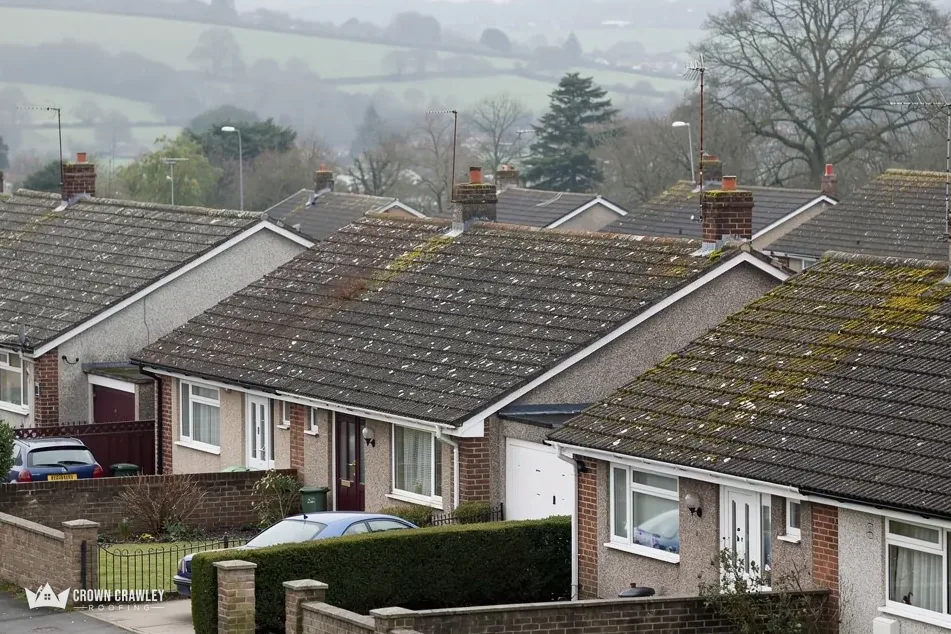
Terraced bungalows with grey tiled roofs along a cul-de-sac

How does a Surrey scaffold licence work here?

On Surrey's published terms, scaffolding that stands on the road, the pavement or any other public highway needs a licence from the county, at £208 for each 28 day period, and the council wants the application at least 10 working days before the start you are hoping for. A scaffold wholly inside your boundary needs nothing from the highway authority. If the pavement is where the poles must stand, we ask the scaffolder who applies, make sure the request goes in early and hold the first day on site until the licence is in hand.

How is the job set up on a village road?

Limpsfield stretches along the greensand ridge and out towards the commons, and access can be tight beside old walls and cottages. During the survey we study the approach, the space for materials and the route the waste will take, and the written price reflects what we find. Before the scaffold goes up you have a start date, and each day you hear how far the work has got and what is planned. Your postcode and one photo are enough to begin, and the survey photos then show you the roof as we found it.

Limpsfield roofs, listings and licences

My Limpsfield cottage is listed: can broken tiles be swapped like for like?

Replacing a broken tile with an identical one is a repair, but on a listed building it is the council that judges where repair stops and a change to character starts. Send Tandridge District Council's planning team our survey photos and wait for their answer before work begins. If consent is needed, it has to come first.

Could my Limpsfield cottage switch to a different tile inside the conservation area?

The Limpsfield conservation area takes in St Peter's church and the Court Cottages, and a new covering that alters a slope seen from the road is something to raise with Tandridge District Council's planning team first. Matching repairs in the same material are the simpler case. We ask at first contact whether a house is listed or inside the area, and suggest you check the boundary with the council.

How much is a road licence for scaffolding in Limpsfield?

Surrey County Council's published figure is £208 for each 28 day period, with applications wanted 10 working days ahead. Nothing is due when the poles stand inside your boundary. Where the poles can only go on the pavement, ask each roofer who applies. We settle that point with the scaffolding firm before we book your start date.

What should I do first if a storm damages my Limpsfield roof?

Tell your insurer, make a temporary repair if that is safe, and keep photos and receipts, because pictures support a claim. Making the roof safe comes first, then we write up what the survey shows. Whether a claim pays out is for the insurer to decide, and the Financial Ombudsman deals with complaints about how it was handled.

Tell us about your Limpsfield roof

Send a photo and your postcode, and note any listing or conservation area. The survey is planned around your answers.

01293 974253

10-year workmanship guarantee, in writing.

Call Get a free quote