Roofers in Hever

Roofs in a Weald village beside a Grade I castle.

Hever sits beside Hever Castle, and a Grade I church and a Grade II barn stand close by. We find out what your roof is built from and whether any listing touches it.

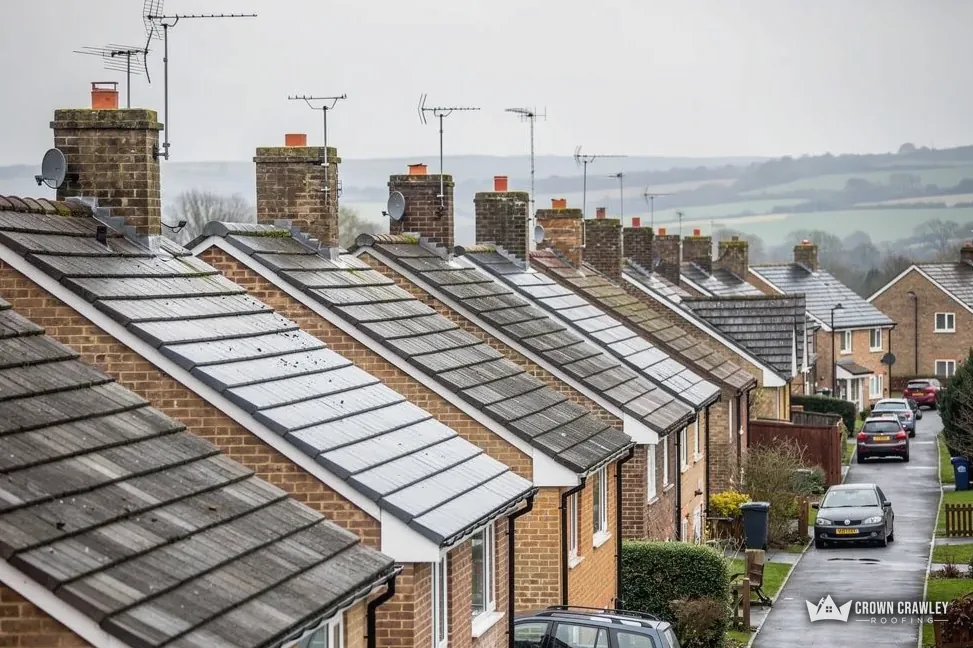
Terraced street with new grey tiled roofs

A Hever roof, layer by layer

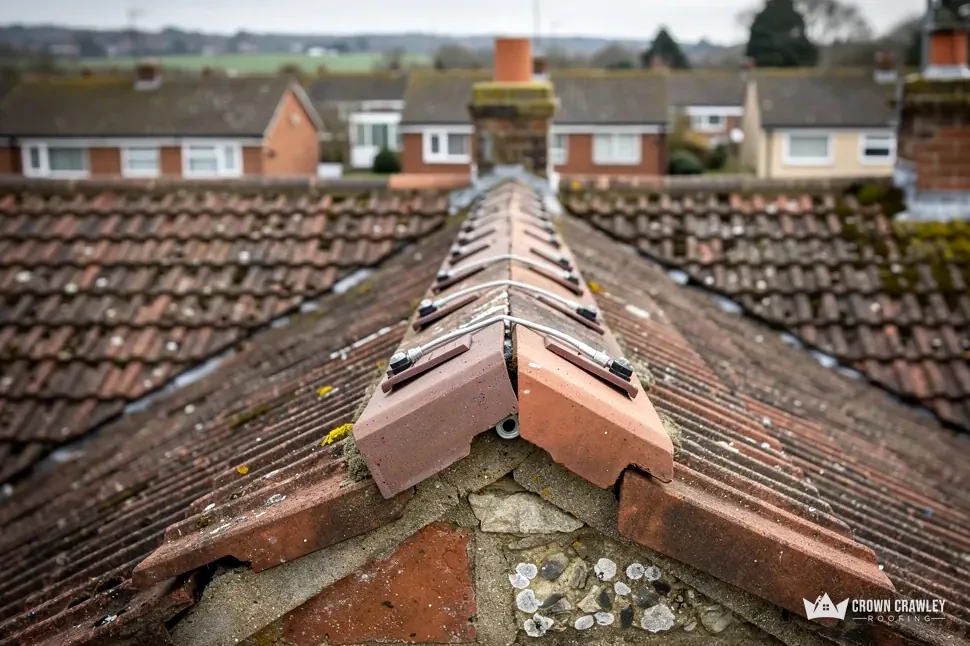
Clay ridge tiles along a hip on a pitched roof

Listed buildings by the castle

Hever Castle and the Church of St Peter are both listed Grade I, and a barn south-east of the Bower is Grade II. Listings follow the named building, so we first find out whether your own house has an entry.

Old tiled roof on a historic building

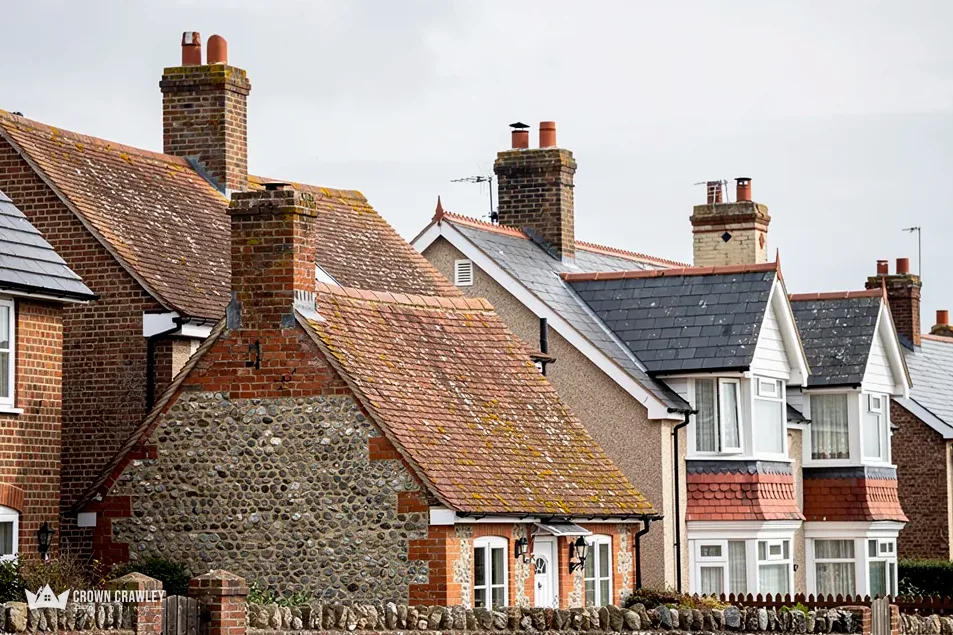
Flint and brick houses with clay tiled roofs and chimneys

Barns and outbuildings

The listed barn is a reminder that the village has working buildings as well as houses. A barn or outhouse roof is a long, plain slope, and sag, loose battens and tired eaves tell us most of what we need.

Long pitched roof on a barn

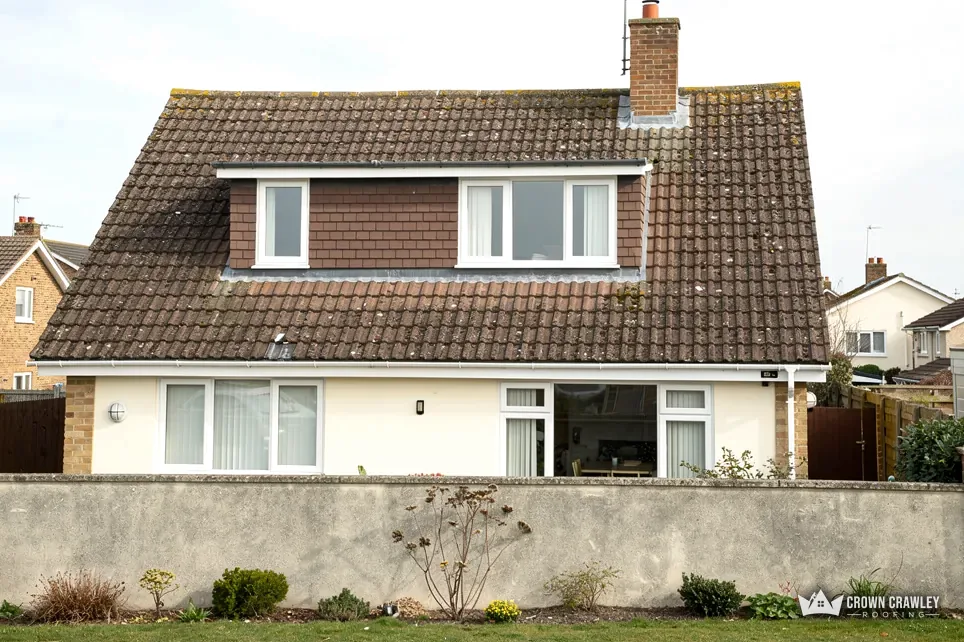
Dormer bungalow with a brown tiled roof and white rendered walls

Houses in a small parish

The 2021 Census counted 1,237 people in the parish, so there is no single street to describe. Each house is read on its own terms, and the photographs from your survey show what is really on the slopes.

Detached house with a tiled roof

Hever, west of Penshurst

Map of Hever and the neighbourhoods around it, with Crawley for reference.

Hever is a small Weald village beside Hever Castle, west of Penshurst, in the Sevenoaks district of Kent.

Distance
17.1 road miles from Crawley, to the east
Drive
About 34 minutes
Council
Sevenoaks District Council and Kent County Council
Planning authority
Sevenoaks District Council
Parish population
1,237 (Census 2021, Hever civil parish)
Church
St Peter's, Grade I, Church of England
Get a free quote

A Hever roof, step by step

Roof work in the shadow of a Tudor family seat

Listings near the castle, the faculty route for St Peter's, and what Sevenoaks and Kent expect once a job grows.

Stage 01 · Listed setting

A listing that stops at the front door

Hever Castle, St Peter's church and a Grade II barn are all listed, which makes it worth checking whether your own roof has an entry.

Hever is a small Weald village beside Hever Castle, and its past is written down in unusual detail. Hasted's History of Kent says William de Hever rebuilt the mansion in the reign of Edward III and was licensed to embattle it. The Bullen family, spelled Boleyn today, later extended the buildings, with work begun by Sir Geoffrey Bulleyn finished by his grandson Thomas, Earl of Wiltshire, the father of Anne Boleyn. Both the castle, listed in 1954, and the Church of St Peter carry Grade I, while a barn south-east of the Bower is Grade II. That history hangs in the background of roof conversations here, even for a house that has no link to the castle at all.

Close checks in Hever

Listing
Your address checked on the list
Covering
Recorded in photographs
Timbers
Battens and rafters sounded
Eaves
Wet staining looked for
Outbuildings
Barn and shed roofs included
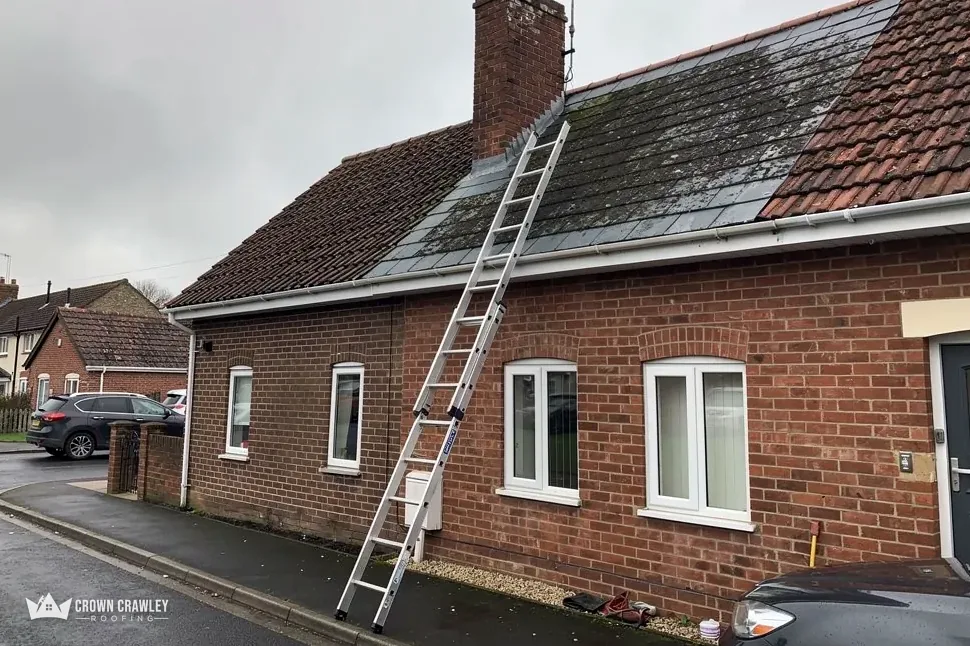
Brick bungalow with a ladder leaning against its tiled roof

Does the castle's listing reach my Hever house?

Each list entry protects the structure it names and nothing beyond, so the castle's grade does not spread across the village. Your house is covered only if it has an entry of its own, and a search on the Historic England list will answer that in a few minutes. If it does have one, listed building consent is the route for work that affects its character, and our part is to give Sevenoaks District Council what it needs to judge: a description of the covering, photographs, and the exact repair proposed. If there is no entry, ordinary planning and building rules apply, and the third chapter below explains them. Sevenoaks District Council can confirm whether a Hever house falls within a conservation area. Where a house does carry a listing, the written price describes the method and the matching materials, because consent turns on those details.

A castle's listing covers the castle, and your house stands or falls on its own entry.

What does a barn or outbuilding roof ask of a roofer?

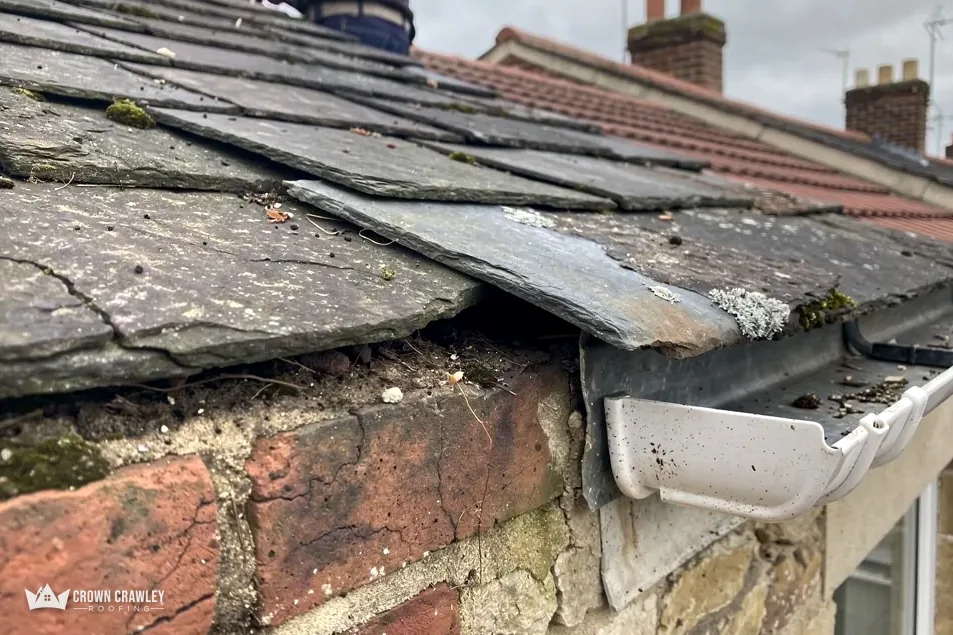
Long slopes, long timbers and plenty of weather. We sight along the ridge for sag, press the battens to see whether they still grip their fixings, and look at the eaves for staining that tells of years of slow leakage. An outbuilding roof may have no underlay at all, so a bright gap between tiles is a clue to follow up from inside, not an instant verdict. The survey ends with a list of what is sound as well as what is not, so a barn that needs only its ridge rebedded is never priced as a rebuild. Where a gutter is fixed straight to the rafter ends, a failure lets damp creep up the wall plate, so we check that too. Our pitched roofing page explains how we put right slipped tiles, battens and underlay, and our gutters, soffits and fascias page covers the rainwater side.

Storm-damaged tiled roof with the battens exposed and tiles on the ground

Stage 02 · Church roofs

St Peter's and the faculty route

An Anglican church in use is consented through its diocese, not the district council, which changes who you ring first.

St Peter's, Hever, is listed Grade I under National Heritage List entry 1258341, first listed on 16 January 1975. It is also an active Church of England place of worship. Hasted records that the Earl of Wiltshire is buried there under a black marble altar tomb, with a life-size brass of him in Garter robes. For roofing purposes, the useful point is that a church where the Church of England worships does not go through listed building consent. Its works are decided under the faculty system, the Church of England's own consent process.

Who gives permission for a church roof here?

The Ecclesiastical Exemption Order 2010 sets out which denominations run their own systems. For the Church of England the system is the faculty, applied for through the parish and the diocese. Official guidance on the exemption says a church still needs ordinary planning consent for exterior development, faculty or not, plus scheduled monument consent wherever that law reaches the site. For a gutter or a slipped tile, the parish and its advisers decide how the route is followed. We keep out of that decision and concentrate on the evidence.

Consent words, in plain English

Faculty
Diocese permission for Anglican church work
Grade I
Highest tier of listing
Grade II
Listing for buildings of special interest
List entry
The official record of a listing

What do we hand a parish before it applies?

A written survey of the covering, ridge, valleys, flashings and rainwater goods, with photographs taken on the roof so that nobody has to guess. The way onto a church roof affects the cost, so the survey records the access as well. Because the diocese and the parish control the process, a roofer cannot short-cut it, and a quote that hints otherwise deserves a second look. Ask to see the consent paperwork before work starts on a church roof, and keep a copy beside the survey photographs. The same habit helps a householder: whoever must give permission, they decide faster when they have a clear picture of what is wrong and what will be done about it.

If your Hever property is not a church but sits close to one, nothing about the church's route applies to you. What carries across is the method. Find the owner of the decision, write down what is on the roof, and let the price follow the facts. A vestry, a lych gate or a parish hall raises the same question of who decides, so on any building that is not a private house we ask that before anything else.

Stage 03 · Permissions

Sevenoaks and Kent rules for a Hever job

Sevenoaks District Council handles planning and building control here, and Kent County Council licenses any scaffold on the road.

Small mends rarely meet a form. Paperwork arrives when a repair turns into a major renewal, when someone wants a different covering, or when poles need part of the lane.

How much renewal can a Hever roof take before building control is involved?

The Planning Portal's national test runs like this: no building control application is normally needed where under 25 per cent of the total building envelope and under 50 per cent of the roof is involved, while approval enters the picture if a replacement covering raises the roof's weight by 15 per cent or more, or would perform differently if there were a fire. Sevenoaks District Council provides building control for its own area, so that is the team to ask about a large renewal. A survey that finds several slopes in play is reflected in the written price. Our roof replacement page describes a full renewal, and the guide to planning permission for roof work covers the planning questions.

Hever paperwork at a glance

Planning
Sevenoaks District Council
Building control
Sevenoaks District Council
Highway permit
Kent County Council
Applicant
The scaffolding company
Lead time
Submit 5 working days ahead
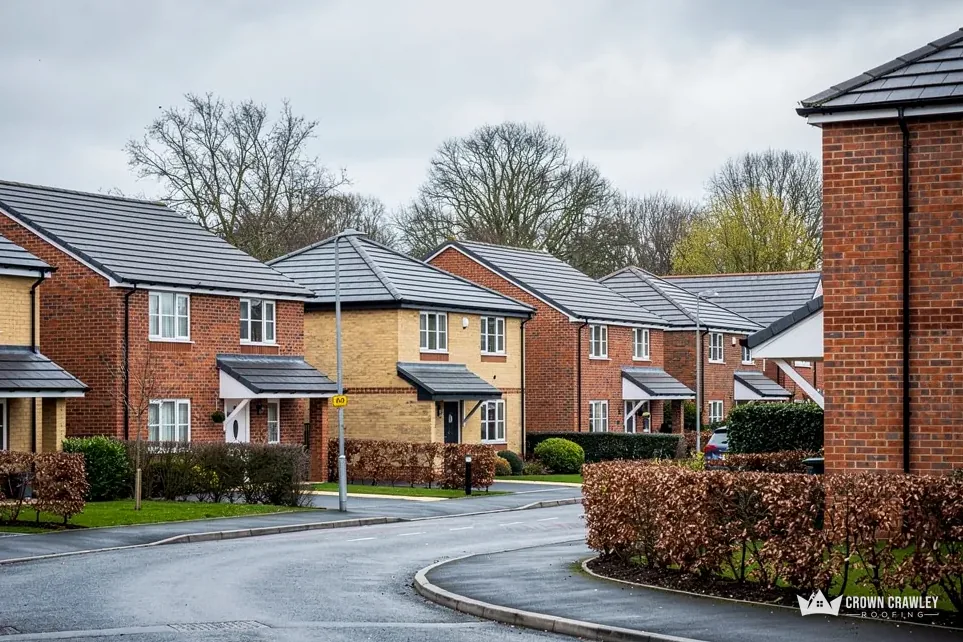
Modern estate road with brick houses and grey roof tiles

Who applies for a scaffold permit in Hever?

Kent County Council's own wording puts the application with the firm erecting the scaffold, which holds the registration and applies for its customer. Kent asks for applications at least 5 working days before the permit should begin and lists £52 a week for 2026 to 2027, with a site inspection at £78 if the council thinks one is needed. Renewals follow the same five-day rule, which matters on a job that overruns. Kent's wording means you are not left holding the paperwork. A wide drive can host the scaffold itself, and then no highway permit comes into it. The lane decides where the skip goes, so on survey day we walk the approach, note gate widths and the nearest passing place, and plan deliveries so the lane is never blocked longer than it needs to be.

Hever's old roofs and outbuildings are the sort of places that can hold bats or nesting birds. Wildlife law bars anyone from intentionally harming an active nest, and every bat species and its resting place is protected as well. Should the survey reveal bat or nest signs, the job pauses until you have heard the choices. The quickest way to begin is to name your lane and the building concerned, whether house, barn or shed, and say what is visible from the lane. Mention any stains inside, drips in the loft or tiles on the lawn, since each one narrows down where we look first and what the survey needs to measure.

Hever roof questions, briefly

Is a house near Hever Castle automatically listed?

No. Protection belongs to whatever building an entry names, such as Hever Castle, the Church of St Peter or the Grade II barn south-east of the Bower. Look up the Historic England entry for your address. If it has none, ordinary rules apply. If it has one, ask Sevenoaks District Council before any roof work.

Who gives permission for work on St Peter's church roof?

St Peter's is a Grade I Church of England church in use, so works go through the faculty system rather than listed building consent. The parish and diocese run that process. We can survey the covering, flashings and gutters and supply photographs and a written report for the parish's advisers to work from, whatever route they follow and whoever signs the roof off at the end.

Does a Hever scaffold need a permit from Kent County Council?

Only when it takes up road or verge space. Kent expects the scaffold firm to apply on your behalf, with applications due 5 working days before the start and a charge of £52 a week for 2026 to 2027. A drive that can hold the scaffold avoids the permit entirely, and we check the space on the survey.

Could my Hever address carry planning conditions I do not know about?

It is possible. It could, and the quickest check is to ask Sevenoaks whether your address sits in a conservation area. A listed building is a separate matter with its own rules. Before altering the appearance of a roof, ask Sevenoaks District Council's planning team first, because your own address may carry conditions that a national map cannot show, and a short call settles it.

Price up a Hever job

Tell us your lane and which building needs attention, house, barn or shed, and say what the trouble looks like from outside.

01293 974253

10-year workmanship guarantee, in writing.

Call Get a free quote