Roofers in Cowden

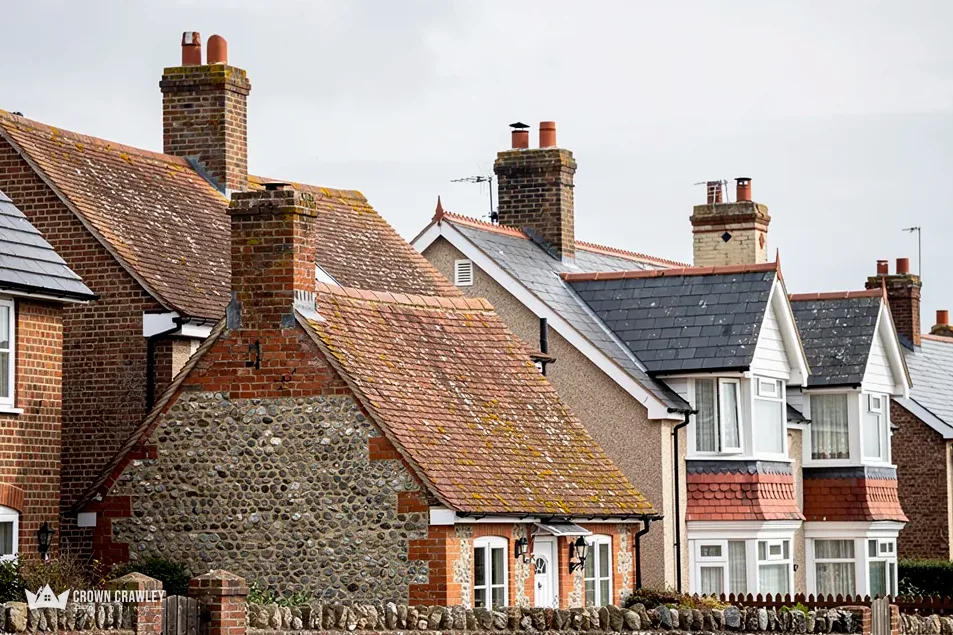
Roofs in a Weald village, part of it a conservation area.

Cowden is a Weald village on the Kent and Sussex border, and part of it is a conservation area. We look at each roof as built, then give one written price after the survey.

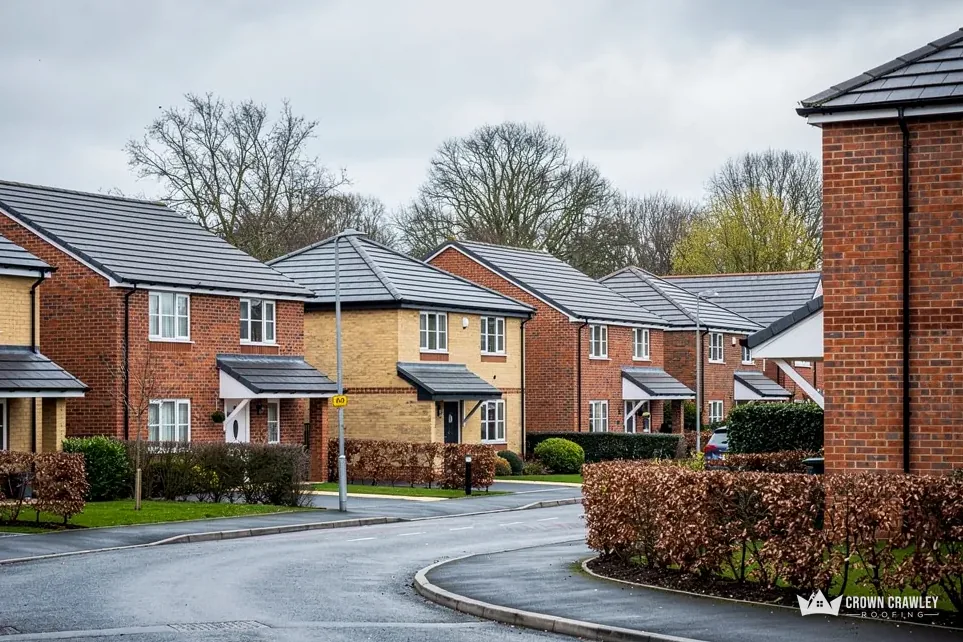
Modern estate road with brick houses and grey roof tiles

Cowden houses from the ridge down

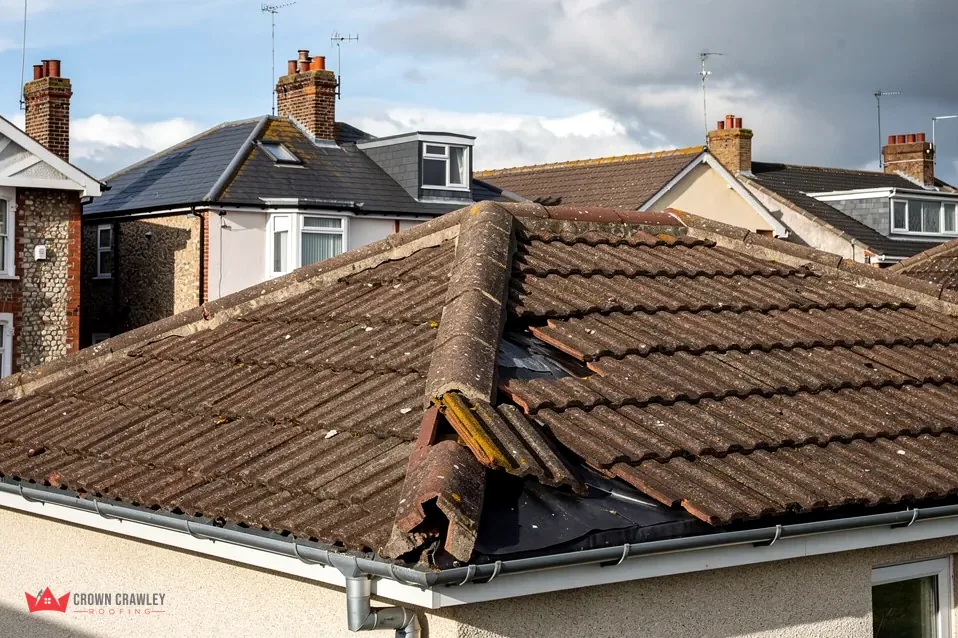
Damaged ridge tiles and exposed mortar at a roof hip

Homes in the Cowden conservation area

Part of Cowden lies in the Cowden conservation area. Before we plan a re-roof there, we check your address against the council's map, then note the tile profile, colour and ridge detail so any repair matches what is already up there.

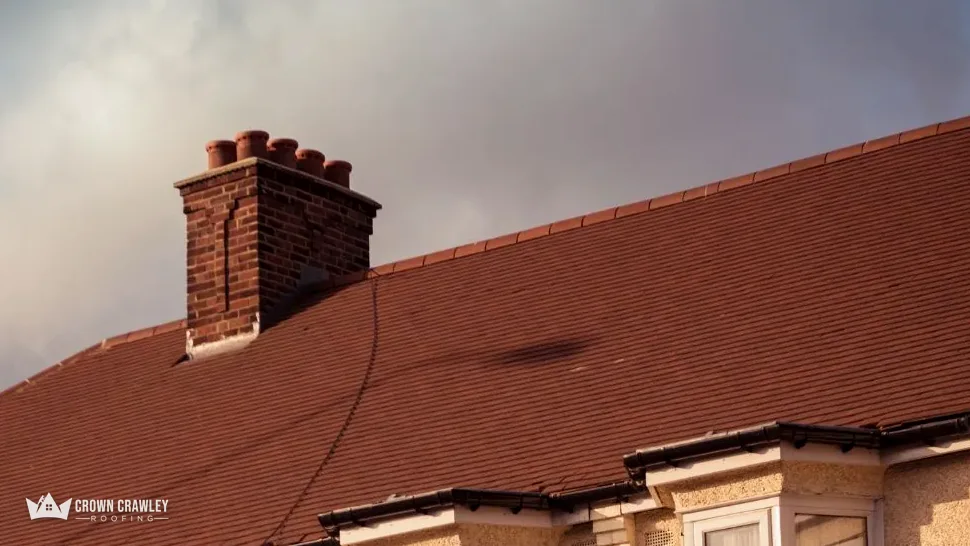
Tiled roof on a village house

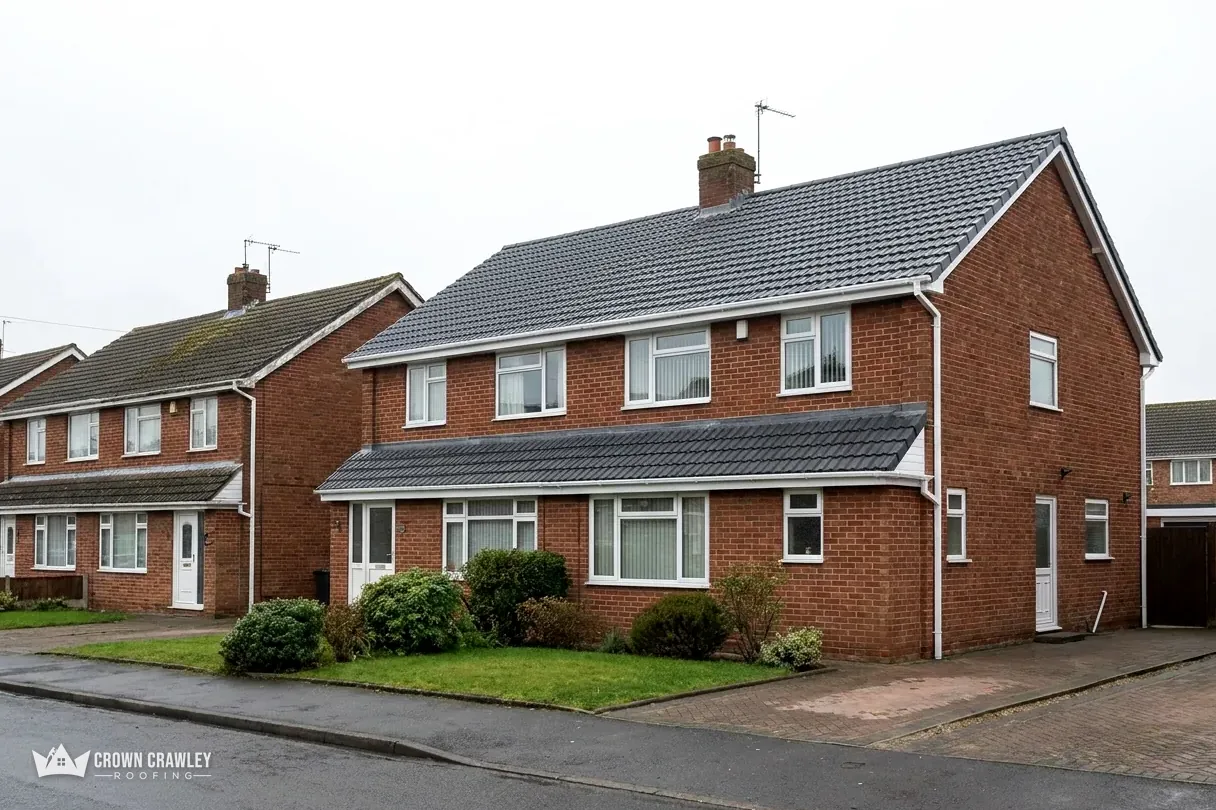
Detached red brick houses with grey tiled roofs on a quiet road

Grade II houses on the High Street

Number 10 and numbers 13 and 15 on the High Street are listed Grade II. Work that changes a listed building's character needs listed building consent, so we send you to the council's planning team before any tile is ordered.

Older house with a pitched tiled roof

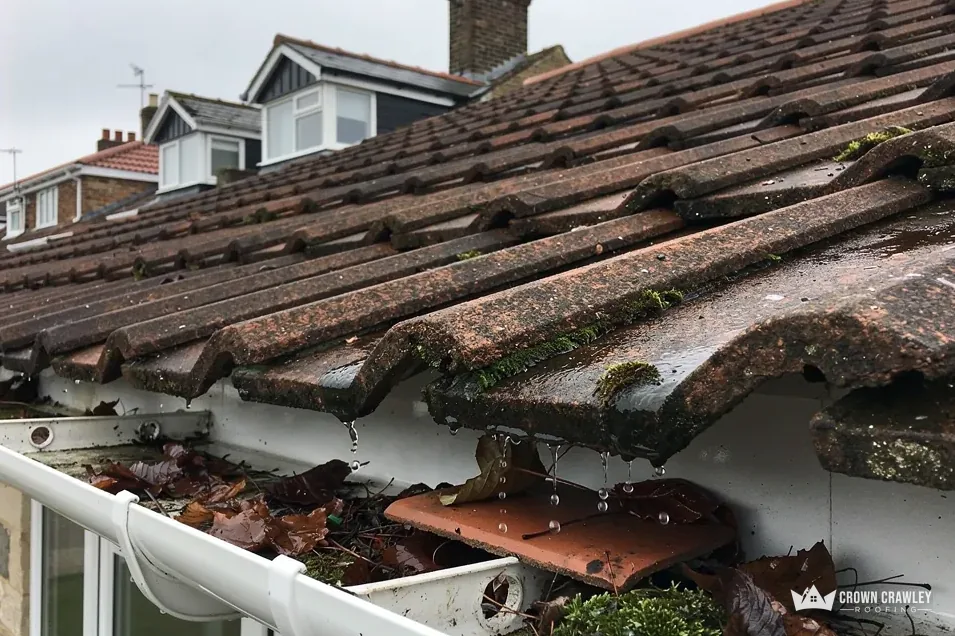
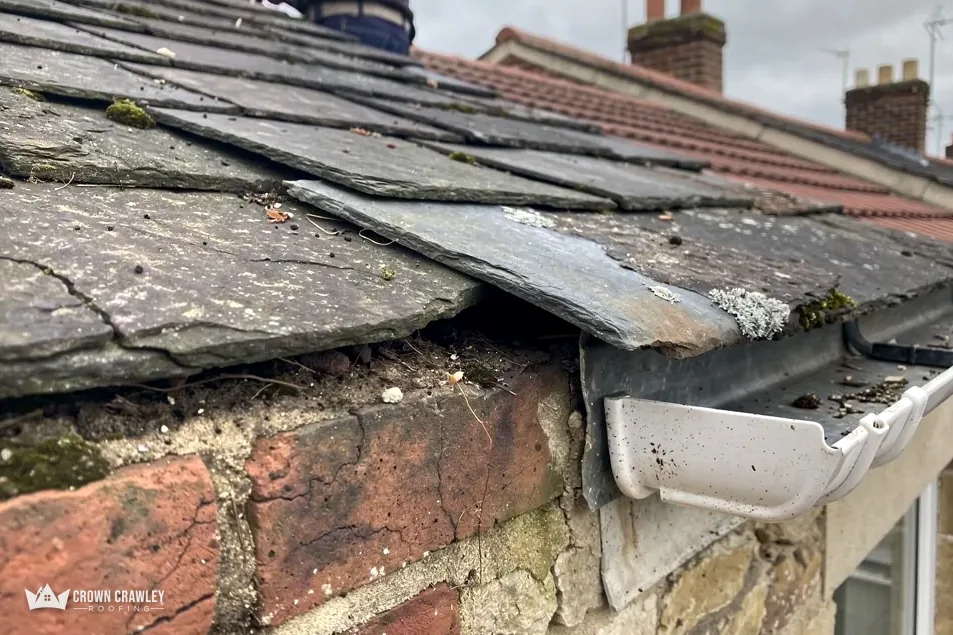
Slipped tiles lying in a blocked gutter

Roofs on wet Weald clay

Hasted described Cowden in 1797 as lying on deep clay, 'very wet and miry'. Wet ground makes clear gutters and downpipes matter, so we follow rainwater from the ridge to the drain and see where it ends up.

Gutter and downpipe at the eaves

Cowden, on the Kent and Sussex border

Map of Cowden and the neighbourhoods around it, with Crawley for reference.

Cowden stands on a rise in the Weald, with the church on its east side and a stream of the Medway bending round the south.

Distance
15.1 road miles from Crawley, to the east
Drive
About 28 minutes
Council
Sevenoaks District Council and Kent County Council
Planning authority
Sevenoaks District Council
Conservation area
Cowden
Landscape
High Weald National Landscape
Population
859 (Census 2021, Cowden parish)
Get a free quote

The Cowden job diary

Cowden: a roof beside the church and the Weald clay

Three chapters on the Weald ground under the village, the protected buildings around the church, and the Kent and Sevenoaks rules for scaffold and larger jobs.

Stage 01 · First look

A village on deep Weald clay

Hasted put Cowden on deep Weald clay in 1797, so shedding rain and sending it clear of the walls matters on every roof.

Cowden stands on a rise in the Weald, close to the Sussex border. When Edward Hasted wrote his history of Kent in 1797 he described the parish as lying wholly in the Weald on deep clay, 'very wet and miry'. Much has changed in more than two centuries, but the ground has not, and it shapes what we look at when we climb up to a Cowden roof. The village sits on its rise with the church on the east side, and a stream of the Medway bends round the south, where it once turned a corn mill.

Does wet ground matter to a roof?

It matters most at the bottom of one. Rain that leaves the roof has to go somewhere, and on heavy clay it drains away slowly. A gutter that overflows, a downpipe that empties against the wall or a blocked gully can leave brickwork wet for weeks, and a wet wall passes damp up into the eaves, the fascia and the feet of the rafters. So at the survey we follow the water from the ridge to the drain. We check the gutter falls, the joints, the brackets and the place where each downpipe lands, as well as the tiles above. Our gutters, soffits and fascias page explains what we replace and what only needs realigning.

What a Cowden survey covers

Gutters
Falls, joints and brackets sound
Downpipes
Empty clear of the wall
Tiles
Slipped or cracked, nibs whole
Underlay
Whole at the eaves
Loft air
Eaves gap left open
Dormer window with white cladding in a clay tiled roof

What do we check on the slopes themselves?

A tiled or slated roof tends to fail in a handful of familiar places. Tiles slip when a nail or a nib gives way, the underlay (the membrane under the tiles) tears or rots at the eaves, mortar on a ridge or verge cracks, and lead flashings lift where a roof butts against a wall or a chimney. The High Weald National Landscape's own account of local building names timber frames and weather-boarding alongside wide use of sandstone, bricks and tiles, so we assume no single pattern for the slopes in front of us. We photograph the slopes, ridge, verges and valleys, and the written price rests on what those photos show. A single cracked tile can often be replaced alone, and our pitched roofing page explains when a repair is the better buy than a new covering.

In the loft we look at ventilation. If the roof has an older felt underlay that does not breathe, BS 5250 guidance asks for a 10 mm gap along the eaves on pitches steeper than 15 degrees, and insulation packed into the eaves can close it. Damp then settles on the timber instead of leaving the roof space. Opening that gap again is quick, and it keeps the battens drier.

Flint and brick houses with clay tiled roofs and chimneys

Stage 02 · Protected buildings

A conservation area, listed homes and a church

Part of Cowden is a conservation area, three High Street addresses are Grade II and the church is Grade I, so consent comes first.

Cowden has a mapped conservation area, and the National Heritage List records the Church of St Mary Magdalene as Grade I, first listed on 10 September 1954. Number 10 on the High Street, and numbers 13 and 15, are Grade II. None of that stops a roof being repaired. It does decide who you speak to before work starts, and in what order.

Do I need consent to repair a Cowden roof?

That depends on the building and on the job. Putting back the same covering on a house inside the conservation area is a different question from altering a listed building, where any work touching what makes it special needs listed building consent. The village falls under Sevenoaks District Council for planning, so its planning team is the place to ask, ideally before a tile is ordered, because the answer can change which covering you choose. Our guide to re-roofing in a conservation area lists the questions worth putting to the council. We help by taking clear photos of the roof and noting the tile profile, colour and ridge detail, so a like-for-like repair can be described accurately in an application or an email.

Terms you may hear

Conservation area
Mapped area where the council guards local character
Grade II
Listed building of special interest
Listed building consent
Council approval for changes to a listed building
Faculty
Consent route for Church of England churches

In a conservation area, the question for the council comes before the order for tiles.

What about the roof of the church itself?

The church is in Church of England use. Where a Church of England church is in use, works go through a faculty from the diocese rather than listed building consent. That process belongs to the parish and its advisers, and it sits apart from any house roof we price. For homes, sheds and outbuildings round about, the council's usual rules apply as set out above, and a church faculty covers none of those buildings.

Why does matching matter so much here?

A conservation area exists to protect the look of a place, so a new ridge or a different shade of tile can stand out on a street where everything else is weathered. We note the profile and colour of each tile, the style of the ridge and the detail at the verge, and the written price states whether stock tiles should match or reclaimed ones may have to be found. If a listed house has lead flashings or valleys, we explain the sheet thickness and the fixing before work begins, and the survey photos show the current state of each junction.

Stage 03 · Permissions

Kent scaffold rules and a larger job

Cowden is in Kent, so the county's licence rules apply to scaffold on the road, and Sevenoaks handles building control.

Cowden is in Kent, which makes Kent County Council the highway authority, while Sevenoaks District Council deals with planning and building control for the village. A small repair needs none of that. The rules begin to matter once scaffold must go up on the public road, or when a repair grows into a full re-roof.

Does scaffold on the road need a licence in Cowden?

Putting scaffold on or over a public highway means applying to the highway authority first, under section 169 of the Highways Act 1980. Kent County Council's rule is that the scaffold firm, not the householder, holds the registration and applies on your behalf. Kent wants applications in 5 working days before the licence begins, and the 2026 to 2027 charge is £52 for each week the scaffold stands on the highway. If the house has a drive or front garden with room, the scaffold can stand there instead, clear of the highway and of the licence. We work out which suits your house at the survey and set the start date around any licence.

Checks we make in Cowden

Scaffold
Licence needed on the highway
Notice
5 working days, Kent
Planning
Sevenoaks District Council
Approvals
Sevenoaks building control
Wildlife
Work stops if bats appear
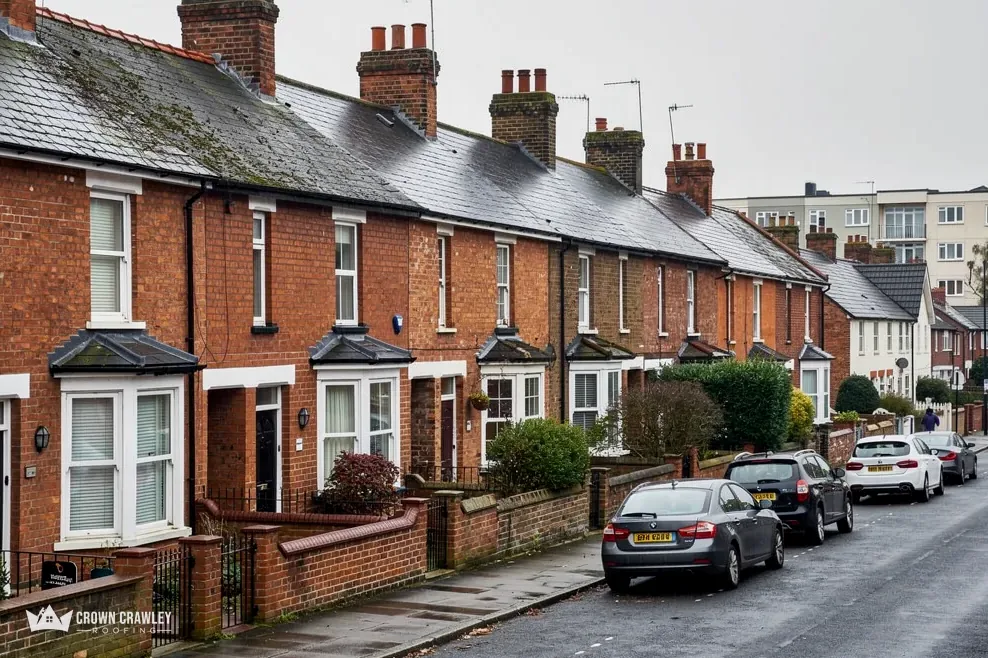
Victorian brick terrace with bay windows and parked cars

When does a Cowden re-roof need Building Regulations approval?

On the Planning Portal's test, an ordinary re-roof needs no building control application while under 25 per cent of the building envelope and under 50 per cent of the roof are touched. A heavier covering (15 per cent or more extra load) or one that burns differently changes the answer, and the Planning Portal advises getting the structure checked by an engineer or surveyor before work begins. Sevenoaks District Council runs its own building control service, so that is who to ask on a larger job. Our roof replacement page walks through a whole re-roof from survey to sign-off.

What if there are bats or nesting birds in the roof?

The law fully protects bats and their roosts, and government guidance counts repairing or re-covering a roof as a job that may disturb them. Birds get similar cover: under the Wildlife and Countryside Act, intentionally damaging a nest that is in use is an offence. If droppings, a nest or a bat show up during the survey, work pauses while we decide the way forward together. To start, take a garden photo of the gutter run or slope that concerns you, add your postcode, and mention any listing or conservation-area status you know of.

Cowden roofs, protected buildings and scaffold

Can the wet Weald clay around Cowden cause trouble at the eaves?

The ground does not harm the tiles, but water that cannot drain away keeps the walls and eaves damp. Hasted called the parish's clay 'very wet and miry' in 1797. We check gutters, downpipes and the lowest courses of tiles together, because a blocked outlet can flood the bottom edge of the roof. The survey photos show which it is.

Do I need permission to re-roof a house in the Cowden conservation area?

Part of Cowden is in the conservation area, so check your address on the council's map and ask Sevenoaks District Council's planning team before ordering materials. Replacing like for like is a simpler question than changing the covering. Listed buildings need listed building consent for work that alters their character. We photograph the roof so the council has something to look at.

Who applies for the scaffold licence in Cowden?

In Kent, the county council puts the application on the scaffolding firm, acting for the customer, and wants it at least 5 working days before the start. Scaffold set up off the highway, on a drive or front garden, falls outside the licence, so room at the front avoids the question. Otherwise we agree the start date with the scaffolder once the licence route is clear.

Is a Cowden roof repair affected by being in the High Weald?

A like-for-like repair looks the same as before, so the designation does not come into it. It matters when the shape of the roof would change, because in law the High Weald is still an Area of Outstanding Natural Beauty, and the planning rules for that land are tighter. Ask the council's planning team first, and send us photos so we can price the repair itself.

Send us the Cowden roof that worries you

Photograph the slope or gutter that concerns you, add your Cowden postcode and any listing you know of, and we will book the survey.

01293 974253

10-year workmanship guarantee, in writing.

Call Get a free quote