A church covered in two materials
In 1824 the old church was described as covered partly with tiles and partly with stone slates. A mixed covering on one building is a good reason to read each roof, not assume.
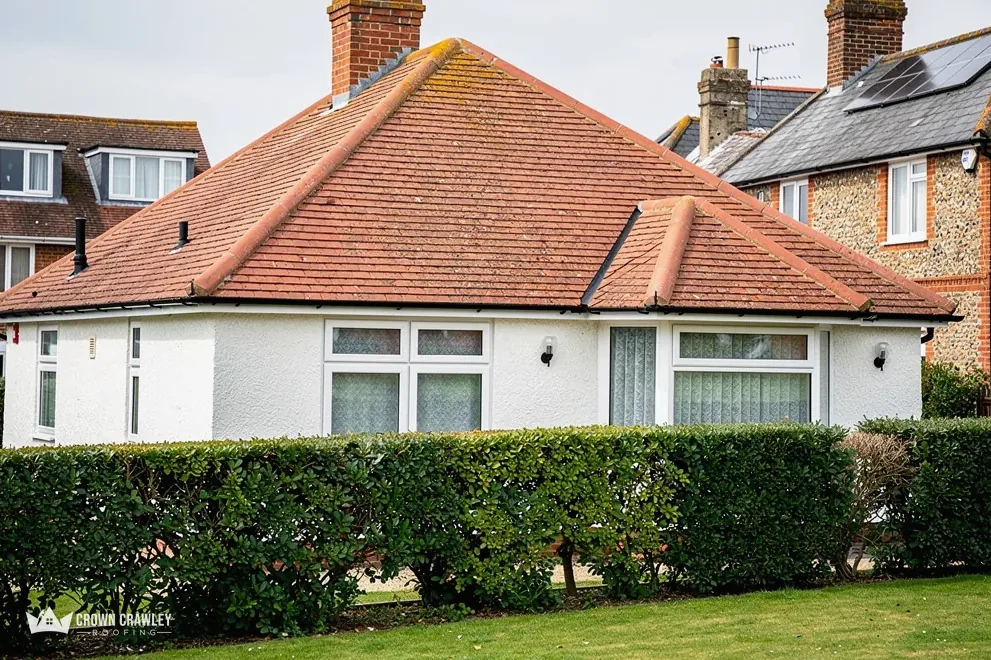
Stone slates beside clay tiles
Roofs in a small Surrey Hills parish south of Godalming.
Hambledon is a parish of 2,721 acres inside the Surrey Hills National Landscape, about four miles from Godalming. Each roof gets a survey first, and the price comes once, in writing.
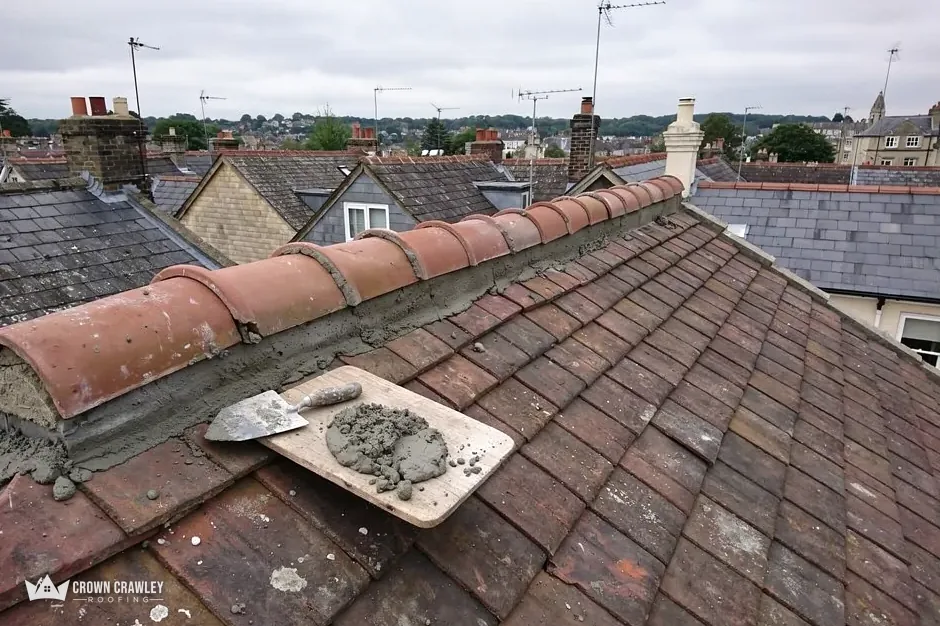
In 1824 the old church was described as covered partly with tiles and partly with stone slates. A mixed covering on one building is a good reason to read each roof, not assume.
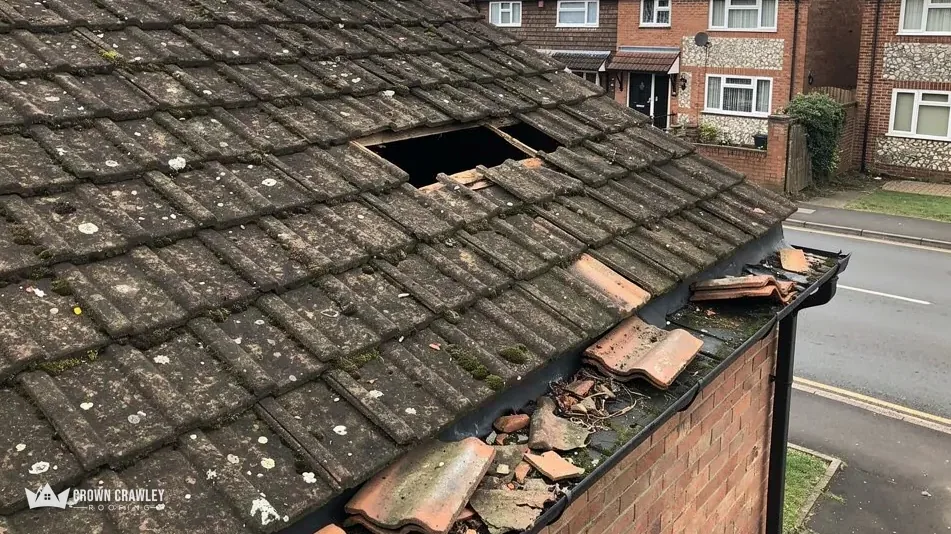
Stone slates beside clay tiles
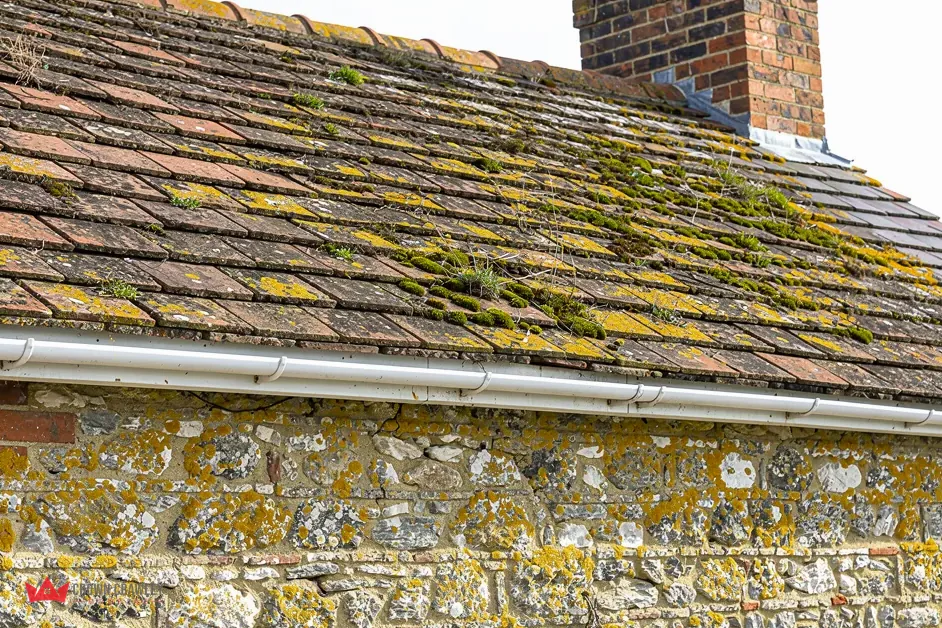
St Peter's was almost entirely rebuilt in 1846 and is listed Grade II. Tigbourne Court is Grade I. Listing brings an extra question before anyone changes a roof's covering or outline.
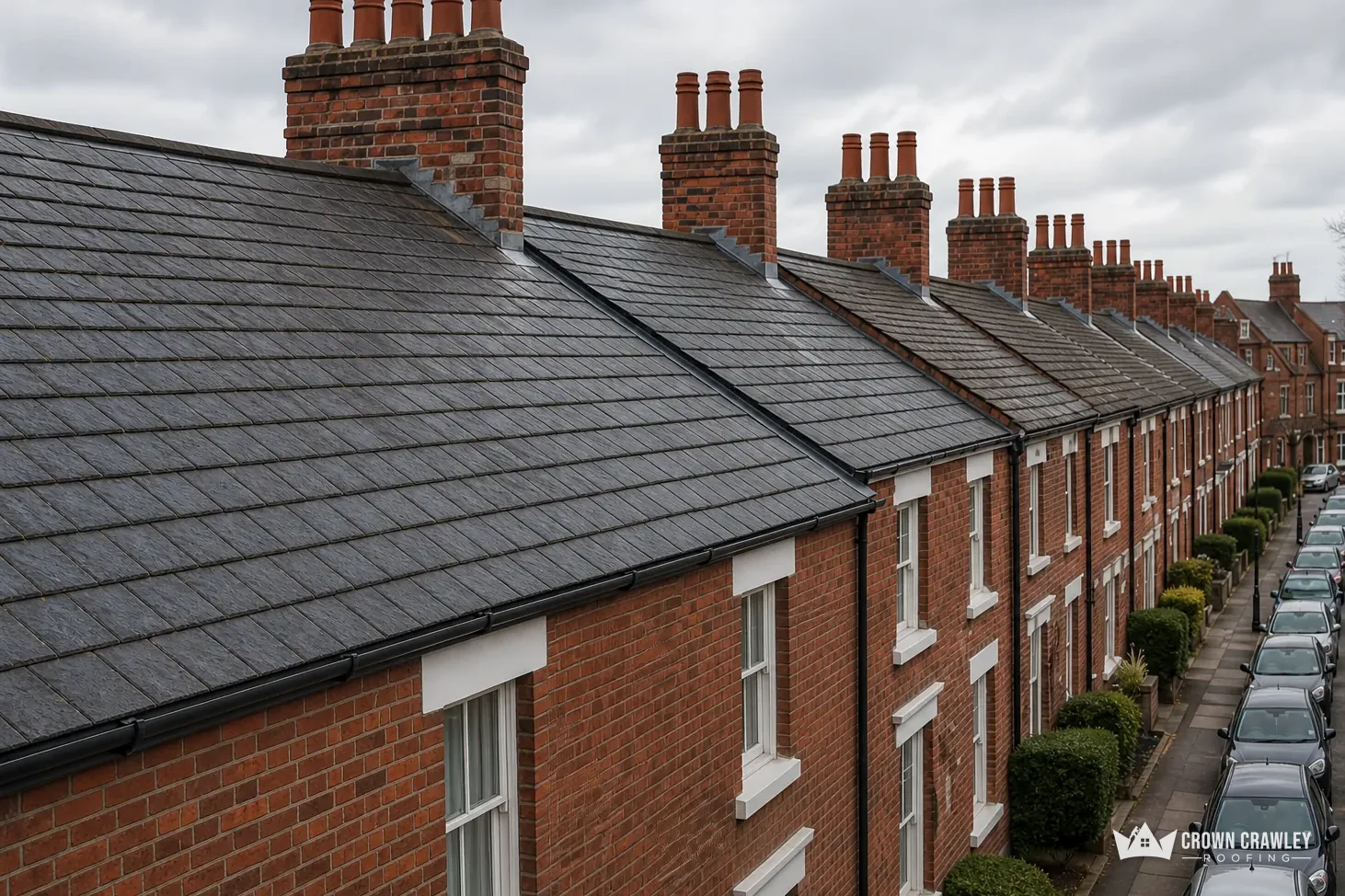
An older house with a tiled roof

The clay in the south of the parish was thickly wooded with oak, and the Victoria County History says brick-making was carried on there. Brick chimneys on older houses get a close look from us.
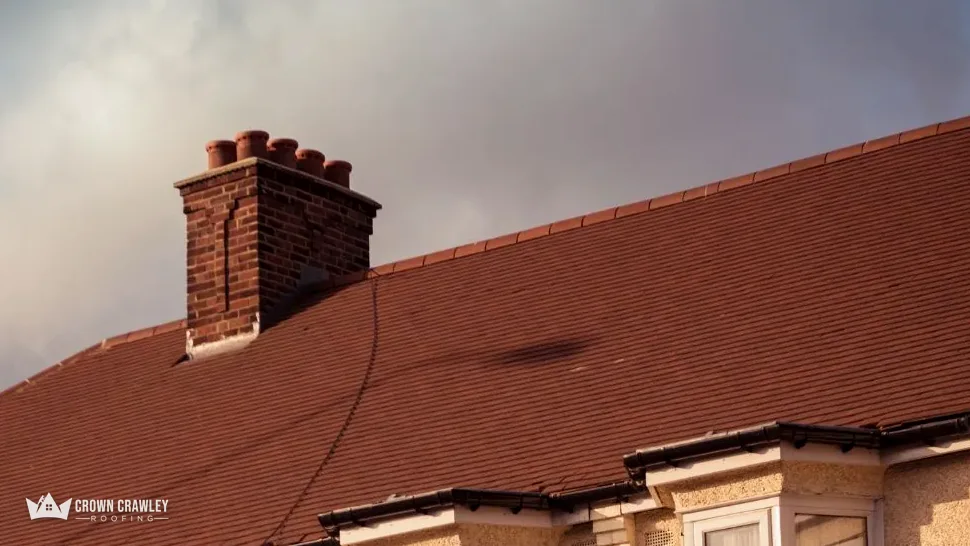
Brick chimney stack above a roof
Map of Hambledon and the neighbourhoods around it, with Crawley for reference.
Hambledon lies west of Crawley, on the Greensand and Weald clay south of Godalming, with 771 people in the civil parish.
Hambledon parish notes
Three short chapters on what the parish record shows, how two conservation areas and a National Landscape shape a repair, and how Surrey and Waverley handle the paperwork.
Stage 01 · First look
The county history puts the north of Hambledon on Green Sand and the south on thickly wooded clay, and its roofs carry a mixed past.
Hambledon is small, and its written history is short but specific. The Victoria County History describes a parish of 2,721 acres, about four miles from Godalming, whose northern part lies on the Green Sand. In the south the soil is clay, very thickly wooded chiefly with oak, and brick-making is recorded there. It also quotes a description from 1824 of the old church as covered partly with tiles and partly with stone slates, before St Peter's was almost entirely rebuilt in 1846.
It tells us not to assume. Within one parish, and sometimes on one building, tile, stone slate and later replacements can sit side by side, so each survey begins by identifying what is actually up there. If yours is clay tile, Building Research Establishment findings set a 60 year floor for clay, and with old peg tile that number is only a loose marker. The Confederation of Roofing Contractors gives slate kept in good order 100+ years. We photograph the covering up close, note its fixings and say what each fault means before any price is discussed.
A Hambledon roof, inspected
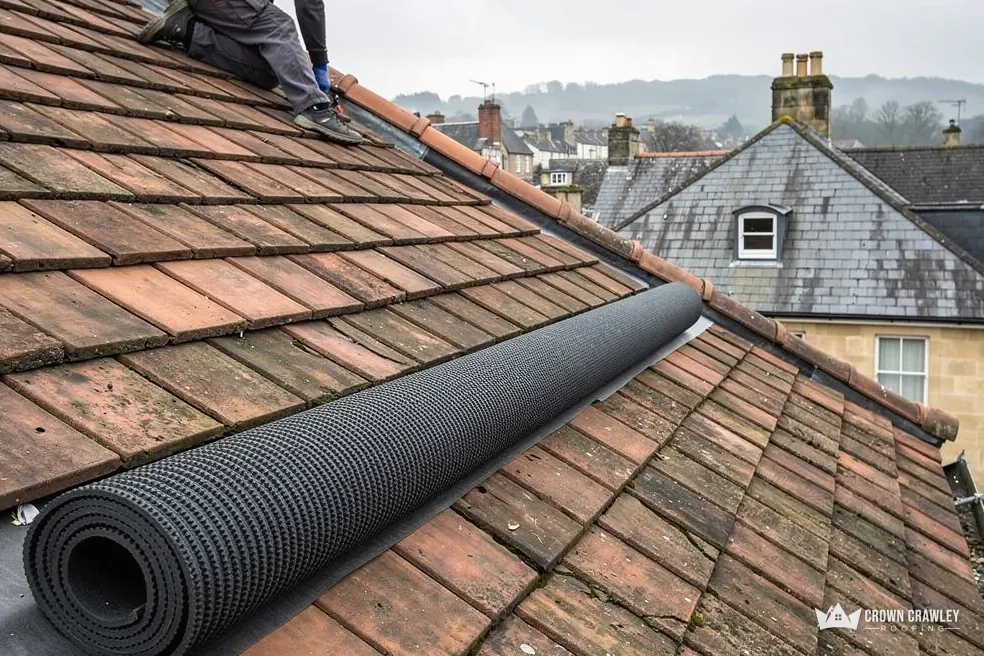
Oak country means leaf fall, and leaves are what block gutters, valleys and the gaps behind chimneys. A valley is the channel where two slopes meet and carry water between them, and when it clogs, rain backs up under the tiles or slates alongside. Overhanging branches also rub the surface and drop moss spores onto shaded slopes. None of this means a new roof. Clearing the channels, resetting a few slipped pieces and checking the flashing, the metal strip that closes each join, often settles it. Our pitched roofing page describes how a slope is repaired.
Shade also keeps a roof damp for longer, which is why the timbers are checked from within the loft as well as the covering from outside. A dry loft with no daylight showing and no stained rafters is the best sign that a roof is doing its job. If the loft is full of stored boxes, we ask to move them aside, because a stain can hide behind them for months. Insulation matters here as well: pushed hard into the eaves it can block the airflow that keeps the timbers dry, so we look at that gap on every older roof.

Stage 02 · Permissions
Hambledon has two mapped conservation areas and sits in the Surrey Hills National Landscape, so planning questions deserve an answer before work starts.
The national planning data records two conservation areas at Hambledon, labelled A and B, and Waverley Borough Council is the planning authority. The parish also lies in the Surrey Hills National Landscape, which dates its designation to 1958, among the first in the country. Tigbourne Court is listed Grade I, first listed on 9 March 1960, and St Peter's church is listed Grade II.
Section 55(2)(a) of the 1990 Act leaves out of the meaning of development any works with no material effect on a building's outward appearance, so re-laying the same covering at the same pitch changes nothing the planners care about. Changes to the shape or openings of a roof are another matter. A dormer, a new rooflight or a different covering should go to Waverley's planners before any order is placed, and it is sensible to ask whether an Article 4 direction applies to your address as well. Our post on planning permission for roof work sets out the national rules and the questions to ask.
Terms from the parish
Roof questions in a protected landscape are best answered by the planners in writing.
A listed parish church in use for worship, like St Peter's, answers to the diocese's faculty jurisdiction and not to listed building consent. A listed house is different: consent is needed before an alteration that would affect its special character, and the council decides what that means for your roof. We help by recording the covering, ridge, verges, chimney and lead, so a conversation with the planners is about real details. File their reply alongside the survey photographs, so the record is to hand if a buyer's solicitor asks about past roof work.
The practical point is that a leak is never made to wait, whatever the designation on the map. Water coming in is stopped and the opening made safe first, and the permanent repair follows once the right people have answered. Working in that order protects the loft, the ceilings below and the timbers, and it keeps a weekend of rain from turning a small repair into a large one. Once the planners have replied, your quote arrives as one written total, with the covering, fixings and any lead described plainly so that nothing is open to argument later.
Stage 03 · On site
Surrey County Council licenses scaffold on county roads, Waverley handles building control, and bats and birds can alter the plan.
Country lanes can be narrow, and a scaffold that blocks one is a different matter from a scaffold on a drive. Knowing which applies to your house tells you whether a licence is part of the plan at all.
A road, pavement or other public highway is Surrey County Council territory, and scaffolding put up there needs its licence. Applications go in 10 working days or more before the preferred start, and £208 covers each 28 day period, renewals included. The council's page leaves unsaid who lodges the application, so we ask the scaffolder directly and fix the date only once that is answered. Poles that stand entirely within your own boundary are a separate case with no licence involved. Whichever quote you choose, find out whether scaffolding and VAT are inside the figure. Deliveries matter on a lane too: a lorry of tiles needs somewhere to stop, and a neighbour's gate or a bend in the road can decide where the materials wait.
Before a Hambledon job starts
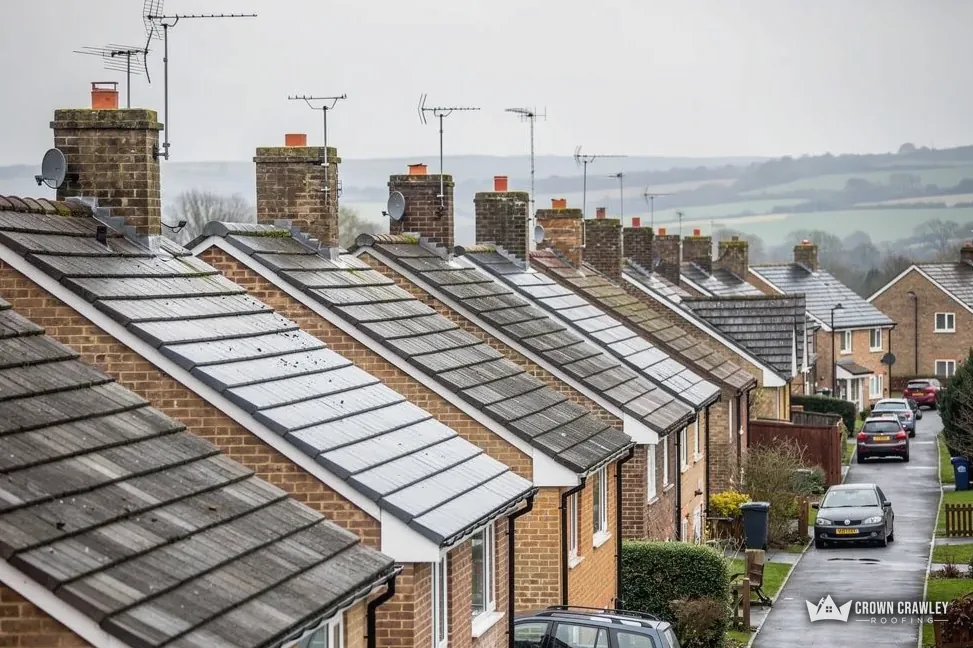
Inspections are Waverley's own job here; ask by 4pm and a visit can be booked for the next day. For the starting test, the Planning Portal says that under 25 per cent of the building envelope and under 50 per cent of the roof means no building control application in the normal course. A heavier replacement covering is separate, because a weight rise of 15 per cent or more triggers approval, so swapping stone slate or clay for something heavier needs a conversation first. Where the whole roof has run its course, our roof replacement page walks through a re-roof stage by stage.
In a wooded parish it is a fair question. Wildlife law makes it an offence to intentionally damage a wild bird's nest while the nest is occupied or under construction. Any bat roost is legally protected too, and GOV.UK's bat page puts work on a roof in the category of activity that can affect colonies. A sighting therefore changes the plan: the job pauses and next steps are agreed with you before anything is touched. Birds nesting under eaves and bats in a loft are easier to spot during the survey than halfway through a strip.
Whatever the job, you hear what is planned each day, the access is set up safely and the waste goes with us. A good first step is a clear photo of the covering or chimney that bothers you, sent with your Hambledon postcode.
The south of the parish was recorded as thickly wooded clay, chiefly oak, and leaves are what choke gutters, valleys and the gaps behind chimneys. Overhanging branches also keep a slope damp and shaded. We check the channels and the loft timbers together, and the written price names whatever clearing, resetting or repair the survey finds.
Re-laying the same covering at the same pitch and outline leaves the outside materially unchanged. Anything that alters a roof's shape, openings or covering is for Waverley Borough Council's planners, and it is wise to ask them in writing whether a conservation area or an Article 4 direction applies to your address before ordering materials.
Surrey County Council wants 10 working days' notice before the start, with a charge of £208 for each 28 days. The council does not name who lodges the application, so we ask the scaffolder directly and set your date around the licence. Poles kept entirely on your own plot fall outside that licence, though access for materials still needs planning.
Not without a pause. Bat roosts are legally protected, and GOV.UK treats roof repair as a job that could disturb them. If the survey shows droppings or a likely roost, work stops while we discuss what happens next with you, and the plan is rebuilt around what the roost needs. A nest in use, or still being built, is protected from intentional damage as well.
Send a photo of whatever concerns you on the roof, with your Hambledon postcode and any planning letter you already hold.
Message us on WhatsApp