Roofers in Guildford

Welsh slate, clay tile and tile-hung walls across the Guildford roofline.

Guildford's town centre appraisal records hand-made clay tiles on Quarry Street and Welsh slate on buildings from after the mid-19th century. We read your roof as it is, then give one written price.

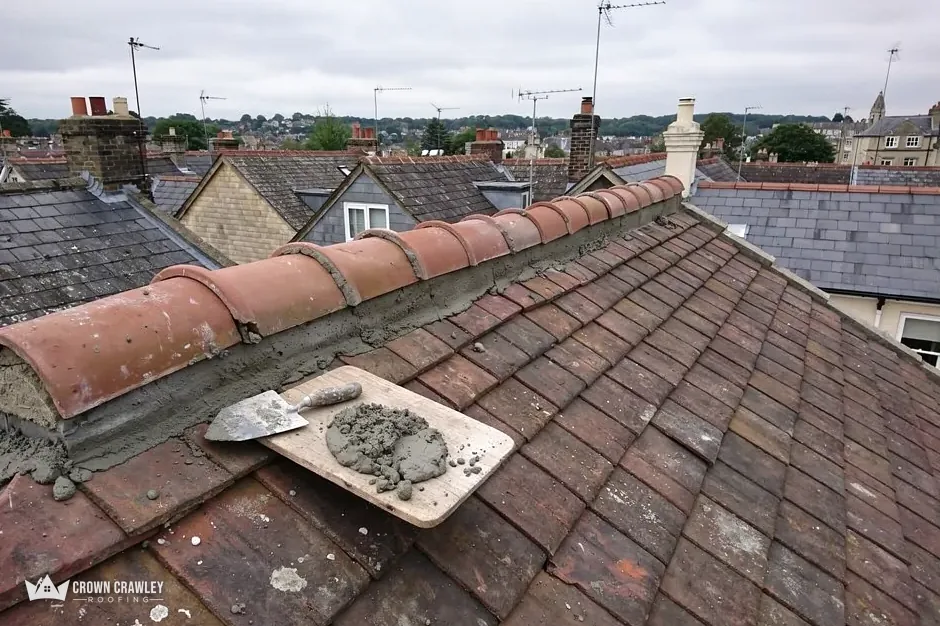
Ridge tile bedded in fresh mortar with a trowel resting on the roof

What the council says sits above Guildford

Brick chimney with lead flashing on a clay tiled roof

Quarry Street clay tiles

The council's appraisal calls the Quarry Street roofscape very important and describes hand-made clay tiles on pitched roofs with brick chimneys. When a slope needs work, we match tile size, colour and bedding to what is already there.

Hand-made clay tiles on a pitched roof

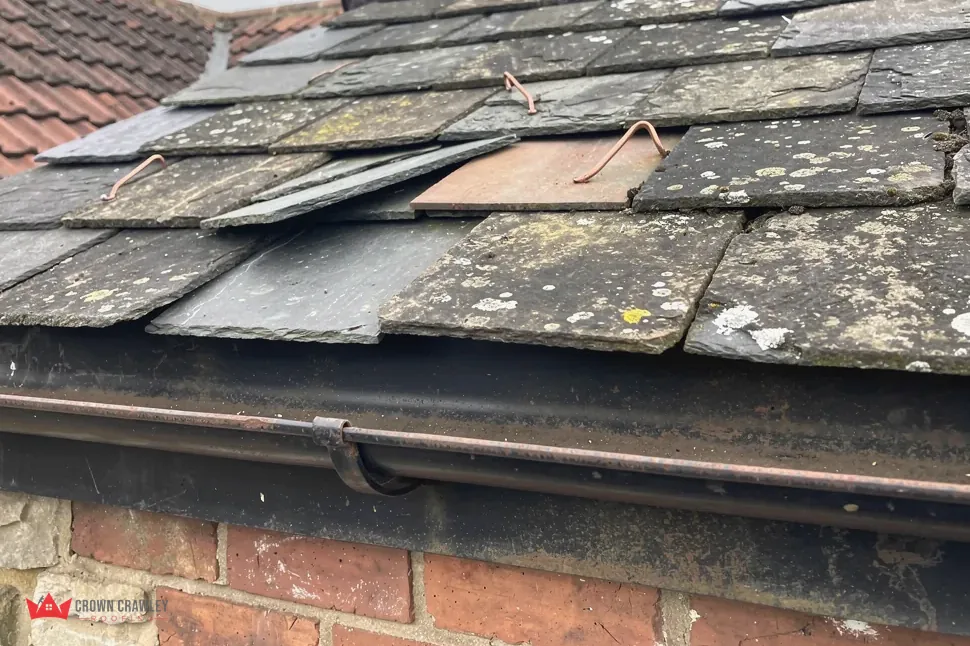
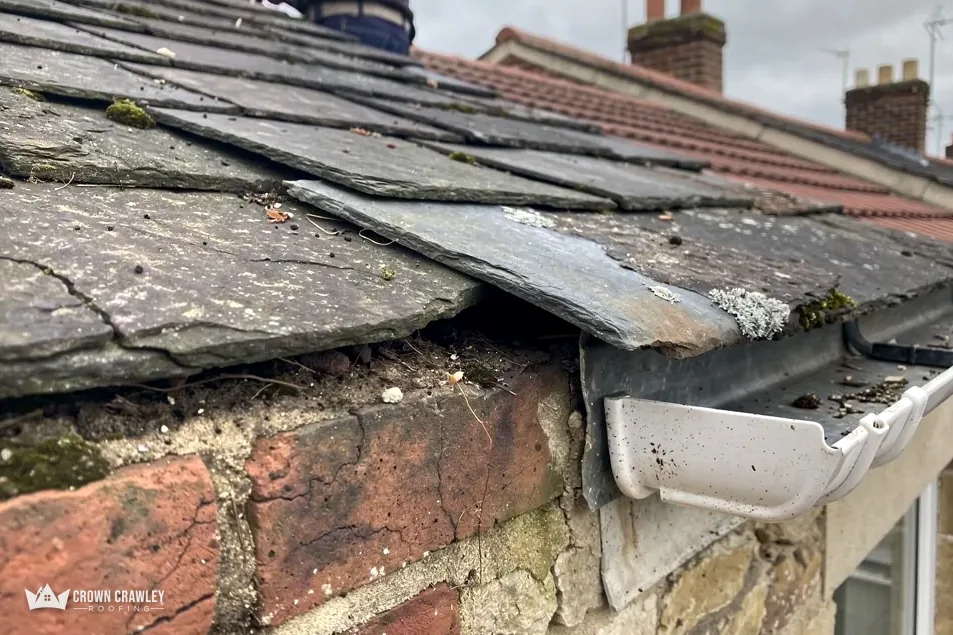
Old slates, damaged and slipped, above a cast-iron gutter

Welsh slate after 1845

Welsh slate became the preferred covering after 1845, once railways made it cheaper to carry, and the appraisal links it to town centre buildings from after the mid-19th century. Slate is repaired with slate, slip by slip.

Natural slate roof in close view

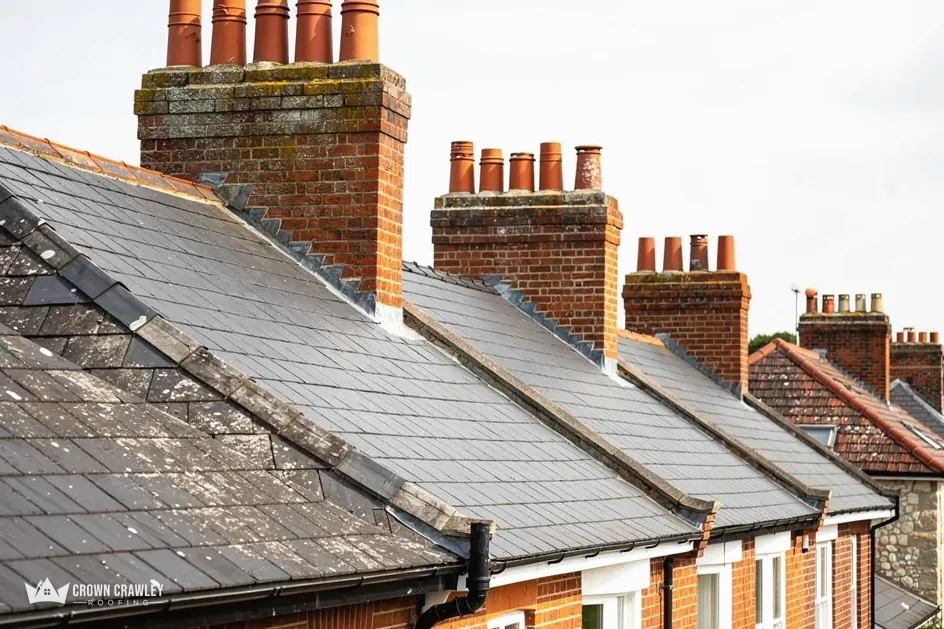
Row of terraced chimney stacks above slate roofs

Tile-hung walls

Vertical tile-hanging in locally made clay, hand-made and then machine-made after about 1900, appears on many town centre buildings. Where such a wall meets a roof, the metal strip sealing the join, called flashing, gets a close look.

Clay tiles hung on a wall

Guildford, across the Surrey border

Map of Guildford and the neighbourhoods around it, with Crawley for reference.

Guildford sits north-west of Crawley in Surrey, and its listed buildings include two Grade I churches and part of the castle.

Distance
27.8 road miles from Crawley, to the north-west
Drive
About 47 minutes
Council
Guildford Borough Council and Surrey County Council
Planning authority
Guildford Borough Council
Conservation area
Guildford Town Centre; Wey and Godalming Navigations
Listed buildings
Over 1,000 in the borough (Guildford Borough Council)
Conservation areas
40 across the borough (Guildford Borough Council)
Get a free quote

Our Guildford roof diary

Reading a Guildford roof before anyone touches it

Three short chapters on slate and clay in the town centre, work in conservation areas and listed buildings, and what a Surrey scaffold licence involves.

Stage 01 · First look

Slate, clay and tile-hung Guildford

The town centre carries hand-made clay on Quarry Street and Welsh slate after 1845, so the first job is working out which one you own.

Guildford's roofs come with a paper trail, which makes the first look easier. The council's town centre conservation area appraisal calls the Quarry Street roofscape very important and describes hand-made clay tiles on pitched roofs with brick chimneys. It also records that Welsh slate became the preferred covering after 1845, once the railways made it cheaper to transport, so most of the area's buildings from after the middle of the 19th century are roofed in it, often at a shallower pitch than clay allowed. On many buildings the appraisal notes vertical tile-hanging as well: locally made clay tiles fixed up the face of a wall, hand-made at first and machine-made after about 1900.

Inspecting Guildford roofs

Slates
Slipped, cracked or splitting in layers
Fixings
Nails holding, not rusting through
Clay tiles
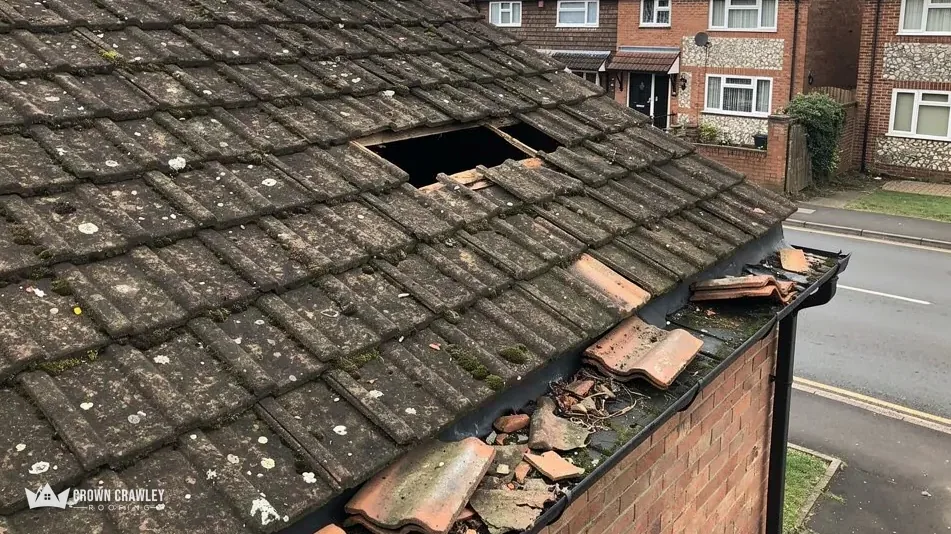
Cracks, frost damage, loose edges
Tile-hung wall
Hanging tiles tight to the wall
Chimney
Brick pointing and flaunching whole
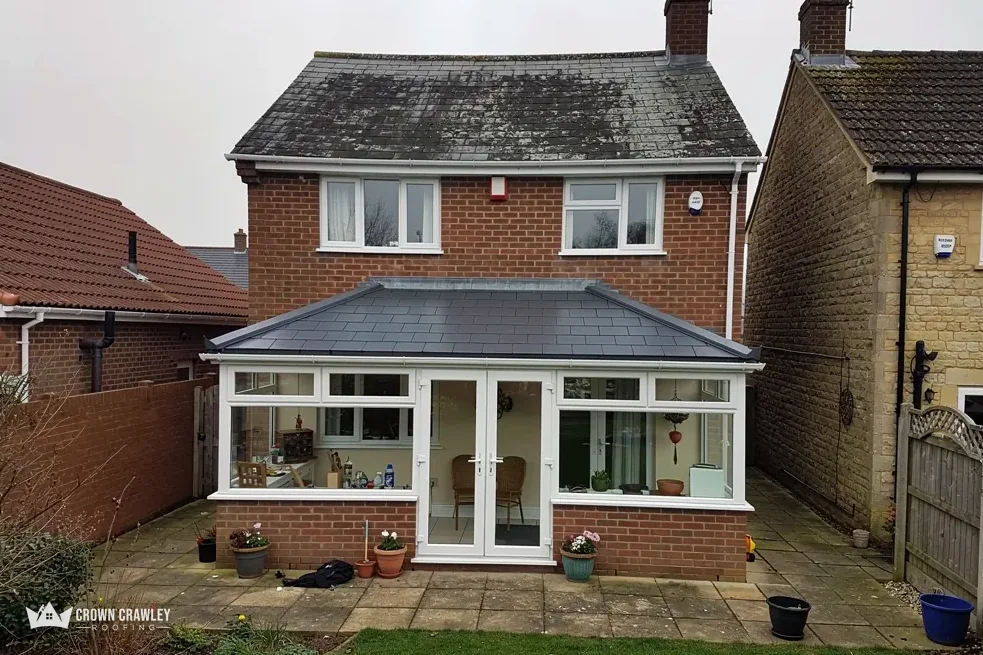
Rear of a brick house with a glazed extension and slate-effect roof

Is my Guildford roof slate, clay or something newer?

That depends on the building, not the postcode, so we climb up and look rather than guess from the pavement. Natural slate splits into thin, slightly uneven layers with a dull edge, while fibre-cement and composite slates look flatter and more even. Hand-made clay shows a slight wobble across the face, where a machine-made tile is uniform. Each covering fails in its own way. A slate slips when its fixing gives way, and a clay tile can crack where frost has worked into the face. You receive close photographs of your own slates or tiles, so the cause is visible to you before any figure is mentioned.

How long should slate and clay last?

The Confederation of Roofing Contractors says well-maintained slate can last 100+ years. Marley quotes a Building Research Establishment minimum of 60 years for clay tile, and buildingconservation.com cautions that for old peg tile the figure is clearly not a reliable guide. Both numbers describe the typical case and neither is a promise. A roof showing its age therefore tells you little by itself, and the answer may be a handful of replacement slates, a renewed run of battens (the timber strips the slates or tiles hang from) or a patch of underlay, the waterproof layer beneath the covering. Tile-hung walls add a detail of their own, because the point where roof meets hanging tiles needs a tight flashing, and any loose hanging tile lets water in behind. Our pitched roofing page explains how we repair a slope without stripping it.

Keep reading

Slipped slates are worth attention early. Water that gets under the covering travels along the battens and rafters before it appears as a stain, so the damp patch indoors can sit some way from the slate that let it in. Our survey follows the path of the water as well as the visible fault.

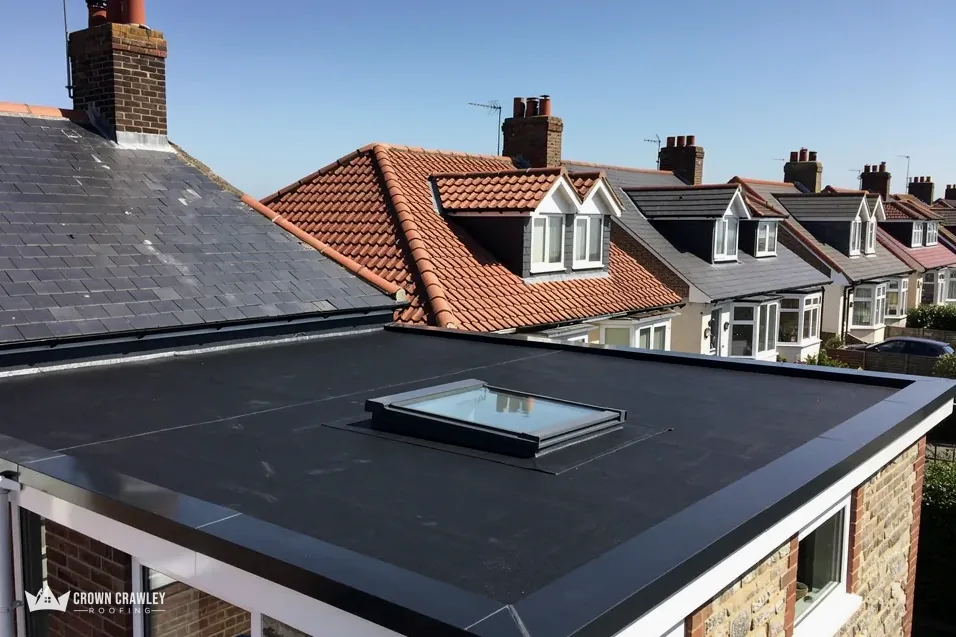
Black flat roof with a rooflight on a house extension

Stage 02 · Permissions

Roofs inside Guildford's conservation areas

With over 1,000 listed buildings in the borough, the first question on some Guildford roofs is who must agree before work starts.

Guildford Borough Council says its borough holds over 1,000 buildings on the statutory list and 40 conservation areas. The town centre area, shared with the Wey and Godalming Navigations, is the one that takes in the roofs the appraisal describes. Whether your house falls inside one, outside one or on the boundary, our survey starts the same way: we photograph what is there, note the covering and the details, and write the findings down.

Can a conservation area roof be re-covered in the same material?

Section 55(2)(a) of the 1990 Planning Act puts works that leave a building's outward look materially as it was outside the definition of development. That is why matching slate for slate, or clay for clay, is the simplest course. A change of material, pitch or outline is another matter, so put it to the planning officers at Guildford Borough Council in writing before you order anything. Our answer on re-roofing in a conservation area lists the questions worth asking them.

Words you may meet

Like for like
A repair that copies the existing roof
Listing
Official record of a building's special interest
Faculty
Church of England's own consent route
Roofscape
The pattern of roofs seen together

What changes when the building is listed?

Listed building consent sits between a listed roof and any change reaching its special character, and a roof counts as much as a wall. Take the Church of Holy Trinity, which is Grade I and still holds services as a parish church under the Church of England: roof work there goes through the faculty system instead. The example shows how the route depends on who owns a building and what it is used for, which is why we ask early. For a house, the planning officers are the first call. Our survey photographs then describe the slates, tiles, lead and chimney work in detail, so any application can be written around the roof as it truly stands, and a matching repair can be specified down to the tile size and fixings.

Matching slate for slate or clay for clay keeps the roofscape the council describes.

Brick chimneys feature in the appraisal's account of Quarry Street, and a stack is often among the first parts of an older roofline to need attention. The brickwork, the pointing and the sealed joint at its foot all age at different rates, and a leak at the foot of a stack can look like a leak in the slope. Our chimney repairs page explains what we check on a stack. Where a chimney meets the slope, lead flashing seals the join, and a national cost guide puts the life of lead flashing at over 80 years, which is a useful figure to hold against any suggestion that a stack needs rebuilding when only its flashing has failed.

Stage 03 · On site

Guildford scaffold licences and sign-off

Scaffold beside a Guildford road or footway needs a Surrey licence, and the borough council has its own building control team.

Most roof jobs generate very little paperwork, because a like-for-like repair behind your own front boundary needs none. The picture changes once a scaffold has to be set up beside the road, or the repair turns into a re-roof. Both situations are worth understanding before you sign anything, because they affect the date work can start.

What does a Guildford scaffold licence involve?

Scaffolding that obstructs a road or footway falls under the highway authority's licence, and for Guildford that authority is Surrey County Council. Surrey asks that the application arrive at least 10 working days before your preferred start, and its fee is £208 per 28 day period. Surrey leaves the applicant unnamed, so on your job we agree that with the scaffolding firm before a date is booked. Where every standard fits on your own forecourt or lawn the question disappears, because a scaffold standing wholly on private ground is not regulated as highway. Whatever you are quoted, check that the total covers scaffolding and VAT, because a price that leaves them out is not the price you will pay. Narrow streets and shared access may call for a closer conversation, and the survey is where we bring that up, rather than on the morning the scaffold lorry arrives.

Before a Guildford job starts

Planning
Guildford Borough Council
Building control
Guildford's own service
Scaffold licence
Surrey County Council, highway only
Lead time
At least 10 working days
Listed roofs
Consent before any change
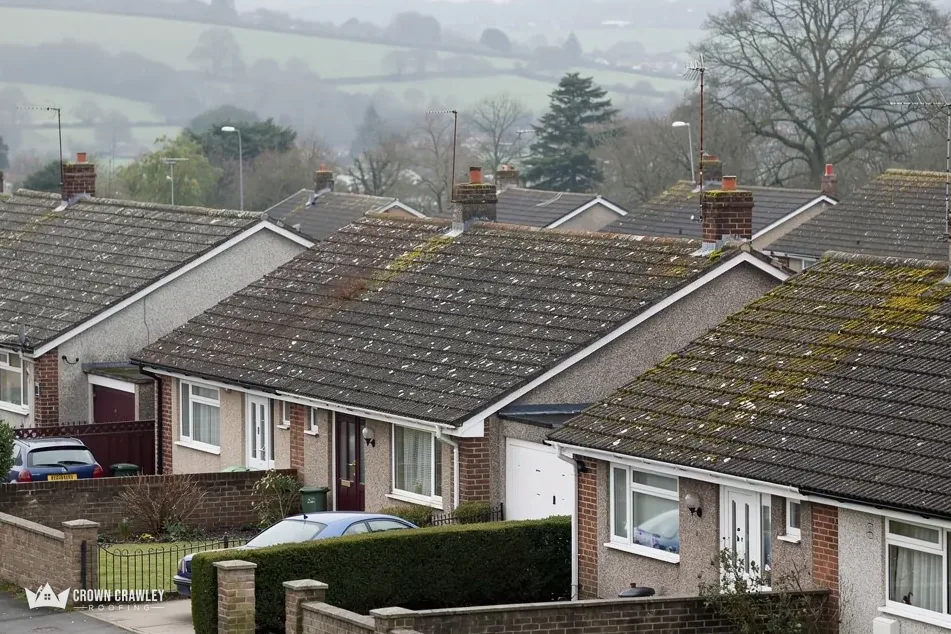
Terraced bungalows with grey tiled roofs along a cul-de-sac

Could swapping slate for tile on a Guildford roof need approval?

The Planning Portal sets two limits for skipping a building control application: under 25 per cent of the building envelope and under 50 per cent of the roof. Separately, a new covering that would weigh 15 per cent more than the old one, or perform differently in a fire, brings approval into play, and that matters if anyone proposes swapping slate for a heavier tile. Guildford runs its own building control, a service it describes as not for profit, independent and impartial, so put your specific job to them. For a full strip and re-lay, our roof replacement page shows how the work runs from stripped battens to the final ridge.

On any size of job we explain what will happen each day, keep the access safe and carry the waste away. A good first step is a close photograph of the slates, tiles or tile-hung wall that worry you, sent with your postcode, so that the survey can begin with the right part of the roof. If a chimney or a patch of lead sits near the fault, mention it, because those details change what we bring up the ladder.

Slate, tile and licence questions in Guildford

Is Welsh slate on a Guildford house worth repairing before replacing it?

Frequently it is. The Confederation of Roofing Contractors says well-maintained slate can last 100+ years, so a few slipped or cracked slates, or a run of rusted fixings, are repairs rather than reasons to strip a whole slope. The survey photographs show which slates have failed and why, and the written price covers whichever route is sensible for your roof.

Who looks after the join where a Guildford roof meets tile-hung walling?

The roofer does, because the flashing at that join sits partly under the roof covering and partly against the wall. Loose hanging tiles let water in behind, so we check both sides together and photograph the join from above and below. If the wall is listed or in the town centre conservation area, speak to the planning officers before changing its look.

Do I need listed building consent to repair a Guildford roof?

That depends on what you change, and the council decides. Listed building consent concerns work touching a listed building's character. A like-for-like repair may leave that character alone, but put the question to the planning officers at Guildford Borough Council in writing before work starts, then keep their reply together with the survey photographs of your roof.

When could scaffold stand on a Guildford road?

Surrey County Council asks for 10 working days' notice, and the fee is £208 per 28 day period. Who submits the application is not stated, so we settle that with the scaffolding firm and then build the start date around that licence. Poles standing wholly on your own plot, such as a front drive, fall outside the highway rules, so no licence applies there and the start date is easier to set.

Quote for a Guildford roof

Say whether your roof is slate, clay or tile-hung, attach a photo and your postcode, and we will offer a time to visit.

01293 974253

10-year workmanship guarantee, in writing.

Call Get a free quote