Roofers in West Clandon

Village roofs strung along one road below the chalk.

West Clandon was recorded in 1911 as a village scattered along a north-south road, with old cottages below Clandon Downs. Part of it is a conservation area, so we check what applies first.

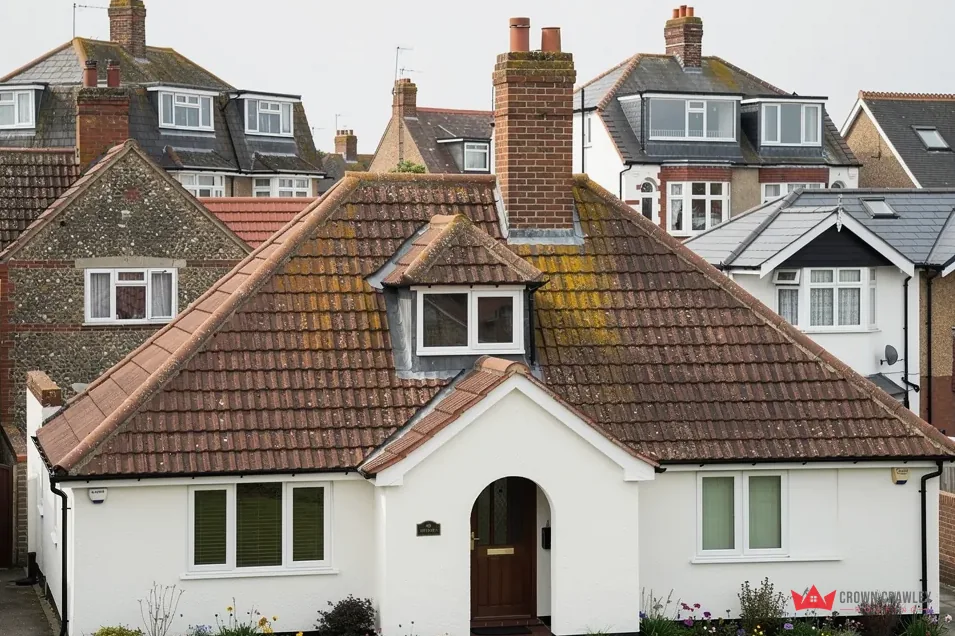
White rendered bungalow with a hipped tiled roof and dormer

What covers West Clandon homes

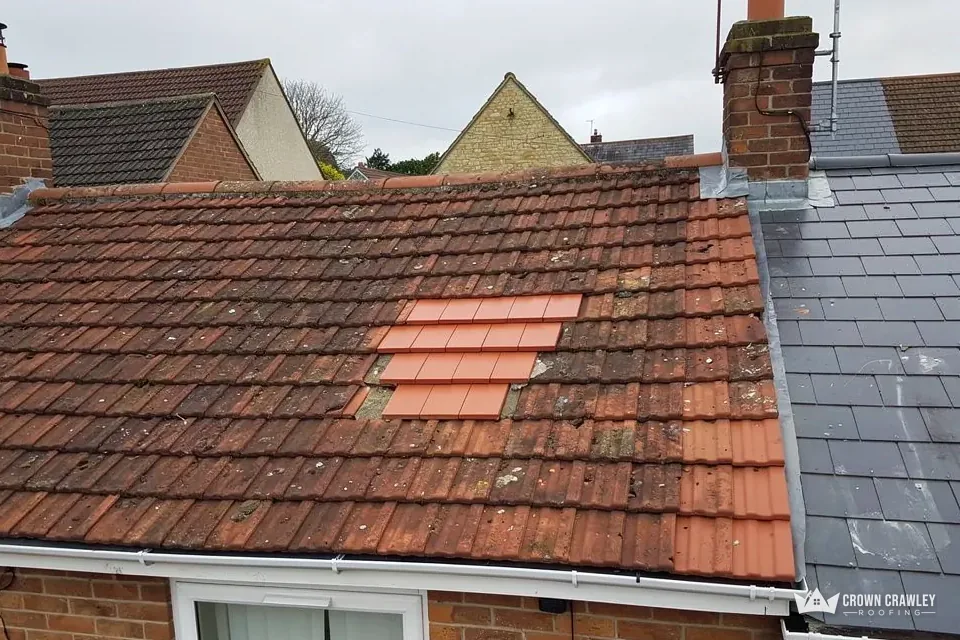
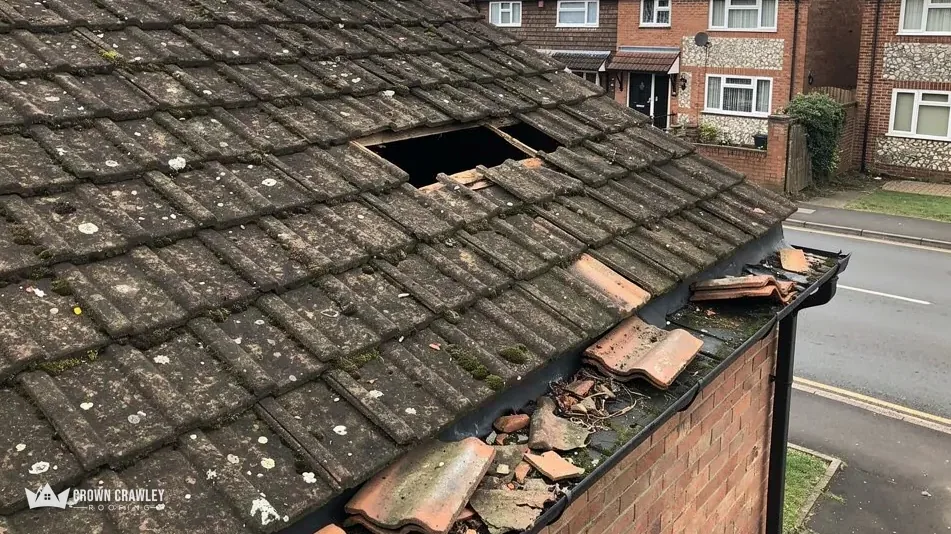
Roof slope with a patch of replacement tiles beside a slate roof

Old cottages along the road

The Victoria County History saw a village scattered along a north-south road, with old cottages below the chalk of Clandon Downs. Brownlow Cottage and Cranley Cottages now carry Grade II listings.

Row of older cottages with tiled roofs

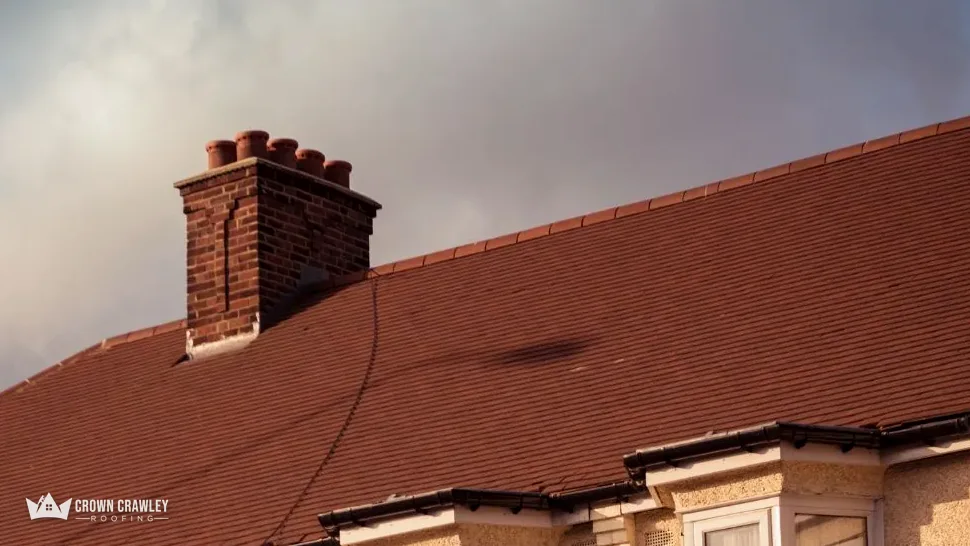
Brick chimney with lead flashing on a clay tiled roof

A listed barn

A barn north of Summers is listed Grade II. Big agricultural roofs have long spans and open eaves, so access and weather cover are planned well ahead of any stripping.

Barn roof with large tiled slopes

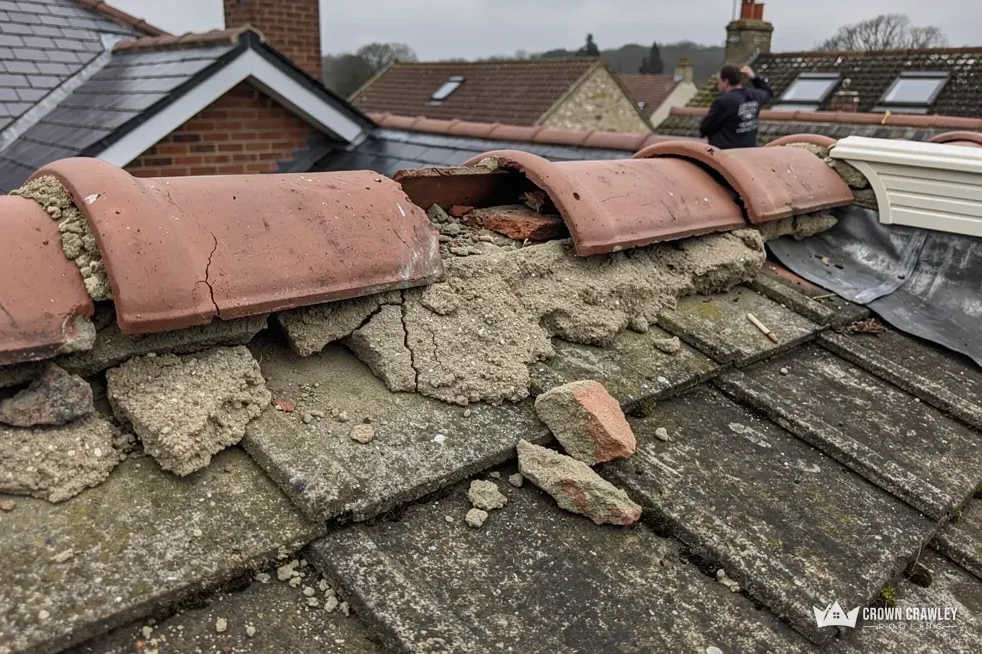
Crumbling mortar and cracked ridge tiles on a roof

A protected stretch of the village

The West Clandon conservation area covers part of the village. If a repair would alter how a roof looks from the road, Guildford's planning team is the first call, ahead of any order for tiles.

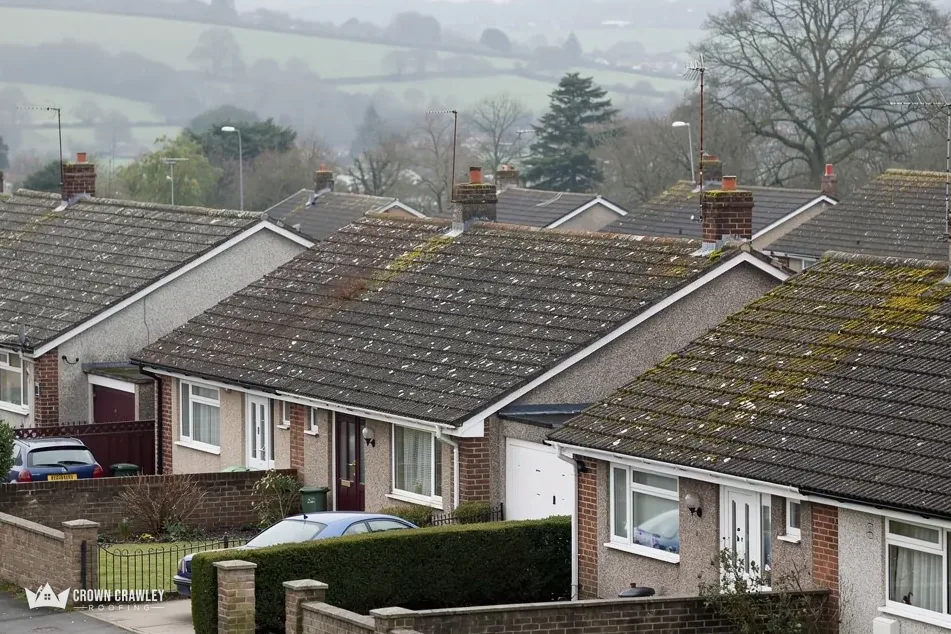
Village roofs seen from a lane

West Clandon, east of Guildford

Map of West Clandon and the neighbourhoods around it, with Crawley for reference.

West Clandon is a small village on the Epsom road, below the chalk of the North Downs, with 1,230 people in the 2021 Census.

Distance
25.5 road miles from Crawley, to the north-west
Drive
About 46 minutes
Council
Guildford Borough Council and Surrey County Council
Planning authority
Guildford Borough Council
Conservation area
West Clandon
Get a free quote

Our West Clandon roof diary

Roof work in a village on the Epsom road

Three short chapters on planning a job in a long thin village, the listed buildings along the road, and which council rules apply to bigger work.

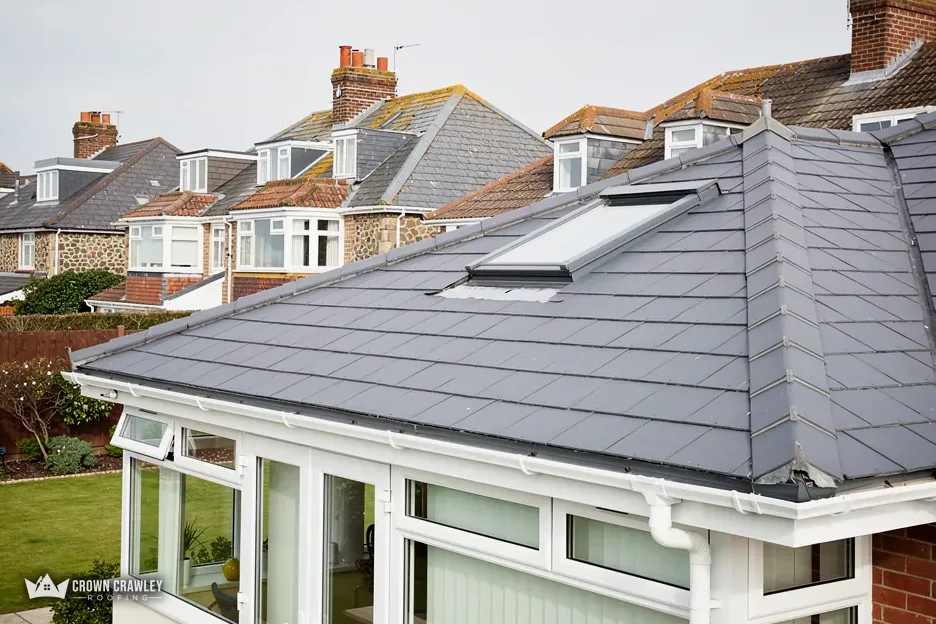
Slate-effect roof over a conservatory on a suburban house

Stage 01 · First look

A village built along one road

A 1911 account describes West Clandon as scattered along one road, and that shapes how we plan access, materials and waste.

The Victoria County History in 1911 found West Clandon scattered along a north-south road beneath the chalk of Clandon Downs, with many old cottages. The Guildford to Epsom road through Clandon became a turnpike in 1758 and was diverted out of the narrow sunken course of the older road, and Clandon station opened in 1885. In the 2021 Census the built-up area counted 1,230 people. A village that size has little spare ground for a builder's yard, so a roof job here is largely a question of planning the space around the house.

Planning a village job

Access
Drive, side path or lane verge
Skip
On the plot, not the road
Materials
Delivered when the slope is ready
Neighbours
Told before poles go up
Weather cover
Sheeting on stripped slopes nightly

How do you work on a village roof with no yard?

We start from the plot. A drive or a side path decides where the tower or scaffold can stand, where the skip sits and how tiles reach the slope. A lane without a pavement leaves less room than a street of terraces, so we keep vans where they will not block the road and tell neighbours before any pole goes up. Materials arrive when the slope is ready for them, not a week early, and waste leaves the site as we go rather than piling up in the garden until the last day.

What happens to a stripped slope overnight?

It is made watertight. Where we open a slope, whether for a few courses of tiles or for a whole re-roof, the bare area is covered before we leave each evening, with battens and underlay or heavy sheeting held down properly. A village under a chalk ridge can get wind and showers arriving fast, and a half-stripped roof is exactly the moment that matters. If the forecast is poor, we do not open a slope we cannot close again before dark. On a village road that also protects the neighbours, because a loose sheet in a gale is a hazard to everyone nearby, and the plan for tying down tarpaulins is agreed at the start of the job and not improvised when the wind rises.

Keep reading

Do old cottage roofs call for a different approach?

Often, because the timber frame underneath has moved over the years. The 1911 record speaks of many old cottages, and we cannot know from the road which ones still have their first timbers, so we check the line of the ridge and the wall plates, the timbers that carry the rafter feet, before deciding how to cover a slope. Our pitched roofing page explains how we treat tiles, battens and underlay, and what a patch can and cannot achieve.

Terraced bungalows with grey tiled roofs along a cul-de-sac

Stage 02 · Consent

Listed cottages, a barn and the stores

West Clandon has several Grade II listed buildings, so the question on an old roof is who has to approve the work.

West Clandon's listed buildings include the barn north of Summers, Brownlow Cottage with West Clandon Stores, and Cranley Cottages with Cranley Lodge, all at Grade II. Clandon Park, the Onslow family's house, was built in 1731 by the second Lord Onslow to designs by Giacomo Leoni and was recorded in 1911 as red brick with stone dressings. We say nothing about what any of these roofs are covered with, because that belongs in the list entry and the survey, not in guesswork from the road.

Does a barn roof follow the same rules as a house?

A listed barn is protected like any other listed building, so changes to its roof need the council's consent if they would alter its character. Barns also offer two things that house roofs rarely do: long unbroken slopes, where a patch shows from the road, and open timber voids under the covering, which birds and bats find attractive. A wild bird's active nest in a barn is shielded by the Wildlife and Countryside Act against intentional damage, and the government's advice on bats warns that mending a roof can disturb a roost. We look for droppings, old nests and gaps used by birds before anything is lifted, and if we find signs of either, the job waits while we decide with you what to do.

What if my house sits beside a listed neighbour?

Then ask the council whether your property is covered as well. A building can count as part of a listed property because of where it stands or how it was used, even if it has no entry of its own. Planning officers can settle that quickly from the address. We would rather you asked than assumed, because consent for one house does not carry over to the next. Our guide to re-roofing in a conservation area lays out the steps we follow, and they apply to a listed roof as well.

On an old roof the chimney is often the part that asks for help first. Our chimney repairs page explains flashings, the mortar collar that holds a pot in place, and the brick joints, and how we judge whether a stack can be mended or has to be rebuilt. Each of those parts is photographed close up from the ladder, and those close-ups reach you ahead of any figure.

Words on a village listing

Grade II
Listed because it is nationally important
List entry
The national list's entry for one building
Consent
Council approval before altering a listing
Roost
A protected resting place for bats

Flashings deserve a second look on any older chimney. They are the strips of lead or metal that seal the stack to the slope, and they are the first thing a gale lifts. A flashing that has pulled out of its joint lets water run down the inside of the chimney breast, where it shows as a brown stain on the bedroom wall a long way from the cause.

Stage 03 · Permissions

Guildford, Surrey and the scaffold licence

Guildford Borough Council handles planning and building control, and the county decides on scaffold licences.

Two councils matter here. Guildford Borough Council decides planning applications and has its own building control service, and Surrey County Council, as highway authority, licenses anything built on the road. The county matters most when a house fronts the Epsom road or one of the lanes off it, because poles on the carriageway or footway need a licence, and the licence comes with a timetable.

What does Surrey ask for?

Surrey's published terms put a scaffolding licence at £208 for each 28 day period, with the renewal at the same price. Surrey asks for the form in at least 10 working days before work is meant to begin, and states that each one is processed within 10 days. The fee cannot be refunded, and the layout drawing has to be a genuine plan, not one produced by artificial intelligence. For an unsafe structure, Surrey asks you to ring about an emergency licence instead. Whoever must apply is not stated, so we ask the scaffolder who will put their name to it and agree the dates together.

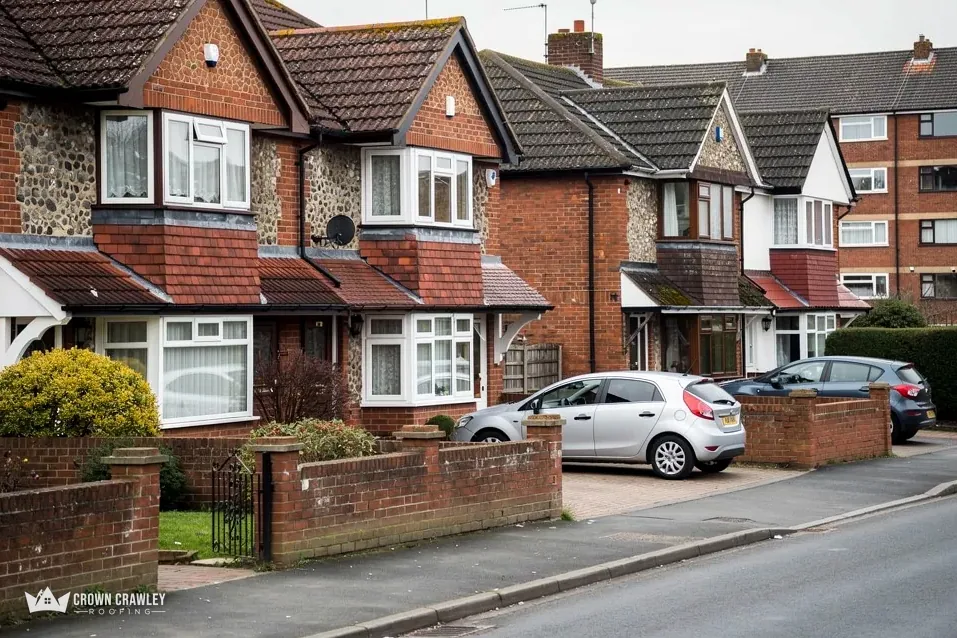
Brick semi-detached houses with tiled roofs and parked cars

Surrey scaffold licence

Fee
£208 per 28 day period
Renewal
Same fee again
Apply
10 working days before start
Processing
Within 10 days
Own drive
Measured at survey

Can the poles stand on my own ground?

Often, and in a village that can be the better plan. The county only licenses frames that stand on its roads and footways, so poles set up inside your gate avoid that ten-day wait, though neighbours deserve a warning and a shared drive may have its own rules of use. If the front garden is deep enough for a tower and a skip, the road stays clear and nobody waits on a council timetable before work begins. We measure the garden at the survey and say which arrangement fits, so the quote reflects the real set-up from the beginning and not a guess.

Will a bigger West Clandon job involve Guildford's building control?

The Planning Portal gives the yardstick for building control. Under 25 per cent of the building envelope and under 50 per cent of the roof means approval is normally not required, and a heavier covering whose extra load reaches 15 per cent changes that. Guildford's building control team hears about anything larger than a repair before we fix a date, and Guildford publishes a number for reporting dangerous structures, which we would use if a roof or chimney posed a risk to passers-by. To start, send photographs of the slope and the nearest gutter, with your West Clandon house name or number.

Roof queries from West Clandon

Can an old West Clandon cottage roof be patched without a re-roof?

Sometimes. The frame under an old cottage may have moved, so we check the ridge line and wall plates first. If the timbers hold and the covering is still sound across most of the slope, we replace broken tiles, renew failed battens and refix the ridge. If the frame has dropped, we explain what a re-roof would involve.

Will Guildford have a view on new tiles for my West Clandon cottage?

Possibly. West Clandon's conservation area is drawn round one part of the village, not all of it, so the answer turns on your address. Guildford's planners will tell you whether yours is inside the line. If your house is inside it, speak to the council before altering a roof's appearance, and mention it to us at the survey.

What would a scaffold licence outside my West Clandon house cost?

Surrey County Council's published rate is £208 for 28 days, with renewals at the same fee, and applications should reach it at least 10 working days before the start. The fee is not refundable. A deep front garden or drive may hold the poles instead, leaving the Epsom road clear and skipping the licence wait.

What should I check before work on a village barn roof?

First find out whether the barn is listed, because consent may be needed. Then look for old nests and signs of bats. A nest is protected while a bird is using it or building it, and a bat roost is protected by law. Tell us what you have noticed, so the survey begins in the right corners of the roof space.

Your West Clandon roof, priced

Send pictures of the slope and nearest gutter with your house name, and say if it is listed, so the survey starts well.

01293 974253

10-year workmanship guarantee, in writing.

Call Get a free quote