Roofers in West Horsley

Roofs across a scattered Surrey village of old farms and a manor.

West Horsley is a spread-out Surrey village on chalk and clay, with listed farm buildings and a conservation area. We look at each roof first, share what we find, then quote one total.

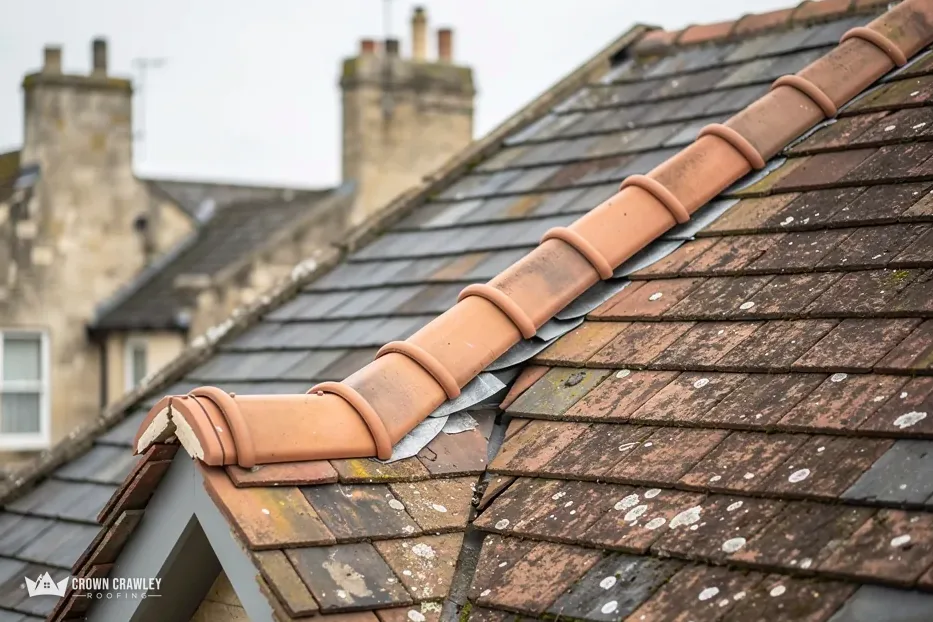
Clay ridge tiles along the hip of a weathered tiled roof

What West Horsley homes are roofed with

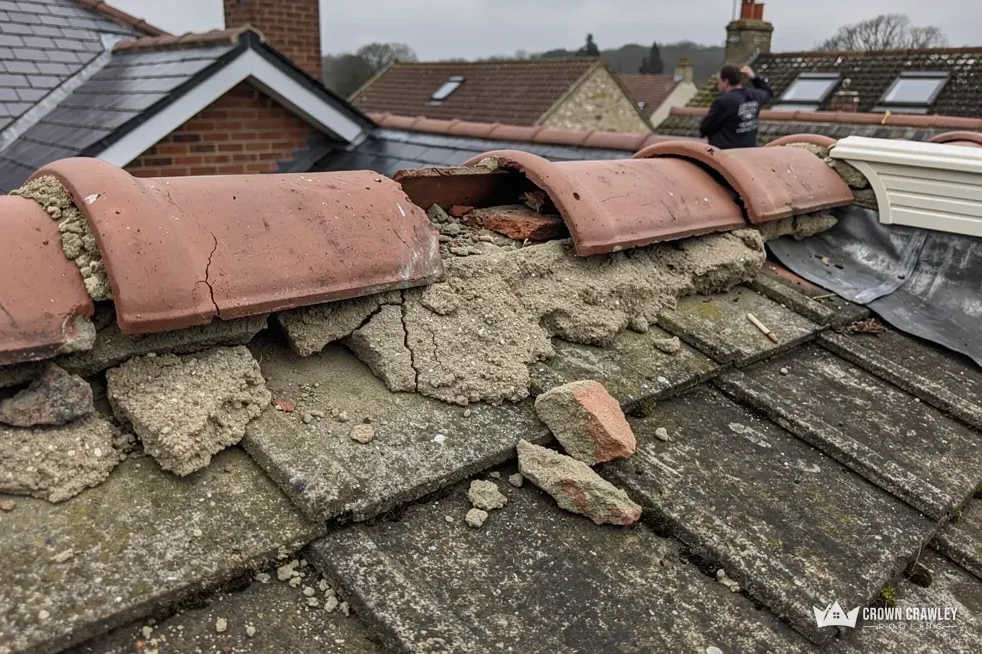
Crumbling mortar and cracked ridge tiles on a roof

A much-altered red-brick manor

West Horsley Place is a large red-brick house, much altered, with parts at the back that may be 16th-century and a front rebuilt in 1749. A roof altered over centuries has to be read slope by slope.

Brick house with tiled roof slopes

New slate-effect roof on a bungalow with white fascias and guttering

Listed farmhouses and barns

The village has listed buildings, among them Barcombe Farm House, a barn at Pincott Farm and a barn and dovecot at Hammonds Farm. A listed roof job starts with a call to the council.

Old barn roof with tiles

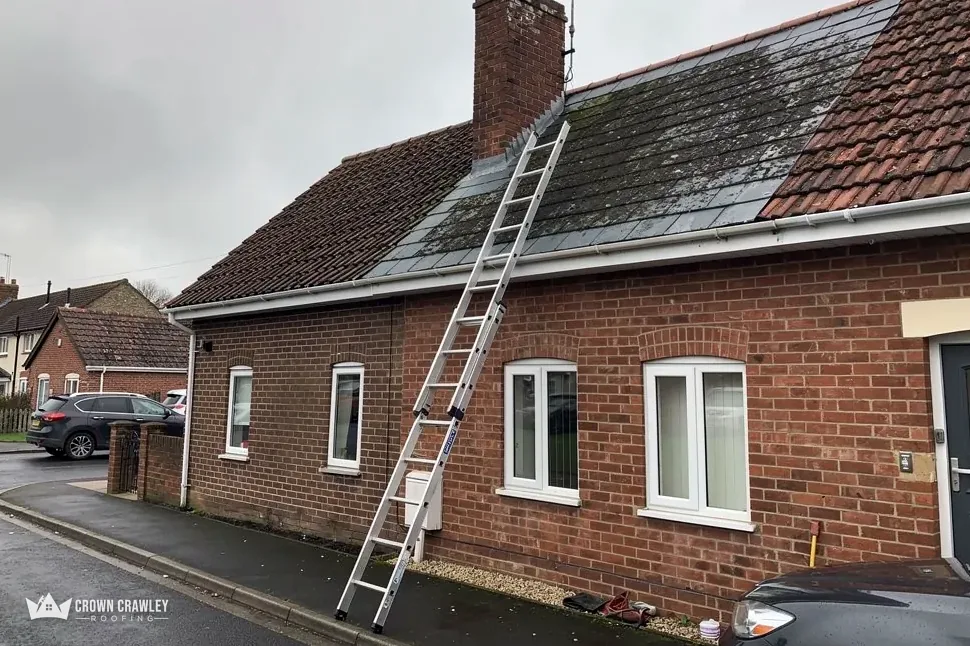
Brick bungalow with a ladder leaning against its tiled roof

Houses scattered along the lanes

Homes here are scattered rather than set in tight streets, with a few clustered at Horsley Green. Long drives and big gardens change where a scaffold and a delivery lorry can go.

Tiled house set back from a lane

West Horsley, six miles from Guildford

Map of West Horsley and the neighbourhoods around it, with Crawley for reference.

West Horsley is a scattered village six miles north-east of Guildford, its parish reaching from the chalk downs to the London Clay.

Distance
25.9 road miles from Crawley, to the north-west
Drive
About 44 minutes
Council
Guildford Borough Council and Surrey County Council
Planning authority
Guildford Borough Council
Conservation area
West Horsley
Conservation area
West Horsley (part of the village)
Population
1,377 (Census 2021, West Horsley built-up area)
Get a free quote

Notes on West Horsley roofs

Old farms, a conservation area and the roofs between

Three short chapters on a village spread across two kinds of ground, the listed roofs among its farms, and what Guildford asks of a job once it outgrows a few tiles.

Stage 01 · Background

A village on chalk and clay

West Horsley's parish runs from chalk downs to London Clay, its houses scattered, so no single street tells you what to expect.

The Victoria County History describes West Horsley as a scattered village. The church stands just on the edge of the chalk, the rest of the settlement lies on the next soil, and a few houses cluster at Horsley Green. For us that description has one practical meaning: there is no single street, estate or decade to point at. The houses went up at different times for different owners, and their roofs tell different stories, so a neighbour's advice about their own roof may not fit yours.

What do we do when there is no pattern?

We start from the roof itself. Before pricing anything we look at what covers it, how the ridge and the edges are fixed, what the chimney flashings are made of and what the roof space looks like from inside. Houses of quite different ages can sit a short stroll apart along these lanes, so guessing from the postcode would be a mistake. Your survey photos show what we saw on your roof, and the written price covers that roof alone, with one total figure at the end.

What a West Horsley survey covers

Covering
Tiles, slates or other, as found
Roof edges
Ridge, hips and verges fixed firm
Chimneys
Flaunching, pots and flashings sound
Roof space
Timbers dry, eaves air gaps open
Drainage
Gutters running and downpipes clear
Dormer window with white cladding in a clay tiled roof

Does the ground under a house affect its roof?

Indirectly. A house on clay can shift a little as the seasons change, and a roof that has moved may show it first as a cracked ridge bed, a hip tile that has slid, or a gap where a lean-to meets the main wall. That is worth watching rather than worrying about. We look for fresh cracks in mortar and for gaps that have opened at joins, then tell you whether the movement looks settled or still going, and how long a repair is likely to hold if it is still going.

Age comes into it too. For clay, Marley passes on a Building Research Establishment figure of at least 60 years; for concrete it suggests about 60 years and says plainly that this is no guarantee. Neither is a deadline for your roof, and neither says anything about a roof that has been patched or re-bedded since it was built. What counts is whether the battens, nails and underlay are still doing their job. Our pitched roofing page describes the inspection we carry out on those parts, and what each finding means for the decision between mending and re-covering.

Rear of a brick detached house with a tiled roof and garden

Stage 02 · Listed buildings

Barns, farmhouses and listed roofs

Listed farm buildings carry extra rules, and they decide what a roofer may do before any tile is lifted.

West Horsley has several listed buildings on its farms. Historic England lists Barcombe Farm House at Grade II, from 14 June 1967, and the village also has a barn five metres north of Pincott Farm House and a barn and dovecot at Hammonds Farm among its listed entries. For buildings like these the roof forms part of what is listed, and that changes the order in which things happen.

What do we do on a listed roof?

We begin by asking what the building is listed for and what its roof is made of. A listed house still has its permitted development rights for roof work, but works to a listed building's character need listed building consent under section 7 of the Planning (Listed Buildings and Conservation Areas) Act 1990. A survey on a listed farm building therefore ends with advice rather than a start date. We set out what we found, what a sympathetic repair would involve, and the person to contact at Guildford Borough Council before anything is booked.

Words on an old barn roof

Rafter
Sloping timber that carries the covering
Purlin
Horizontal beam supporting the rafters
Batten
Strip of timber the tiles hang from
Eaves
Bottom edge where the roof overhangs
What about a barn that is now a home?

A converted barn is a different problem from a farmhouse, because its roof covers a wide span, often held up by few internal walls. Water gets into old oak and softwood in slow, hidden ways, which is why the visible tiles are rarely the whole story. From inside we check the rafters, the purlins and the battens for staining, soft patches and daylight at the joints, then from outside we match what we saw to a slipped tile, a failed valley or an open verge. If the trouble lies in the covering, repair is usually enough. If it lies in the timber, the conversation changes and we spell it out.

A listed roof is a conversation with the council before it is a job for a roofer.

Do old coverings have to be matched?

On a listed building the council may want the existing material or something very close to it, so we note the tile type, colour, size and any peg holes before we price. Clay and natural slate both age with the roof, and a patch in new material can show for years. Keeping what can be kept is often kinder to the building and the bank balance than stripping a sound slope.

If the building is listed, the council's answer comes before ours, and our roof replacement page follows a full strip and re-cover from the first scaffold board to the last.

Stage 03 · Permissions

Guildford's rules and the village conservation area

West Horsley has a conservation area and Guildford Borough Council handles planning and building control, so a bigger job starts with a few checks.

For plain repairs none of this arrives. Refitting a handful of fallen tiles leaves the house unchanged to the eye, so nothing needs approving. Questions begin when work spreads over most of a slope, when the covering becomes another material, or when your address sits inside the conservation area. A new dormer, roof window or chimney alteration is another trigger, and each has its own checks.

How does the West Horsley conservation area touch a roof?

The national planning dataset shows a West Horsley conservation area, drawn from council boundaries and covering part of the village. Not every house is inside it, and from the road we cannot tell. Guildford Borough Council's planning team can confirm your address. Inside a conservation area the appearance of a roof is judged closely, so a new material, a different shade of tile or a changed pattern is something to raise with the council early. Our answer on re-roofing in a conservation area covers the usual points.

Checks as a job grows

Planning
Guildford Borough Council
Approvals
Guildford's own building control
Conservation
West Horsley area covers part
Road scaffold
£208 per 28 days
Surrey lead time
10 working days or more
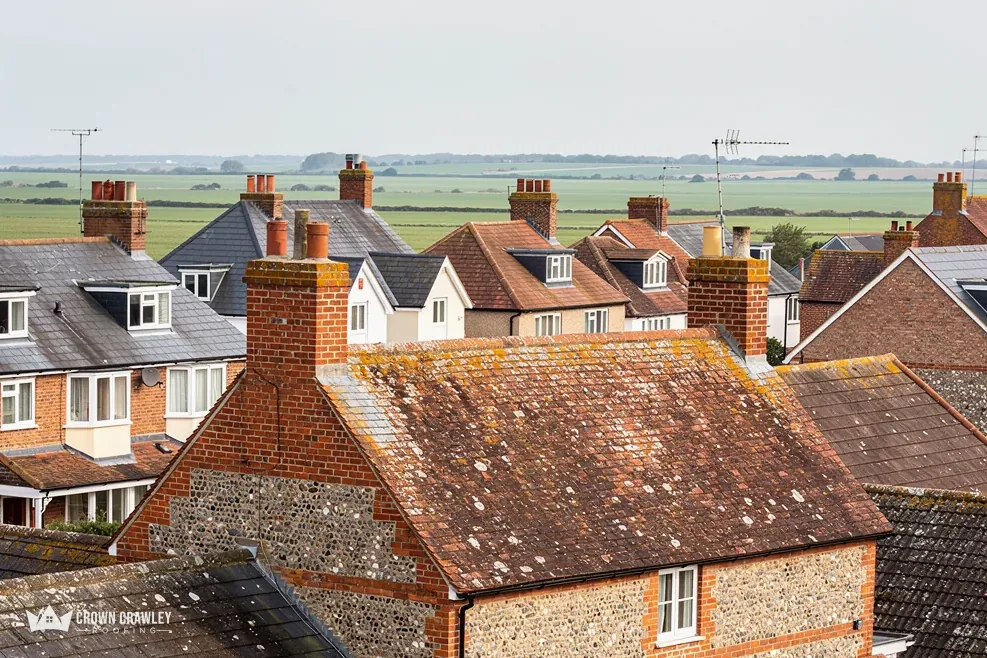
Flint-walled house with a mossy clay tiled roof overlooking fields

Who checks the work and what do they look for?

Guildford Borough Council runs its own building control service. The Planning Portal's national test for re-roofing turns on two figures: an application is not normally required while the work affects under 25 per cent of the whole building envelope and under 50 per cent of the roof, the two measured together. A new covering heavy enough to add 15 per cent or more puts the job back under approval. We run through those two questions at the survey, so if your job crosses a line you hear about it in the written price before you book.

What does a scaffold on the lane involve?

Licences for this stretch of highway come from Surrey County Council, whose page asks for one whenever scaffolding goes up on the carriageway, the pavement or other highway land. Its fee is £208 per 28-day period, with applications due at least 10 working days before the start, so the lead time goes into our dates. Surrey County Council's wording reaches the public highway only. Poles planted entirely inside your boundary sit outside it, and where a house is set well back from the lane they can usually stay on your side of the hedge. If a licence is unavoidable, the scaffolder and our office settle who submits it, and you receive the planned dates in writing. Neighbours hear from us before the first pole arrives.

West Horsley: questions and answers

Can a West Horsley barn or farmhouse roof be repaired without a full re-roof?

Often a repair is possible, but a listed building changes the route. If your barn or farmhouse is listed, alteration that affects its character needs listed building consent, so we begin by surveying it and then speak to Guildford Borough Council. We explain what a sympathetic repair involves and what a full re-roof would mean before anything is booked.

Will a new tile colour be noticed in West Horsley's conservation area?

Within West Horsley, a conservation area covers one part of the village, though not every address. Give your address to Guildford Borough Council's planning team, who can say which side of the boundary it falls. It matters because a change to the look of a roof, say a new shade of tile or a different material, gets closer scrutiny inside a conservation area, so ask first, before you choose a covering.

Does West Horsley use Guildford for building control?

Yes. Guildford Borough Council runs its own building control service and is also the planning authority for West Horsley. Swapping roof tiles like for like seldom involves either body, and a wider job may involve both. Stripping most of a slope, or choosing a weightier tile, might, and we raise that on the roof itself, and the written total then makes room for it.

My West Horsley house is set back from the lane. Will the scaffold need a licence?

Often not. Where a drive or garden gives room, we keep the scaffold inside your boundary, and Surrey County Council's licence covers only scaffolding put on the public road, footway or other highway. We check at the survey where it can stand and where deliveries can stop. If any part has to stand on the highway, Surrey County Council's licence is needed, and our office sorts it out with the scaffolding firm.

Get your West Horsley roof priced

Tell us which roof or barn needs a look, your postcode, and if the building is listed, and the survey gets booked.

01293 974253

10-year workmanship guarantee, in writing.

Call Get a free quote