Roofers in Chipstead

Roofs on a high chalk ridge above the Brighton line.

Chipstead is a scattered village on a downland ridge 500 to 600 ft up. We check the fixings on its exposed slopes as closely as the tiles, then put one price in writing.

Rear of a brick detached house with a tiled roof and garden

Roofs along the Chipstead ridge

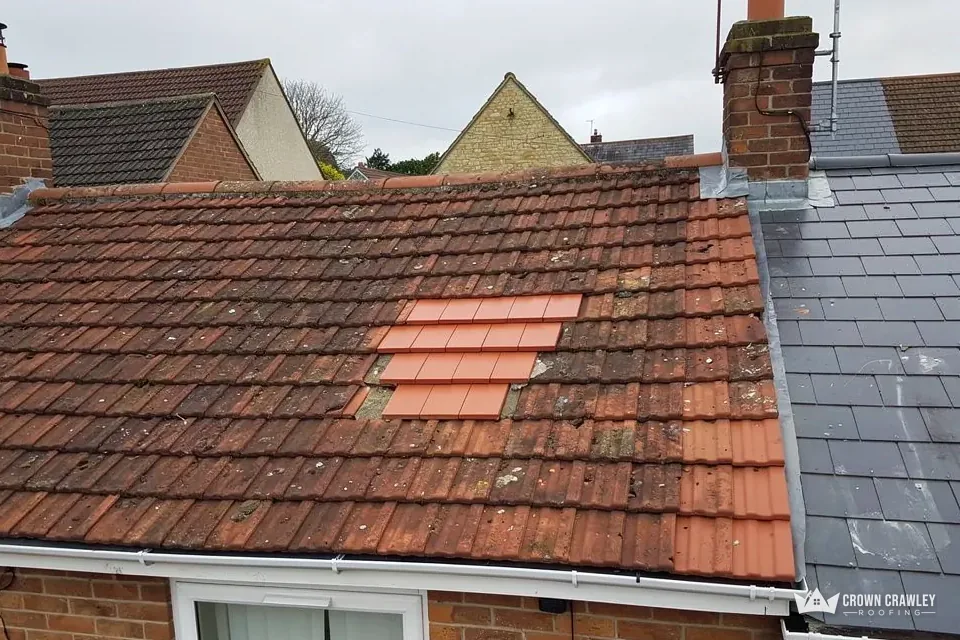
Roof slope with a patch of replacement tiles beside a slate roof

Houses spread across the hilltop

The Victoria County History found scattered houses and a farm near the church in 1911, not a tight village. With no single street pattern, we read every roof separately and never assume a neighbour's roof matches.

Pitched tile roofs among trees

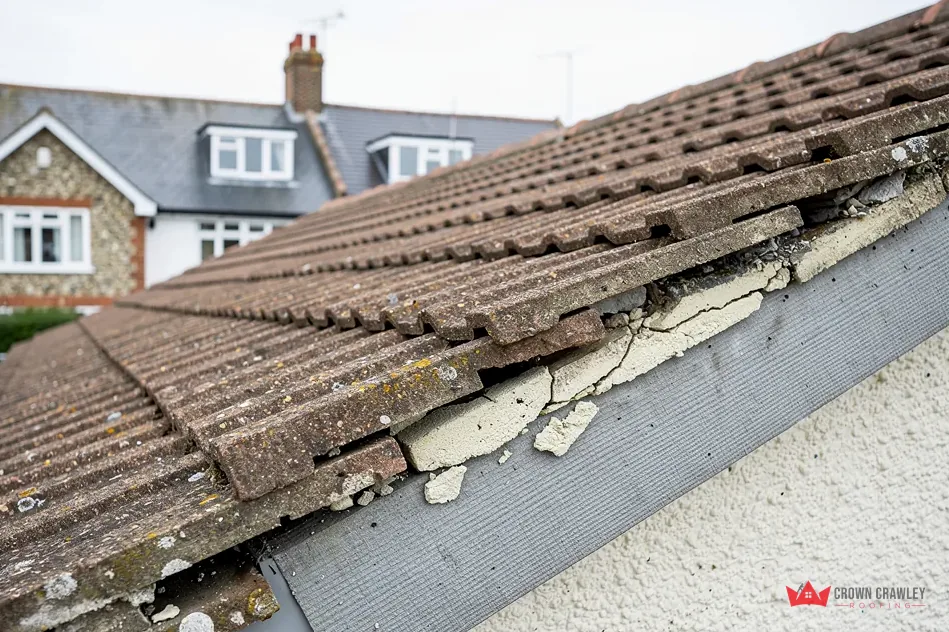
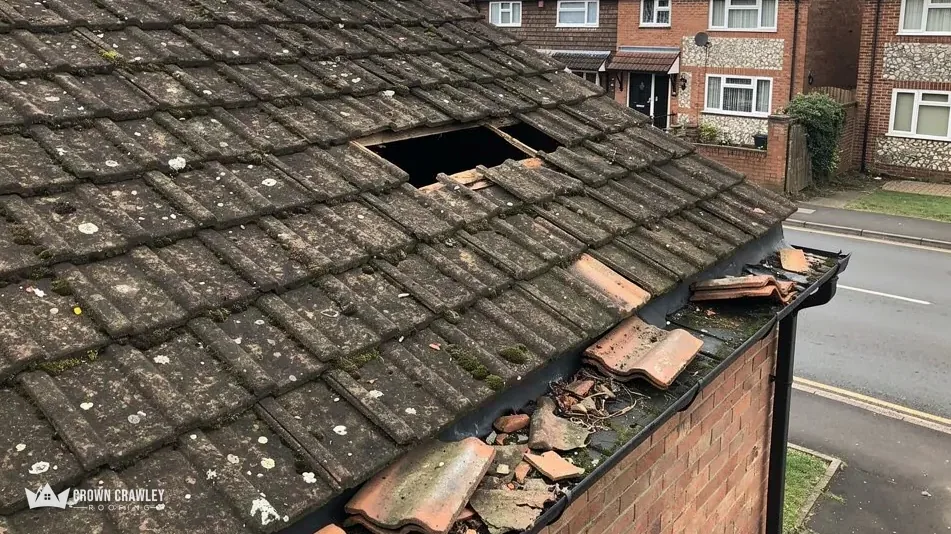
Lifted tiles and worn verge along a gable end

Ridges and verges on an open site

A roof at 500 to 600 ft stands higher than the valleys around it. We look hard at ridge and verge fixings, the parts that take the most from a gusty day.

Ridge tiles on a pitched roof

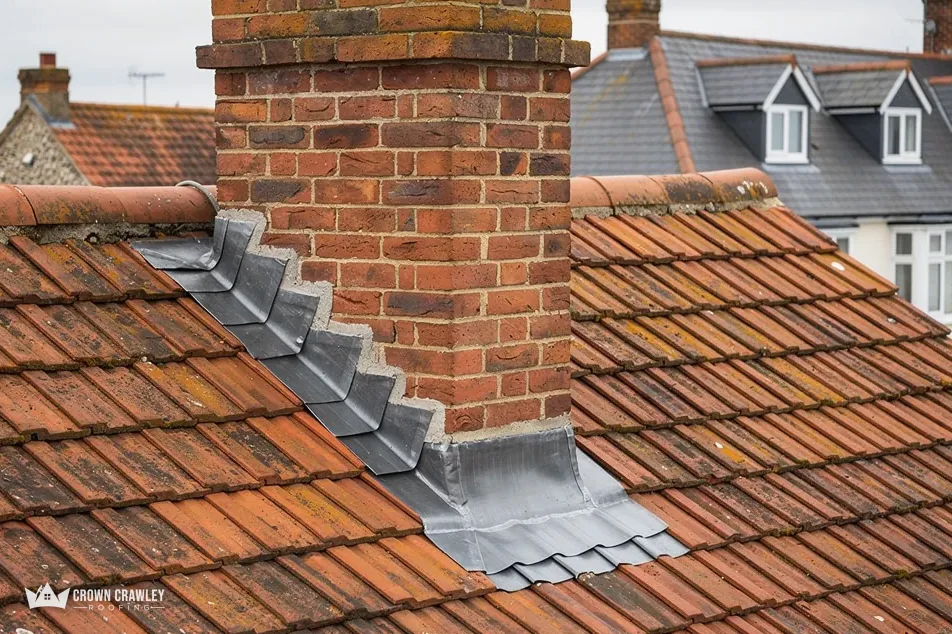
Stepped lead flashing around a brick chimney on a red tiled roof

Mugswell and the outlying homes

Mugswell, once called Monks Hole, is a hamlet about 2 miles south-west of the church. Outlying houses can be awkward to reach, so we plan access and deliveries at the survey.

Country house with a tiled roof

Chipstead, four miles north of Redhill

Map of Chipstead and the neighbourhoods around it, with Crawley for reference.

Chipstead is a scattered settlement on a high chalk ridge, between Chipstead Bottom and the dry valley that carries the Brighton line.

Distance
17.1 road miles from Crawley, to the north
Drive
About 25 minutes
Council
Reigate and Banstead Borough Council and Surrey County Council
Planning authority
Reigate and Banstead Borough Council
Built-up area population
4,519 (Census 2021)
Listed example
West Ridge, Grade II, listed 2019
Get a free quote

Chipstead: what happens when

A survey for roofs on the Chipstead hilltop

Three short chapters on the hill the village stands on, the councils that deal with a bigger job, and the fixings and access that matter up here.

Stage 01 · First look

Chalk, clay with flints and a high ridge

Chipstead sits on a downland ridge, on chalk capped by clay with flints and a large patch of sand, and that height shapes our inspection.

The Victoria County History places Chipstead on a high downland ridge, 500 to 600 ft above sea level, on chalk capped by clay with flints and a large patch of sand. Its 1911 volume went further and said the place could hardly be called a village at all. A farm stood near the church on its commanding hilltop, with scattered houses about it, and the hamlet of Mugswell lay two miles to the south-west. A century later the Census 2021 recorded 4,519 residents across the built-up area, so the houses are far more numerous now, though many still sit well apart on their own plots. The hill is the same height it always was, and a roof up here has a different day to one in a valley.

First look at a Chipstead roof

Ridge
Mechanical fixings, not mortar alone
Verge
Edge tiles clipped or well bedded
Tiles
Slipped, lifted or cracked pieces
Underlay
Whole at the eaves and laps
Gutters
Clear, level and firmly bracketed
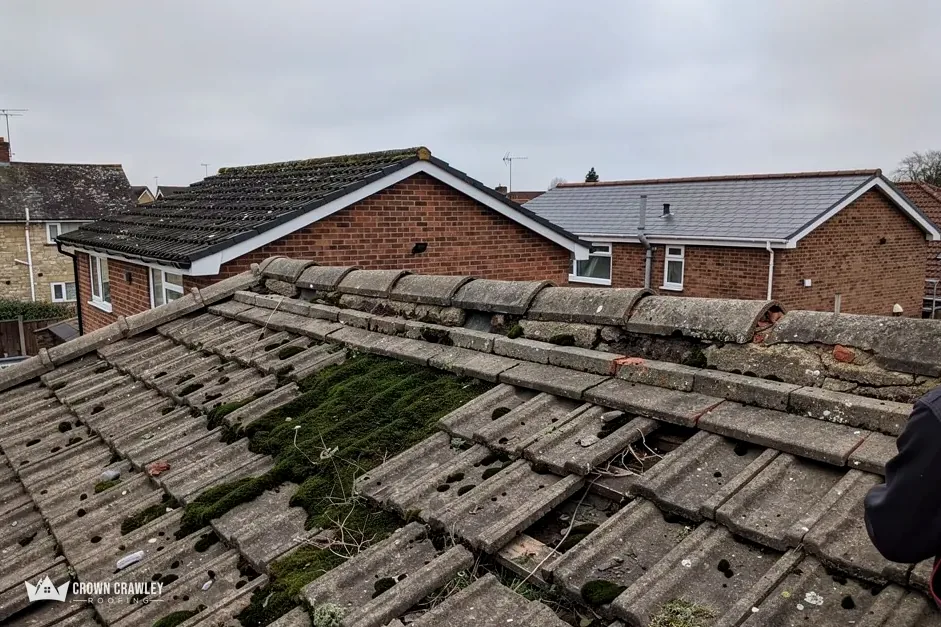
Aged concrete roof tiles with moss on the slope

Does being high up change how a roof is surveyed?

It changes what we look at first. We hold no wind figures for Chipstead and do not make any up, but a roof standing above the ground around it simply has less shelter than one in a hollow. So the parts that resist a gust, the ridge, the hips, the verge and the eaves, get our longest look. We ask whether each tile is clipped or nailed as well as bedded, whether the mortar is cracked or crumbling, and whether the underlay is flapping or torn where it meets the gutter. A slope that looks fine from the lawn can show a row of lifted tiles from the ladder, and the photos make that plain to you, with each fault circled, so the fault, and the reason it matters, is there in front of you. That is also why a quote given over the phone from the ground can only ever be a guess.

What does the standard say about fixing a ridge?

According to Marley, the 2014 revision of BS 5534 ended any reliance on mortar strength alone for ridge and hip tiles, so every bedded tile and fitting is expected to have a mechanical fixing too. The same manufacturer states that following the standard is not a legal requirement, and BSI notes its advice may not suit the re-tiling of some old roofs built with traditional or reclaimed materials. So we read the roof you actually have. When a ridge needs rebuilding, our dry ridge and dry verge page describes the clipped systems tested to BS 8612, and we tell you plainly when an older mortar ridge can stay as it is.

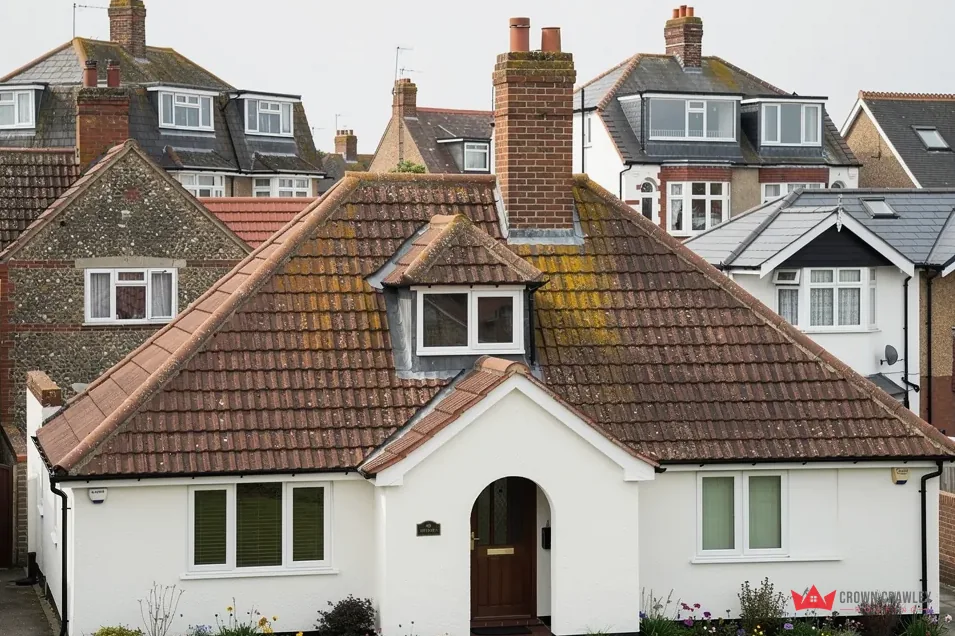
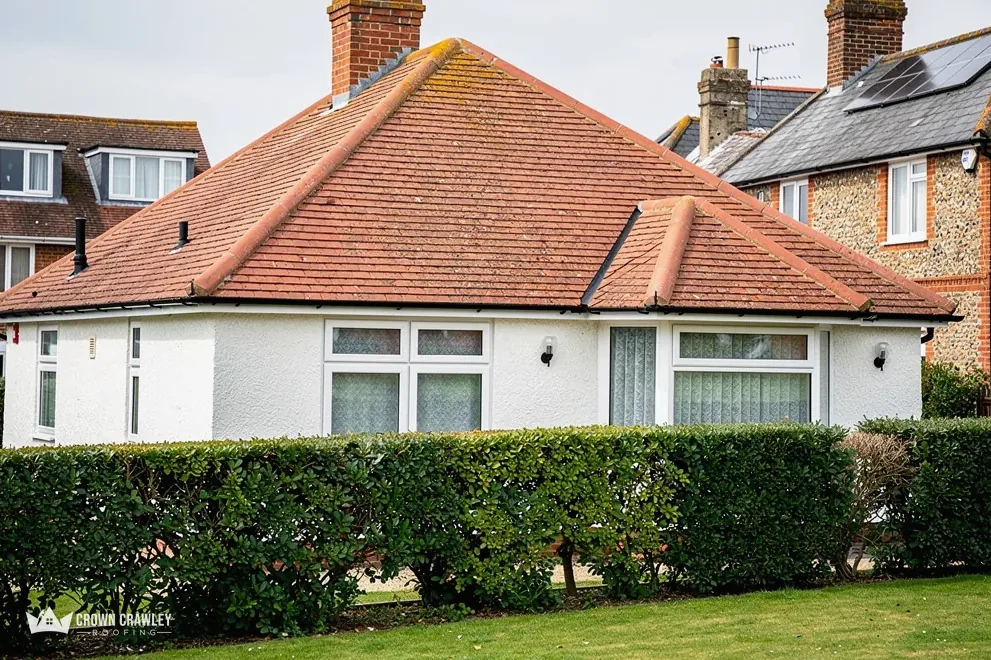
White rendered bungalow with a hipped tiled roof and dormer

Stage 02 · Permissions

Two councils and one building control team

Reigate and Banstead Borough Council deals with planning in Chipstead, and a shared team handles building control.

Most small repairs on a Chipstead roof involve no paperwork whatever, and you can start the conversation with a photo. Swapping slipped tiles, re-fixing a ridge or renewing a valley liner keeps the house as it was, and the survey photos are all the record you need. Building control comes into play differently, and it is worth having the answer in hand before the scaffold is booked. The councils step in once the work grows, so it helps to know who is who before the work is priced.

Who deals with planning and building control here?

Planning belongs to Reigate and Banstead Borough Council. Building control for the borough is handled by the Southern Building Control Partnership, a shared service founded in 2017 that combines Mole Valley, Reigate and Banstead, and Tandridge into one team. Chipstead is outside the South Downs National Park, so its planners have no say here, and an ordinary repair usually needs nothing extra, though the borough can confirm whether a conservation area covers your road. The exception is a listed address. West Ridge is listed Grade II, and for any listed house, changes that touch its character need listed building consent before work begins.

Who is who on a bigger job

Planning
Reigate and Banstead Borough Council
Building control
Southern Building Control Partnership
Highway authority
Surrey County Council licenses scaffolding
Listed building
Needs consent for changes to character

At what point does a re-roof need building control?

The Planning Portal sets the usual line at less than 25 per cent of the building envelope and less than 50 per cent of the roof. Beyond that, a covering that leaves the roof 15 per cent heavier or more also calls for approval, and the Portal suggests a structural engineer or surveyor can advise first. During the survey we work out where a job sits against those limits, and your written quote records what we found. If a full re-cover is the sensible route, our roof replacement page describes each stage of the job, with the written price settled before it starts.

Is a planning question worth asking first?

Yes, whenever a plan alters how the roof looks: a different type of covering, a different pitch or a new window in a slope. Our guide to planning permission for roof work sets out the questions to put, and the borough's planning team gives the answer for your own address. Keep any reply it sends, because it is useful evidence if you later sell the house and a buyer's solicitor asks what was approved.

Stage 03 · On site

Scaffold, eaves and getting to a hilltop house

A scattered village means long drives, private tracks and the occasional house with no pavement at all.

With houses spread over a hilltop, access often decides how a Chipstead job runs. A long private drive can suit a scaffold well, while a house set hard against a road may need a licence. We find out which applies at the survey, not on the morning the lorry arrives.

Does a scaffold in Chipstead need a licence?

Surrey County Council is the highway authority. Its guidance says scaffolding or hoarding that blocks the road or pavement needs a licence from the council, and applications go in at least 10 working days before your intended start. Surrey prices a licence at £208 for each 28-day period. Ask who applies; the scaffolder and we handle that step between us. Poles standing wholly inside your own boundary need no highway licence, so a house with a generous drive may avoid the question entirely. Surrey also has an emergency route: if a structure is unsafe, its page says to phone the council instead of waiting. Where a roof has been opened up by a fallen branch or storm, we make the area safe first and ask the scaffolder to raise it with the council at once.

Planning the access

Highway
Surrey licence if scaffold blocks it
Lead time
10 working days before the start
Private drive
No highway licence required
Deliveries
Lorry route agreed beforehand
Waste
Cleared as the job goes
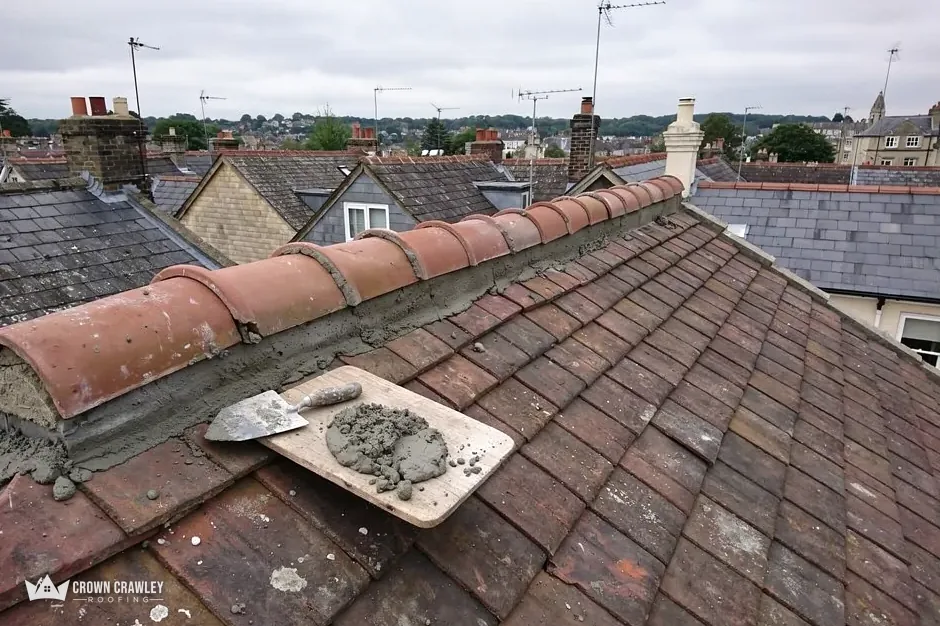
Ridge tile bedded in fresh mortar with a trowel resting on the roof

How do we deal with the eaves and gutters?

The eaves are where a high, open roof shows its weakness first, because wind-driven rain can find the gap between underlay and gutter. We check that the underlay drapes into the gutter instead of sitting behind it, that the fascia board is firm and that the gutter falls toward its outlet. If a run needs renewing, our gutters, soffits and fascias page shows how that job is done. Moss is a separate matter: Marley says high-powered jet washing can damage tiles and slates and shorten their expected life considerably, so we choose gentler cleaning. We also use only products authorised for the job and follow the label, which is what the Biocidal Products Regulation requires of anyone using them.

What if the roof is leaking before we can start?

Our first step is to make a leaking roof safe, with a temporary cover where the weather demands it, and then plan the proper repair for when the slope is dry. If you plan to claim on insurance, keep dated photos of the damage and your receipts, since the Institution of Structural Engineers calls photographs vital evidence for a claim. To start a survey, message us a photo of whichever tile line, edge or gutter bothers you along with the nearest road to your house, and we will fix a date that works around your week.

Good to know in Chipstead

Do roofs on the Chipstead ridge need stronger ridge and verge fixings?

No rule says so, and BS 5534 is not itself a legal requirement. But the ridge stands 500 to 600 ft up and has less shelter, so we check that ridge and verge tiles are mechanically fixed and not held by mortar alone. If they are not, we explain the options before any work starts.

Who does building control for a Chipstead re-roof?

The Southern Building Control Partnership, the shared building control team for Reigate and Banstead Borough Council, which also covers Mole Valley and Tandridge as a single service. For a large strip and re-cover we find out whether approval is needed before booking the start, and your written price records exactly what the team told us.

Does a Chipstead roof repair face any heritage checks?

A repair matching your existing covering is the lightest case, and Reigate and Banstead's planners can tell you if a conservation area includes your lane. West Ridge is a listed building, and any listed address needs consent for changes that affect its character. If you want to alter the look of a roof, ask the borough's planning team before agreeing anything.

How long does a scaffold licence take in Chipstead?

Surrey County Council wants an application at least 10 working days before the scaffolding is due up, and says it processes applications within 10 days. A 28-day licence is listed at £208. Scaffolding set up inside your boundary needs none of this, which is why we study your plot before the road, and we confirm the dates with you in writing.

Your Chipstead quote

Send us a photo of the ridge line, verge or eaves that is worrying you, with your Chipstead road name, and the survey date follows.

01293 974253

10-year workmanship guarantee, in writing.

Call Get a free quote