Roofers in Chaldon

Roofs beside flint and chalk walls on the Surrey downs.

Chaldon is a small downland parish where the oldest buildings are flint, chalk and firestone. We read each roof against the walls beneath it and give you a single written total.

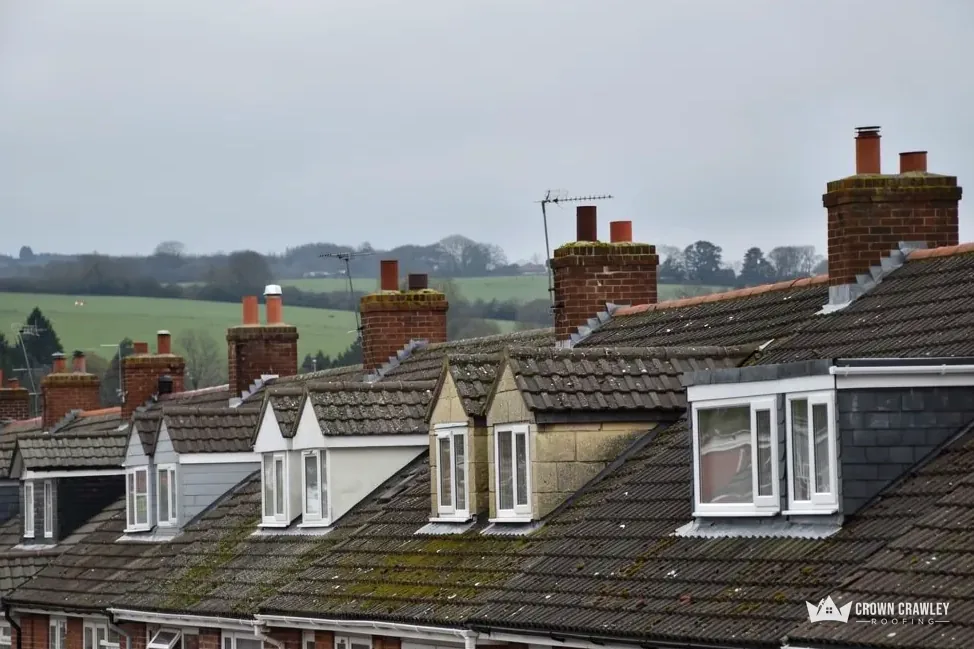
Dormer windows on a weathered tiled roof facing open fields

What sits over Chaldon's stone and flint

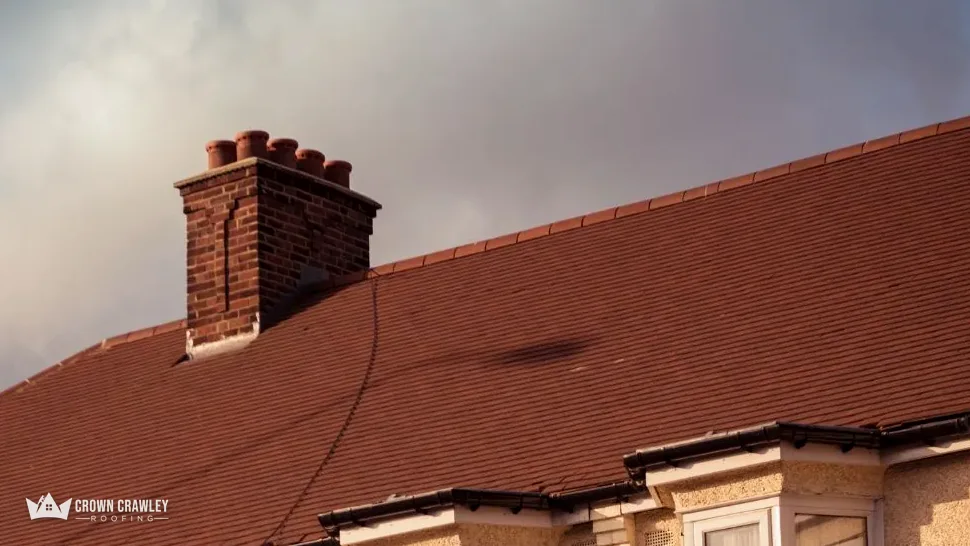
Brick chimney with lead flashing on a clay tiled roof

Houses in the conservation area

Part of the parish lies inside a conservation area mapped by Tandridge District Council. Before a re-roof we check whether your house is within the line, because that decides who we ask first.

Tiled cottage roof beside a lane

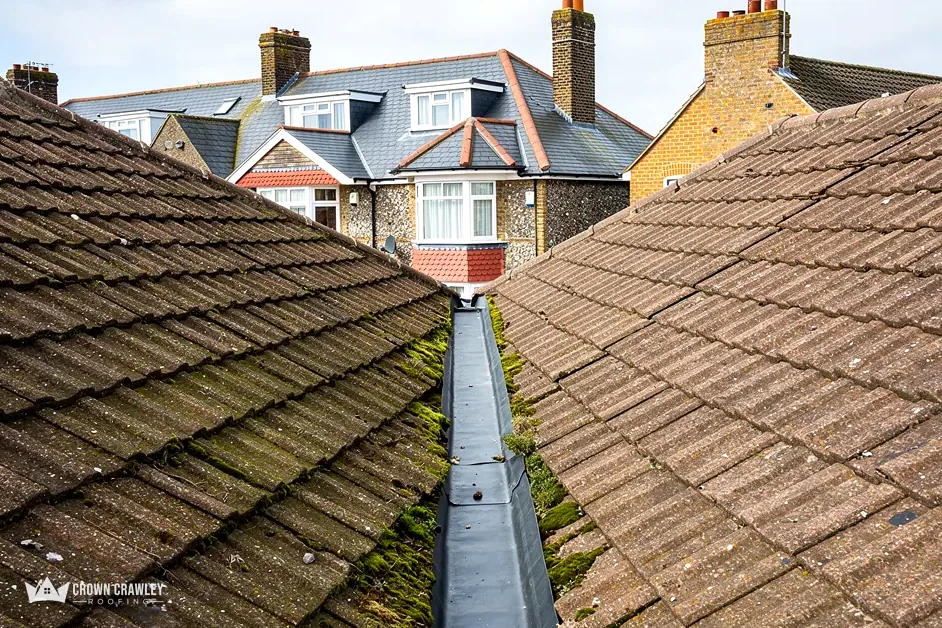
Lead-lined valley gutter between two tiled roof slopes

Walls of flint, chalk and firestone

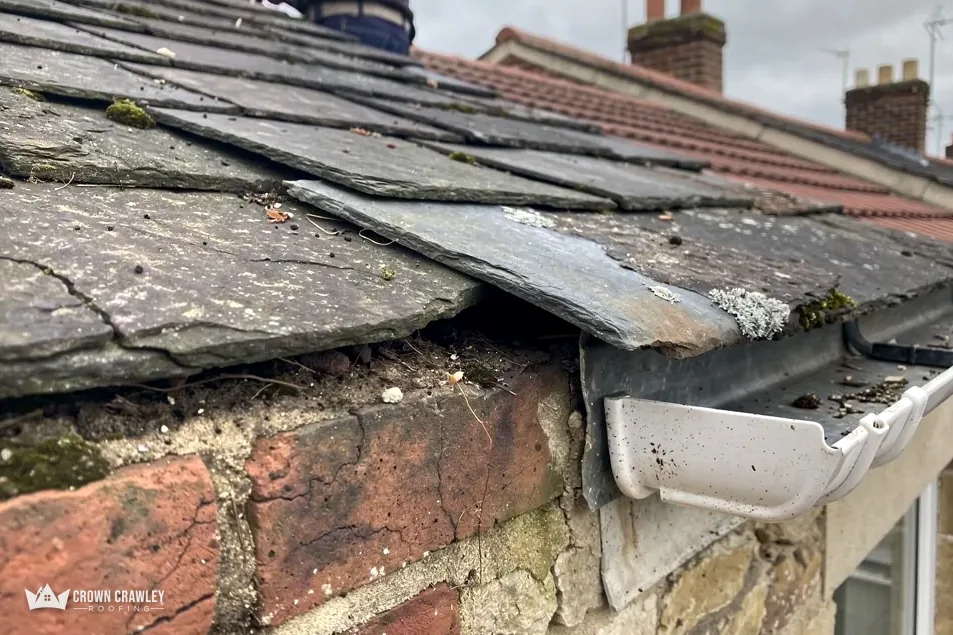
The church is built of field flints, chalk and firestone rubble, and the old manor farm has walls of chalk and flints, mostly plastered. Roofs meeting rough stone need flashings cut to the wall, so we study that joint closely.

Roof edge meeting a rough stone wall

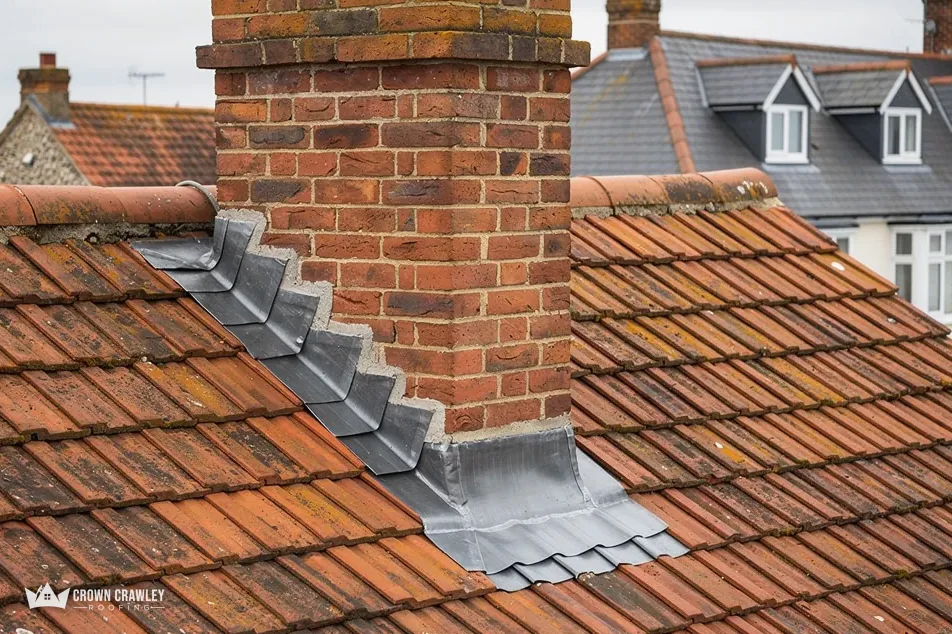
Stepped lead flashing around a brick chimney on a red tiled roof

Listed homes such as Rook Cottage

Rook Cottage is listed Grade II and the church Grade I. A listed house needs the council's consent for work that alters its character, so we find out what applies before we plan anything.

Old cottage roof with a brick chimney

Chaldon, on the chalk between Coulsdon and Merstham

Map of Chaldon and the neighbourhoods around it, with Crawley for reference.

Chaldon is a scattered downland parish in Surrey, set on the chalk between Coulsdon and Merstham, with views from White Hill out over the Weald.

Distance
17.2 road miles from Crawley, to the north
Drive
About 23 minutes
Council
Tandridge District Council and Surrey County Council
Planning authority
Tandridge District Council
Conservation area
CHALDON
Population
1,442 (Census 2021, Chaldon built-up area)
Building control
Southern Building Control Partnership
Get a free quote

A Chaldon roof diary

Reading a roof on the chalk above the Weald

Three short chapters on a scattered parish and its exposed hillside, the flint walls that roofs have to meet, and the Tandridge and Surrey steps on a bigger job.

Stage 01 · Setting

A scattered parish on the chalk

Chaldon has never been a tight village, and a roof on an open hillside is judged by how well its edges are held.

When the Victoria County History described the parish in 1912, it noted that there was no village of Chaldon at all. It called the parish "wonderfully rural and sequestered", with the chalk rising to 760 ft at White Hill. That scattered setting still shapes how we plan a job here, because each house is reached by its own approach and each roof has to be judged on its own exposure.

Why does an open hillside matter to a roof?

We cannot say how windy any particular lane is, and we will not pretend to. What we can say is where wind does its work on any exposed roof: at the edges. Three lines catch it first. The ridge is the cap that runs along the apex of the roof. The verge is the tiled edge of a slope beside a gable wall. The eaves are the low edge that overhangs the gutter. At survey we press on the caps, test how the verge tiles are held and look along the eaves for tiles that have crept out of line.

Survey points for Chaldon homes

Ridge
Caps firm, not rocking or cracked
Verge
Edge tiles held, not creeping out
Eaves
First course tight, gutter clear
Battens
Sound timber, no soft ends
Underlay
Whole, with no tears at laps
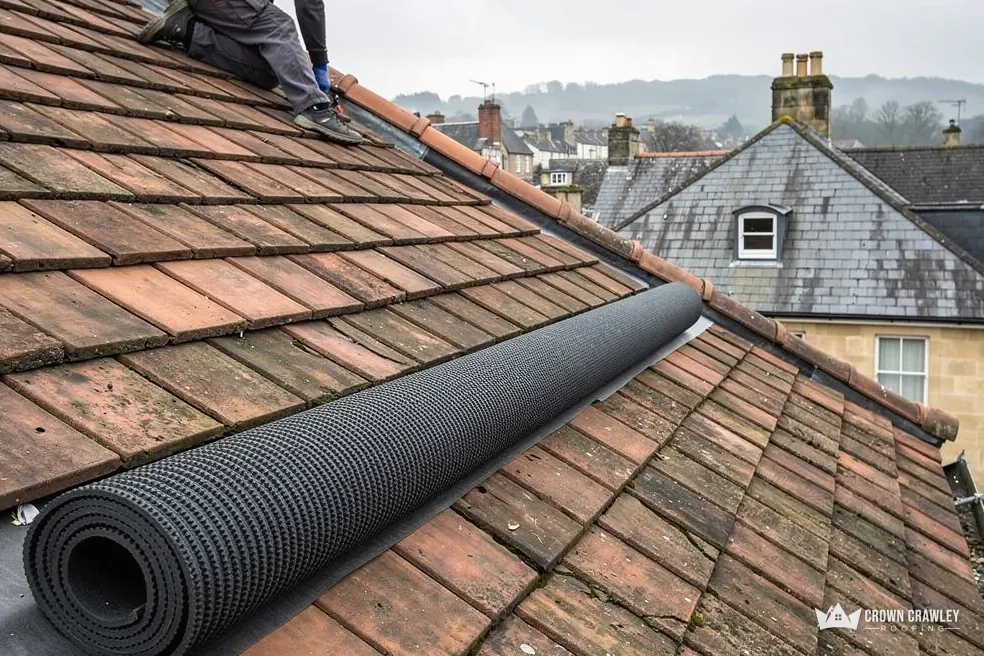
Roll of roofing membrane lying on a clay tiled roof

What holds ridge and verge tiles on?

On older work it was mortar alone. Marley's reading of the 2014 revision of BS 5534 is that mortar by itself is no longer enough for ridge and hip tiles, so a screw, nail or clip should hold each bedded piece too. The same company adds that fixing to BS 5534 is not a legal requirement, so you may meet either method on a house here. We find out which you have. If the bedding has cracked we rebed the caps with fixings added, or we can fit dry-fix parts, which clip on instead of relying on mortar. Our service pages on dry ridge and dry verge systems cover both routes and the roofs each one suits best.

Beneath the covering sit the battens, thin timbers carrying each course, and the underlay, a sheet laid over them as a second barrier against wind-driven rain. A torn underlay at the eaves can drip onto the roof timbers long before a stain shows indoors. You receive photos of whatever we find, taken from the ladder or from inside the loft, and the written price covers the repair that follows. Where the fault is only a handful of slipped tiles, the price says exactly that.

Dormer window with white cladding in a clay tiled roof

Stage 02 · Walls

Sealing a slope to flint and chalk

Chaldon's oldest buildings are rubble stone, and a roof has to be sealed to a wall that is never quite straight.

Chaldon's Grade I parish church, dedicated to St Peter and St Paul, is built of field flints, chalk and firestone rubble, with dressings of Merstham firestone and Bath stone. The Victoria County History adds that the walls of the manor farm are chalk and flints, mostly plastered over. Merstham stone mattered enough that in 1359 the Crown appointed a bailiff of the works at the quarries at the foot of the chalk. We read that history as background only, since it says nothing about what covers a house roof today. What it does show is the kind of wall a roof here may have to be sealed to.

Where roof meets wall

Abutment
Junction of a slope and a wall
Pointing
Mortar filling joints between stones
Stepped flashing
Lead cut in steps up a wall
Rubble wall
Wall of rough, uncut stone

Why are flint walls awkward for roofers?

A brick wall is built in even courses, so a flashing can follow the joints in tidy steps. A wall of flint and chalk rubble has no such rhythm. The stones differ in size, the joints wander, and the mortar between them may have softened over the years. Where a roof slope meets that wall, water runs down the face of the stone and into the gap. We cut lead to follow the actual joints, tuck it into raked-out mortar lines and point over it. Lead is graded by thickness into numbered codes, and Royston Lead lists codes 4, 5 and 6 for flashings. A lead flashing may pass 80 years, according to one cost guide, though that is an average expectation, never a pledge. Our lead work page explains how a code is chosen.

A flashing cut to a straight edge will never seal against a wall that is not straight.

Is the wall or the roof letting the water in?

Sometimes the lead is fine and the pointing above it has opened. Sometimes it is the other way round, and now and then both have failed together. A stain on an internal wall tells you where the water came out, not where it went in, so we trace it from the top. Pointing, flashing, neighbouring tiles and the gutter below all get checked before we name the fault. If only the pointing has failed, the written price covers that and nothing more.

Where a house has a chimney in the same stone, the same questions apply to the stack: pointing, the lead where it meets the slope, and the mortar cap on top. Our pitched roofing page explains how we deal with the tiles, battens and underlay around any of these joints once the wall side is sound.

Stage 03 · Permissions

Tandridge, Surrey and your Chaldon roof

Tandridge District Council deals with planning, the Southern Building Control Partnership with approvals, and Surrey with any scaffold on the road.

Most repairs that leave the roof looking as it did never reach a council desk. Questions arrive with a full re-roof, a different covering or scaffold set up beside the highway.

Does a conservation area change a Chaldon re-roof?

Part of Chaldon lies in a conservation area on the national dataset, using boundaries supplied by Tandridge District Council. Planning rules for roof changes are tighter in conservation areas, and Tandridge's planning officers can confirm whether your house falls inside the line. Our post on planning permission for roof work explains what to ask. Where the work is a plain repair in matching tiles, keep the council's reply with your papers.

At what size does a Chaldon re-roof reach building control?

The Planning Portal's two-part test asks whether under 25 per cent of the building envelope and under 50 per cent of the roof is touched. Pass both and a building control application is not normally needed. Picking a covering that weighs at least 15 per cent more brings approval in separately. Tandridge's building control is the Southern Building Control Partnership, a shared team formed in 2017 with Mole Valley and Reigate and Banstead. If a survey points to stripping a whole slope, we speak to them before agreeing dates. Our roof replacement page shows how a full job runs.

Who to ask in Chaldon

Planning
Tandridge District Council
Approvals
Southern Building Control Partnership
Conservation area
Covers part of the parish
Scaffold on road
Surrey County Council licence
Bat signs
Stop, then talk to you
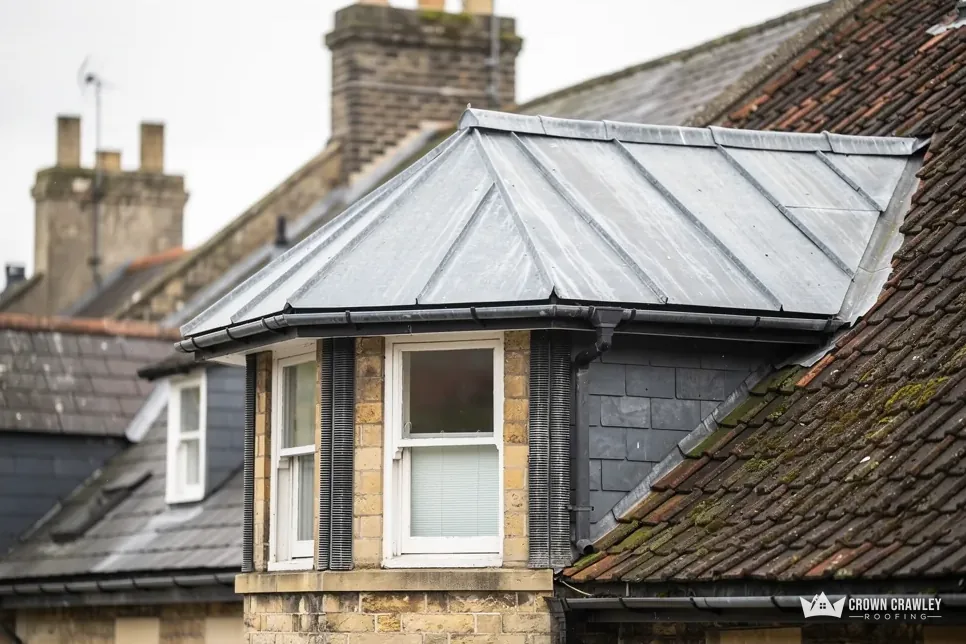
Lead-covered bay roof and chimney stack on a slate and tile roof

Churches, scaffold and bats

The Grade I church is in use for Church of England worship, so work on it follows the denomination's own consent system, a faculty, rather than listed building consent. That is a matter for the parish, not for a house owner. For your own house, a Surrey highway licence comes into play once poles or boards sit on the carriageway or footway. The county charges £208 per 28 day period, wants the application in 10 or more working days before the start, and keeps the fee whatever happens. Before booking, we settle with the scaffolder who applies and when. Scaffold on private ground needs no highway licence.

The law protects bats and the places they rest, and a roof is one of those places. Droppings in the loft or a gap under the ridge cap that looks lived in would halt the work until you and we have agreed what happens next. The first useful thing you can send is a picture of the wall joint or roof edge in question, with your postcode.

Straight answers for Chaldon homes

Does a flint or chalk wall change how my Chaldon roof is repaired?

It changes the flashing, not the tiles. Rubble stone has no even courses, so lead has to be cut to the joints that are really there and pointed in. We check the pointing above any flashing first, since failed mortar and a lifted flashing can look the same from indoors. The written price covers whichever is at fault.

Can a Chaldon cottage roof be re-covered in a different tile?

Ask Tandridge first. Part of the parish is in a conservation area on the national dataset, which uses boundaries supplied by Tandridge District Council, and Rook Cottage and the church are listed. Houses near the boundary are hard to judge by eye. Ask Tandridge's planning team with your address before you commit to anything beyond a like-for-like repair, and keep their reply together with your survey photos.

How much of a Chaldon roof can be renewed before the partnership is involved?

Only if the job crosses the Planning Portal thresholds: 25 per cent or more of the building envelope, 50 per cent or more of the roof, or a covering adding 15 per cent or more to the weight. A repair or a slope renewed in matching tiles usually falls below them. If the survey suggests more, we raise it with the partnership first.

Who pays for a scaffold licence on a Chaldon lane?

The cost belongs to the job, and it only arises if the poles and boards stand on the highway itself. Surrey's rate is £208 per 28 day period, with at least 10 working days' notice before the start. We agree with the scaffolder who applies and set the first day to match. A frame on your own drive needs no licence.

A written price for your Chaldon roof

Email a picture of the troublesome wall joint or roof edge, add your Chaldon postcode, and a survey date follows.

01293 974253

10-year workmanship guarantee, in writing.

Call Get a free quote