Roofers in Billingshurst

Horsham slab roofs, clay tiles and brick chimneys along Stane Street.

Billingshurst grew along the Roman road to Chichester, and its older roofs include Horsham slabs, plain clay tiles and brick chimneys. We survey first, and the price you receive is a single written total.

Dormer window with white cladding in a clay tiled roof

What Billingshurst roofs are made of

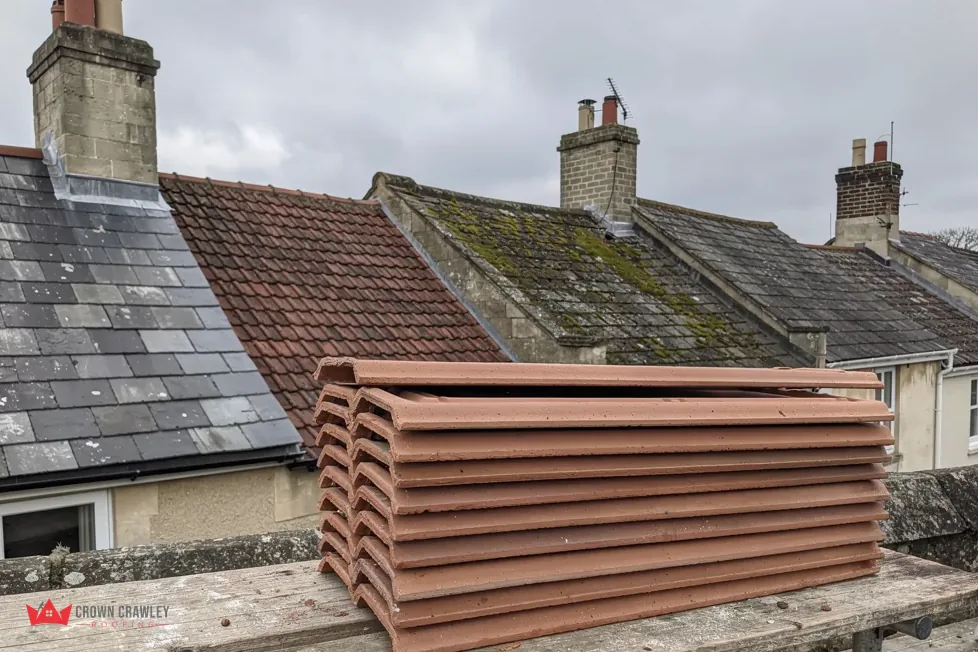
Stack of clay ridge and hip tiles on a flat roof

Horsham slab roofs

The council's appraisal calls the village's roofscape distinctive and extensive, and names Horsham slab roofs and brick chimneys as part of it. We photograph the slabs, their bedding and the chimney joints before we suggest any work.

Stone slab roof beside a chimney

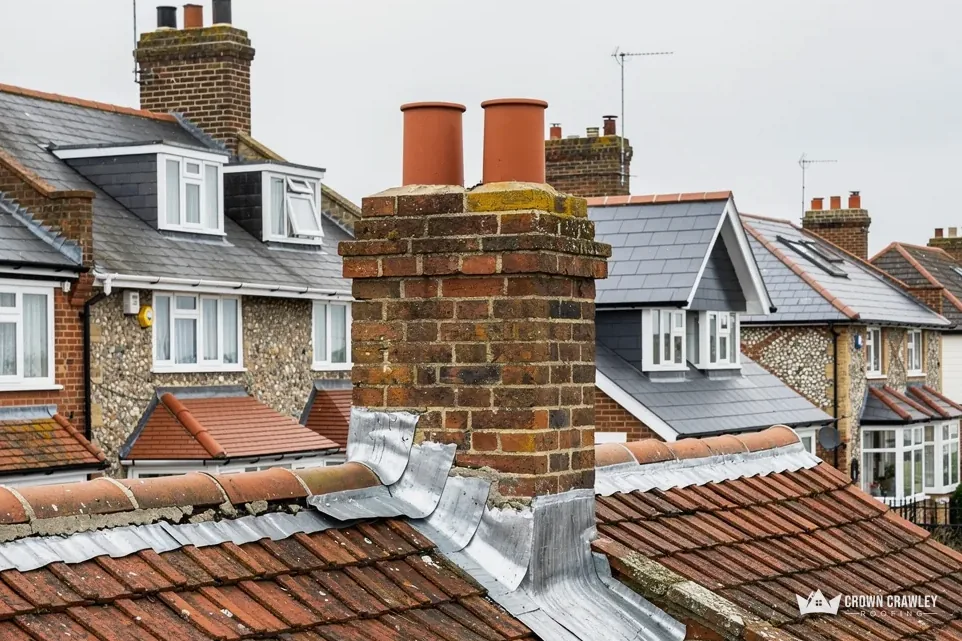
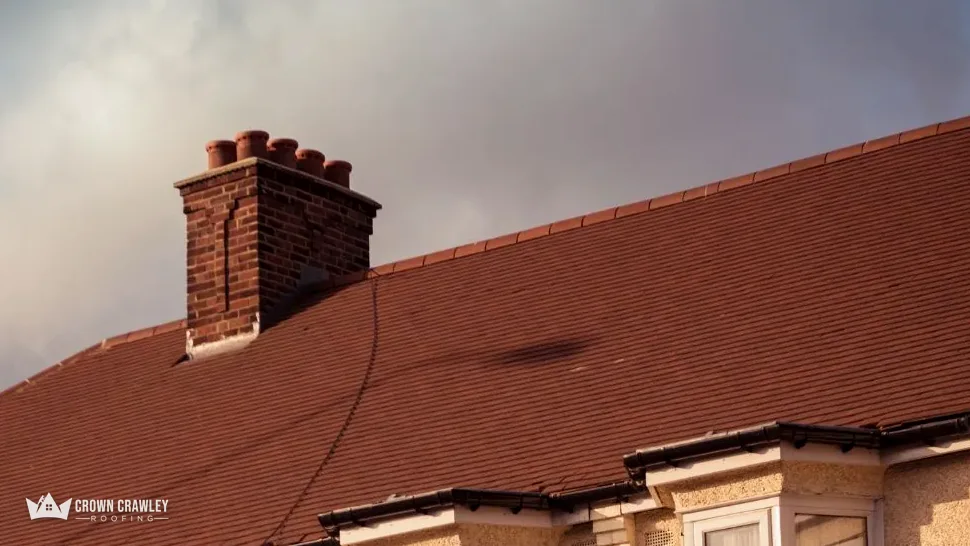
Chimney stack with orange pots and lead flashing among tiled roofs

Plain clay tiles

The same appraisal says plain clay tiles became the common roofing material from the mid 17th century. A roof of small tiles has a great many joints, so we check it course by course for slipped, cracked and flaking tiles.

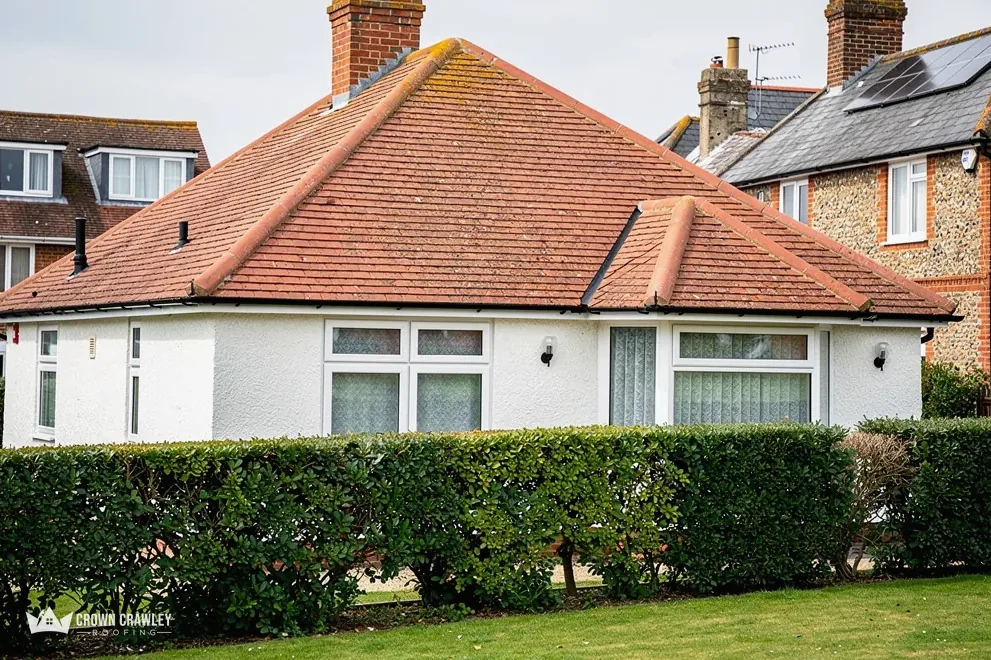
Plain clay tiled roof slope

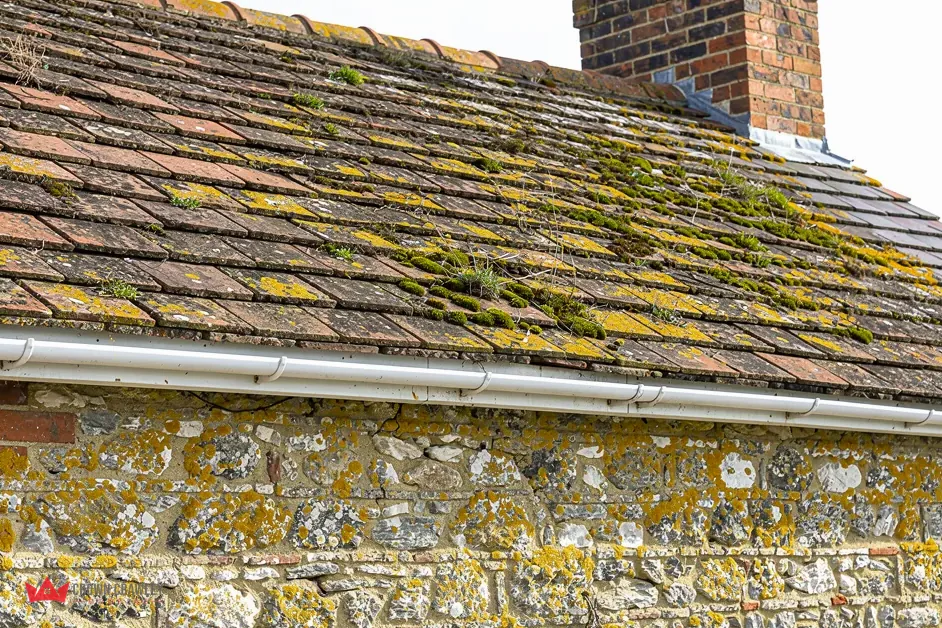
Yellow lichen and moss on tiles above a flint wall

Tile-hung walls

Billingshurst also uses tile-hanging and local sandstone. Where a roof abuts a hung wall, the flashing (the strip of lead or metal sealing the junction) is where water finds its way in, so our survey starts at that line.

Tile-hung wall meeting a roof

Billingshurst, on Stane Street east of the Arun

Map of Billingshurst and the neighbourhoods around it, with Crawley for reference.

Billingshurst is a large Low Weald village strung along Stane Street, today's A29, just east of the River Arun.

Distance
15.1 road miles from Crawley, to the south-west
Drive
About 24 minutes
Council
Horsham District Council and West Sussex County Council
Planning authority
Horsham District Council
Conservation area
Billingshurst Conservation Area
Population
9,127 (Census 2021, built-up area)
Building control
Horsham District Council, as Sussex Building Control
Get a free quote

How a Billingshurst job runs

Reading a roof on Stane Street

Three short chapters on the stone and clay roofs of the old village, the homes added since the 1970s, and the rules that apply once a repair becomes a bigger job.

Stage 01 · First look

Slabs, clay and chimneys on Stane Street

Billingshurst's older roofs include stone slabs, plain clay tiles and brick chimneys, so our first job is working out which covering sits over your head.

Billingshurst is a large village in the Low Weald, laid out along Stane Street, the Roman road from London to Chichester that the A29 now follows. Horsham District Council's conservation area appraisal calls its roofscape distinctive and extensive and names two ingredients: Horsham slab roofs and brick chimneys. That is a useful starting point for an older house here. It still cannot tell us what is on yours, which is why you hear a price from us only after someone has been up and looked.

How do you tell slab from clay on a Billingshurst roof?

From the pavement, slabs look thick and uneven while plain clay tiles look small, regular and slightly curved. The appraisal says early roofs would have been thatched or, on more prestigious properties, Horsham stone slates, and that plain clay tiles became the common roofing material from the mid 17th century. Plenty of houses have been re-covered since, so a photograph from the garden and a look in the loft settle it. You get the pictures too, which means you see what we saw.

On an older Billingshurst roof

Covering
Slab, clay tile or later re-cover
Bedding
Sound under slabs and hips
Chimney
Brick joints and flaunching intact
Flashings
Tight against walls and stacks
Gutters
Falling to the downpipe, not blocked
Brick chimney with lead flashing on a clay tiled roof

Where does water get into these older roofs?

Rarely through the middle of a slab or a tile. It finds the joints: the flashing, which is the strip of lead or metal sealing the roof against a wall or stack; the mortar bedding under hips and ridges; and the flaunching, the mortar cap that holds a chimney pot in place. For clay tile the published minimum from the Building Research Establishment is 60 years, and an article on clay roofs at buildingconservation.com warns against leaning on that number for old peg tile. Age tells us where to look first. The survey tells us what is really happening up there.

What should happen to the brick chimneys?

A brick stack takes weather on every face. Joints open, the flaunching cracks and the flashing at its foot lifts. Checkatrade's October 2026 guide puts chimney repointing at around £750 on average, rising when scaffold is needed, and our own price depends on the same things: height, access and what the survey finds, set down as one total. Our chimney repairs page shows the work in detail, and the pitched roofing page covers tiles, battens and underlay on the slopes either side.

From inside the loft, daylight at a joint or a dark stain on the timber at the foot of a stack points us to the right spot. Where slabs have slipped, we photograph the bedding and the fixings before suggesting anything, so you can judge the repair against the evidence.

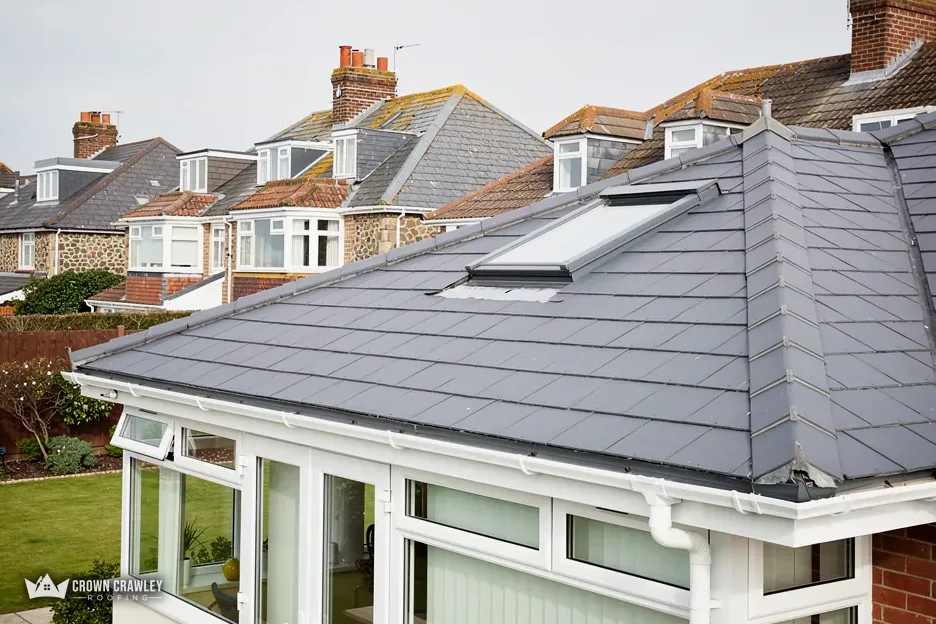
Slate-effect roof over a conservatory on a suburban house

Stage 02 · Newer streets

A village that grew after the war

Billingshurst grew from about 2,000 people after the Second World War to 8,232 in 2011, so roofs of different ages sit side by side.

The appraisal records that Billingshurst grew from about 2,000 people after the Second World War to 8,232 in 2011, with the expansion accelerating from the 1970s. A village that took in homes across several decades ends up with roofs of several ages, sometimes in the same cul-de-sac, and a fix that suits one house can be wrong for the next. So the starting point is the roof itself, not the street it stands on.

Does a roof from the 1970s onwards need replacing?

Age alone does not settle it. Marley's figure for concrete tile is around 60 years, and Marley adds that the number promises nothing about how long a given roof will last. In practice the detail around the tile gives up sooner: crumbling mortar on the ridge and verge, rusted nails, and underlay sagging where it meets the gutter. All of those are repairs. A roof whose battens and tiles are sound but whose edge mortar has crumbled has no need of stripping, and we tell you that on the survey.

Why are mortar verges being refixed with dry caps?

The 2014 revision of BS 5534 made it clear that mortar is no longer a safe sole fixing for ridge and hip tiles, and Marley reads it as meaning that bedded tiles and fittings should carry mechanical fixings as well. BS 8612 is the test specification covering dry-fixed systems for ridge, hip and verge. A cracked mortar verge can be rebedded with fixings added, or swapped for a dry system. Checkatrade's September 2026 guide quotes roughly £10 to £25 per linear metre for dry verge, fitting included, and your written price follows the survey. The dry ridge and dry verge page sets out how each system goes on.

How do you know a repair has run its course?

Soft battens, underlay that has perished across whole slopes, or leaks that reappear in a new place every winter. We show you which of those applies, with photographs of your own roof, and put the price in writing. If the answer is a full re-roof, you will see the reasoning before you see the figure. That way a decision about replacing a roof rests on what is under the tiles, not on a sales pitch.

Roof words on a Billingshurst survey

Batten
Timber lath the tiles hang on
Underlay
Sheet beneath the tiles
Verge
Roof edge running up a gable wall
Valley
Inner angle where two slopes meet

Newer estates add their own details. Eaves vents, felt that has dried and cracked at the laps, and gutters pitched a little off true all show up on homes of this vintage, and none of them needs a new roof. You see a picture of each, with a plain note on whether it can wait or should be put right now.

Stage 03 · Permissions

Conservation area, council and scaffold

Billingshurst has its own conservation area, and Horsham District Council answers the planning and building control questions.

Putting the same covering back in the same place seldom needs a form. Paperwork enters once a repair grows into stripping and recovering whole slopes, once the material or the appearance changes, or once scaffolding has to go on a public road. It helps to know which of those you are facing before anyone fixes a start date.

What does the Billingshurst Conservation Area change?

The appraisal behind it is Horsham District Council's, so the council's planning team is who to ask before altering the covering, the colour or the look of a roof inside the boundary. Replacing like with like is one question and swapping slab or clay for something new is another. Our planning permission for roof work post explains the difference, and we keep the detail there instead of repeating it here.

Who handles building control in Billingshurst?

Horsham District Council, which brands the service Sussex Building Control. Using the Planning Portal's test, a re-roof affecting under 25 per cent of the building envelope and under 50 per cent of the roof normally needs no application, while a new covering at least 15 per cent heavier than the old one does. For a job close to either line, we put the question to your building control body first and write what they say into the price we give you.

Before a bigger Billingshurst job

Planning
Horsham District Council
Area
Billingshurst Conservation Area
Building control
Sussex Building Control
Scaffold
West Sussex licence for the highway
Lead time
At least 10 working days
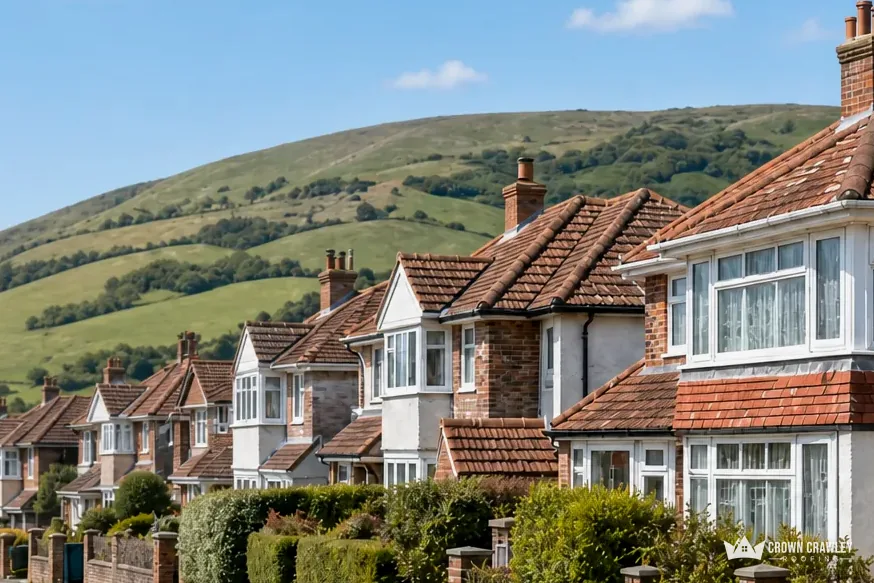
Row of suburban houses with tiled roofs below green downland

Does scaffold outside a Billingshurst house need a licence?

Scaffold standing on the road or pavement comes under West Sussex County Council, which wants an application at least 10 working days before the date they go up and charges £266 for one month. Scaffold kept inside your own boundary is outside the licence rules. Our part is to sort the application out together with the scaffolding firm, then fix the first day around the council's notice period.

Bats have full legal protection, and the government warns that roof work, repair or renewal alike, may disturb them. Slab and tile roofs with gaps under the hips and eaves can shelter bats or nesting birds. Should the survey find droppings or an active nest, work stops at that spot until you and we have talked through what comes next. Start with a photograph of the slope, stack or gutter that bothers you, and add your Billingshurst postcode to the form.

Billingshurst roof questions

Can a Horsham slab roof in Billingshurst be repaired instead of replaced?

Often the slabs themselves are sound and the trouble sits in the bedding, the flashings or the chimney joints. Horsham District Council's appraisal treats these roofs as part of the village's character, so we photograph what we find, say what could be saved, and suggest you speak to the council's planning team before any change of material.

Can a Billingshurst slab roof inside the conservation area be re-covered in clay?

Putting back the same covering, with the roof looking exactly as before, is one thing. Changing the material, colour or appearance is another, and the council's planning officers should hear about it first. We can set out in writing exactly what we propose, which gives the planners something clear to answer, and we photograph the roof before and after.

Will scaffold at my Billingshurst house need a West Sussex licence?

When the poles stand on the road or pavement, yes: West Sussex County Council asks for 10 working days' notice and charges £266 for a month. Scaffold kept on your own drive or garden needs none. Raise it early with us, because the application is made with the scaffolding firm and the scaffold goes up once that notice has run out.

Should the brick chimney be dealt with when the roof is repaired?

It is worth looking at while the access is up. Open joints, a cracked flaunching or a lifting flashing let water in around the stack, and reaching them later can mean paying for scaffold twice. Your survey photographs show the stack from several sides, so you can decide what to include in the written price.

Your Billingshurst roof, priced in writing

Photograph the stack, slope or gutter you are unsure about, add your Billingshurst postcode to the enquiry form, and the survey date follows.

01293 974253

10-year workmanship guarantee, in writing.

Call Get a free quote