Roofers in Wimbledon

Roofs among old brickwork, listed houses and a conservation area.

Wimbledon's recorded buildings run from a ten-gabled brick house of about 1613 to a church largely rebuilt in 1843. Before any price is named, someone climbs up, photographs what is there and reports back to you.

Village street of brick and render houses with old tiled roofs

What shapes a Wimbledon roof job

New slate-effect roof on a bungalow with white fascias and guttering

Brick buildings with many gables

Eagle House, built about 1613, has ten gables and brick walls with stone quoins. Every gable brings a verge, a valley or a wall junction, and each one is checked for open joints, crumbling pointing and tired flashing.

Brick gable end with tiled roof

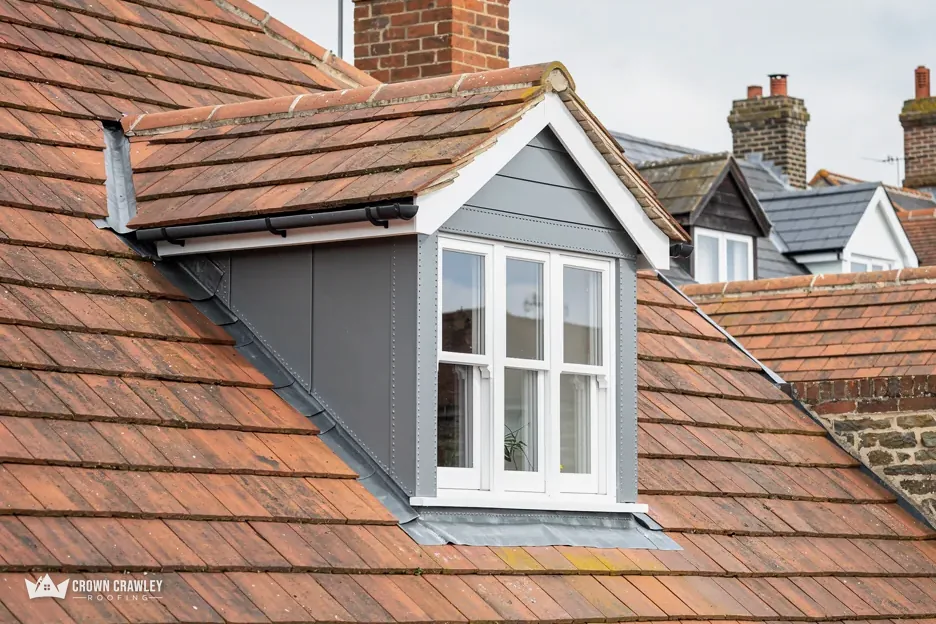
Lead-clad dormer window set into a red clay tiled roof

Listed houses on Belvedere Drive

Number 1 and number 12 Belvedere Drive carry a Grade II listing. When a house is on the list, the planned repair is written out before work begins, since anything altering its character needs consent.

Period house with pitched tile roof

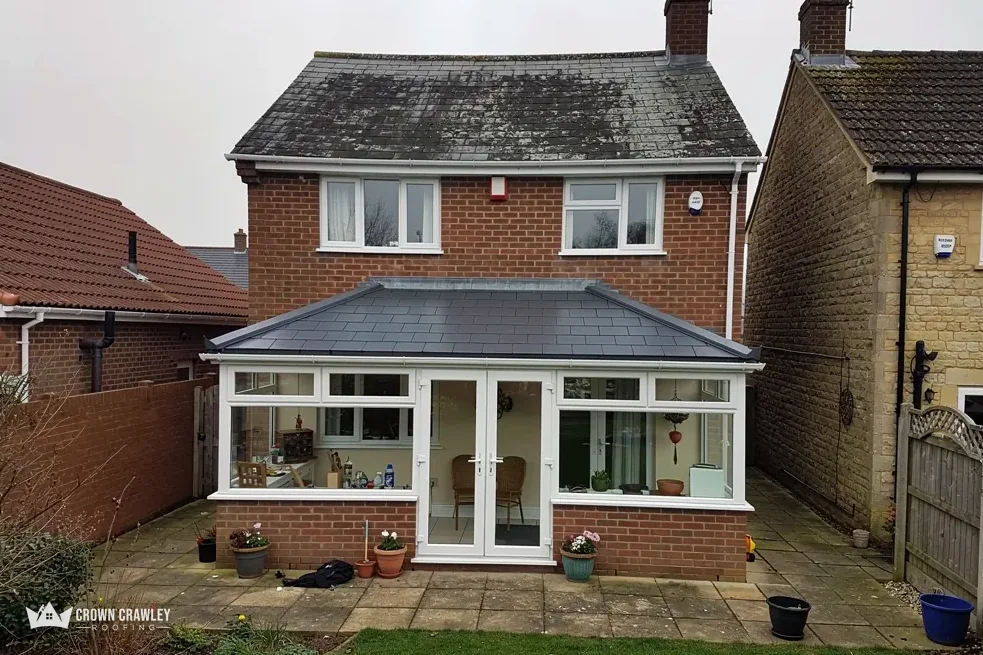
Rear of a brick house with a glazed extension and slate-effect roof

Roofs inside a conservation area

Part of the town falls inside the Wimbledon Hill Road conservation area. Repairs that match the existing tile, ridge and verge keep the street looking as it does, and a change of covering gets raised with the council first.

Terraced homes with matching roof tiles

Wimbledon, between the Wandle and the common

Map of Wimbledon and the neighbourhoods around it, with Crawley for reference.

The town sits between Beverley Brook and the River Wandle, with about 1,000 acres of common on the high gravel of Wimbledon Common.

Distance
26.1 road miles from Crawley, to the north
Drive
About 47 minutes
Council
London Borough of Merton (London borough; Greater London Authority above)
Planning authority
London Borough of Merton
Conservation area
Wimbledon Hill Road; South Park Gardens
Parish church
St Mary's, listed Grade II* (list entry 1080917)
Building control
London Borough of Merton, its own service
Get a free quote

A Wimbledon roof, step by step

Brick, gables and listings on Merton's hill

Three short chapters on old brickwork and gables, the listing and conservation questions that shape a repair, and what Merton, the highway and the wildlife rules ask of a full re-roof.

Stage 01 · First look

Brickwork, gables and the roof edge

Wimbledon's oldest recorded houses are brick, and the line where a roof meets a brick wall is where the survey slows down.

The Victoria County History describes Eagle House, at the top of the High Street, as built about 1613 by Robert Bell, an original member of the East India Company. It has ten gables and is built of brick with stone quoins and a good deal of oak timber in the upper part. A 1649 survey called the old manor-house "of excellent good brick". Those records say nothing about your roof. They do show what some of the town's recorded buildings were made of: brick walls, with roofs that must keep water out at every join with them.

Checks we make in Wimbledon

Gables
Verges and valleys sealed
Brickwork
Pointing sound where roof meets wall
Tiles
Whole, seated and unmossed at the edges
Gutters
Falls clear and joints dry
Loft
No daylight, damp or stained timber
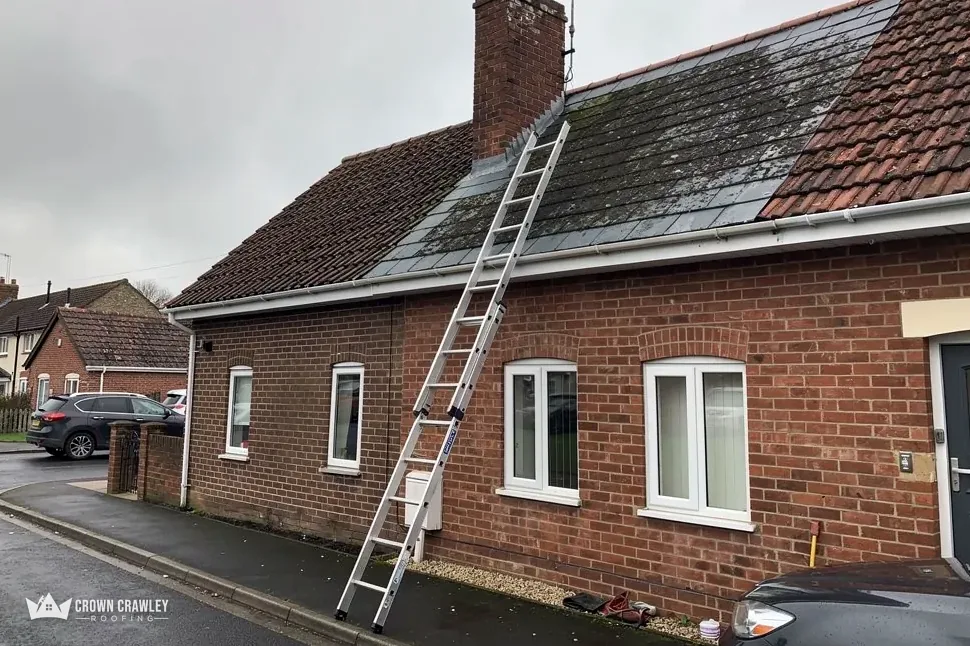
Brick bungalow with a ladder leaning against its tiled roof

What does a gable add to a roof repair?

The sloping edge of tiles at a gable end is the verge. It is held down by mortar, by clips or by a dry-fix cap, and wind and rain reach it from two directions. A house with several gables has several verges, and often a valley between neighbouring slopes, which is a sunken channel that sends water down into the gutter. Where tiles meet a brick wall, a strip of lead called flashing is pushed into a cut in the brickwork and folded over the tile edge. When the pointing around that cut crumbles, rainwater can run behind the lead and into the wall or the ceiling beneath. Every one of these junctions gets looked at from the ladder or the scaffold and photographed for you.

Can a brick-and-tile roof be repaired without replacing it?

Frequently. A repointed flashing, a re-seated ridge tile or a renewed valley liner each cost a fraction of what a new covering does. Replacement earns its place when the battens, the timber strips that tiles hang from, have rotted, when a whole slope of tiles is giving up, or when the repairs are adding up faster than the sound areas. Which camp your roof falls into is decided at the survey, and you get a straight answer either way. Slipped tiles, rotted battens and tired underlay are all dealt with on our pitched roofing page.

Keep reading

The loft is read as carefully as the slopes. Pinpricks of daylight, stained rafters, damp insulation and eaves choked with fibre each point to a place where water or humid air is finding a route in. A gutter that drips at one joint season after season can stain brickwork long before a ceiling shows anything, so the eaves are checked on the same visit. Where old lead has gone thin, split or lifted, our lead work page explains how renewal keeps the wall junction dry.

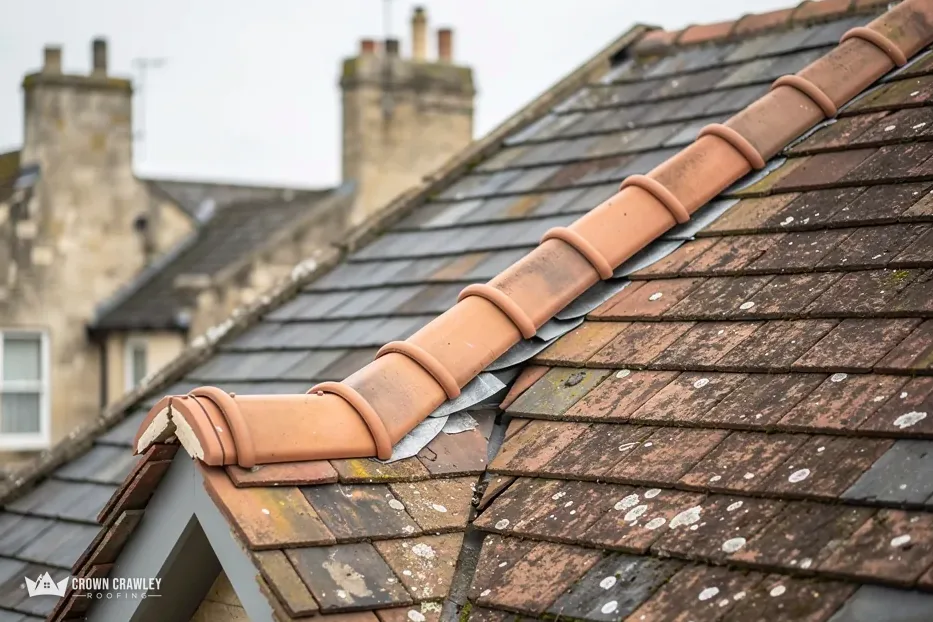
Clay ridge tiles along the hip of a weathered tiled roof

Stage 02 · Permissions

Listed houses and a hill-road boundary

Boundary lines and listings hang over parts of Wimbledon, so a repair here begins by asking what is protected.

Part of Wimbledon lies within the Wimbledon Hill Road conservation area, and the national dataset also names South Park Gardens for the place. The Parish Church of St Mary is listed Grade II*, and two houses on Belvedere Drive are listed Grade II. Before anyone orders tiles, the useful question is whether your own house is listed or sits inside a boundary. Merton publishes a list of its conservation areas, and Merton's planning officers can tell you where a given address stands.

Does a conservation area stop me repairing my roof?

Putting back tiles of the same kind or fitting a new valley leaves the street scene untouched, and section 55 of the Town and Country Planning Act leaves such work outside its definition of development. Trouble starts when the outside changes: another tile, an extra roof window, a taller chimney. A conservation area gives the council a bigger voice on that sort of change, so the existing covering is matched and you hear early if a plan would need approval. Our guide to re-roofing in a conservation area walks through the sequence.

Words you may hear

Listed building
Protected for its special interest
Listed building consent
Needed for works that affect its character
Like for like
A repair that copies the original
Quoin
Stone block at a wall corner

Matching the existing tile, ridge and verge is what keeps a repair simple.

What changes if the house is listed?

Listed houses still get repaired, with tighter limits. Altering what makes a listed building special calls for listed building consent first, and the plainest way to steer clear of that is to repair in the original material wherever the survey allows. If a job could alter the look, such as moving from natural slate to concrete tile, put the question to Merton's planning team before ordering anything. The written quote for a listed roof spells out the planned work in ordinary words, which gives you something concrete to show the council.

Up on the roof, tiles, ridge and flashings are repaired to match, and sound old tile is kept for reuse where the roof allows. A mortar ridge is rebedded with mechanical fixings added, because since the 2014 revision of BS 5534, mortar on its own no longer counts as a fixing for ridge and hip tiles. Old brick often sits under old roofs, so any previous owner's paperwork, such as a listing letter or a conservation note, is worth bringing to the survey. The roof then gets read against what it says, and nothing gets stripped that the paperwork protects.

Stage 03 · Sign-off

Merton's rules for a bigger roof job

A full re-roof pulls in Merton's planning and building control teams, the highway authority and a handful of cost questions worth settling early.

A small repair involves no paperwork. A re-roof does, and the time to learn the rules is before the quote rather than once the scaffold is up. Wimbledon belongs to the London Borough of Merton, which handles planning itself and keeps building control in-house.

Does re-roofing a Wimbledon house need Building Regulations approval?

Two Planning Portal limits decide whether a building control application is normally skipped: under 25 per cent of the building envelope touched, and under 50 per cent of the roof. Weight works as its own trigger: a covering at least 15 per cent heavier than what comes off, or one that responds to fire very differently, needs sign-off however small the area. For a heavier covering, the Planning Portal suggests getting an engineer's or surveyor's view beforehand. Those numbers are laid over the survey, and a job near the edge goes to Merton's building control team before any date is promised. For what a whole new roof involves, from stripping to final check, read our roof replacement page.

Questions for a full re-roof

Planning
Merton's team for any change of look
Approval if
Covering 15 per cent heavier or more
Scaffold
Highway licence if on pavement
Price
Access, area and covering set it
Brick garage with a new flat roof and metal edge trim

Who sorts the scaffold licence on a Wimbledon street?

Poles on the pavement are the highway authority's business under section 169 of the Highways Act 1980. Poles on your own drive are your own affair. When a house opens straight onto the street, the licence is dealt with alongside the scaffolder, and it pays to ask early who files it and how much notice the highway authority needs. Next-door households are warned before the scaffold is erected and again before it is struck.

What decides the price of a Wimbledon re-roof?

Four things move it most: the ease of access to the roof, how many square metres of slope there are, which covering goes back on, and what the survey turns up under the old one, such as rotten battens or a failed valley. On a house with many gables, each extra verge and valley adds cutting, flashing and fixing time, which is why a single number cannot honestly be given over the phone. After the survey you get one total in writing. If you are holding other quotes, check whether each includes VAT and scaffolding, because that alone can explain a gap between two prices.

A short note of which slope leaks, and in what weather, speeds the survey along. So does the date of any earlier repair, because patched areas tell us where to look first.

Gables, listings and licences in Wimbledon

Why are verges and valleys checked first on a gabled Wimbledon house?

A gable gives the roof an exposed edge and often a valley, and rain finds those joins before it finds a flat run of tiles. Eagle House, built about 1613, has ten gables, which is an extreme case, but a house with three or four still has plenty to inspect. Each verge, valley and wall junction is photographed during the visit, so the evidence of which ones need work is in your hands.

Is my Wimbledon home listed, or inside a conservation area boundary?

The borough publishes a list of its conservation areas, and Wimbledon Hill Road is on it. Give its planning team your address and they can confirm the boundary, and whether the house itself is on the national list. Where either applies, repairs use matching material and the written quote describes the work in ordinary words before anything starts.

Who signs off a large re-roof in Wimbledon?

Merton looks after both planning and building control for the borough, running the latter itself. A re-roof inside the Planning Portal limits of 25 per cent of the envelope and 50 per cent of the roof is normally exempt from a building control application, whereas a covering 15% heavier or more is not. Anything near a limit is put to Merton before dates are agreed.

Can the scaffold for my Wimbledon roof stand on the road outside?

Poles on the pavement need a licence from the road authority first, whereas a drive or front garden does not. That licence is arranged alongside the scaffolder, with an early question about who files it. The start date waits until the highway authority's notice period is known and the neighbours have been told.

Send us the Wimbledon roof that worries you

Tell us which gable, valley or wall line is giving trouble, along with a postcode, and a survey slot follows.

01293 974253

10-year workmanship guarantee, in writing.

Call Get a free quote