Homes from the 1948 estate
Croydon's post-war council estate here was begun in 1948. A scheme of that size grew in phases, so each roof is judged as it is today: covering, fixings and loft, house by house.
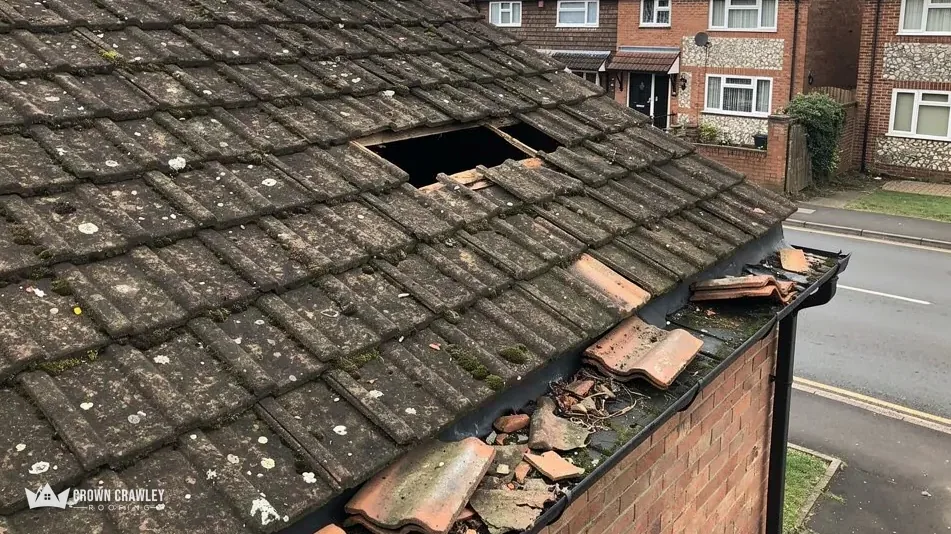
Pitched roofs on an estate street
Roofs on the big council estate Croydon began building in 1948.
New Addington grew from a post-war council estate that Croydon began in 1948. Our surveyors find out who owns the roof before writing a single total.
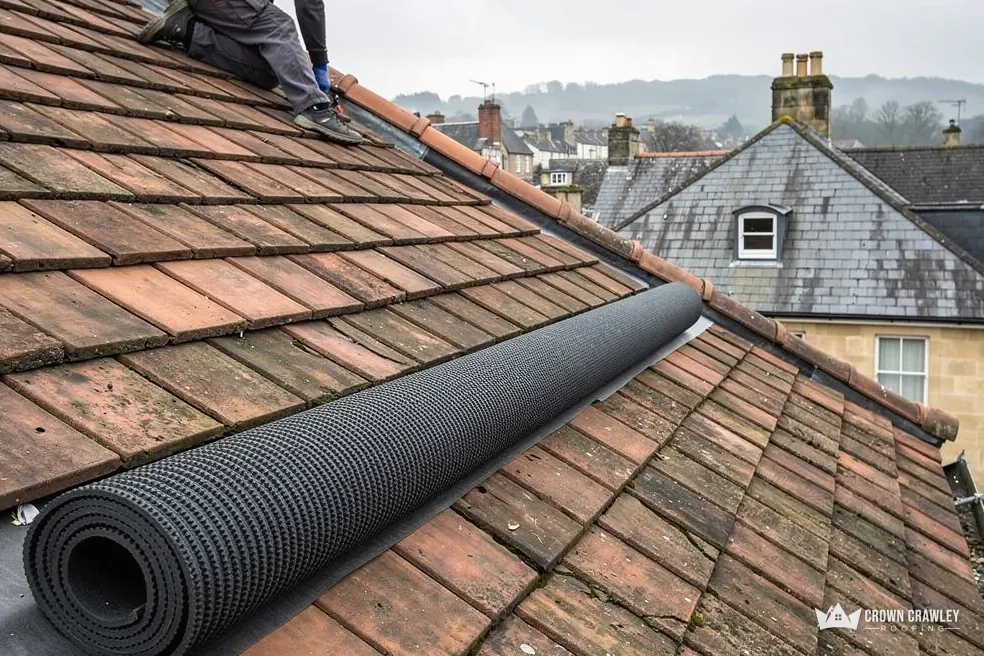
Croydon's post-war council estate here was begun in 1948. A scheme of that size grew in phases, so each roof is judged as it is today: covering, fixings and loft, house by house.
Pitched roofs on an estate street
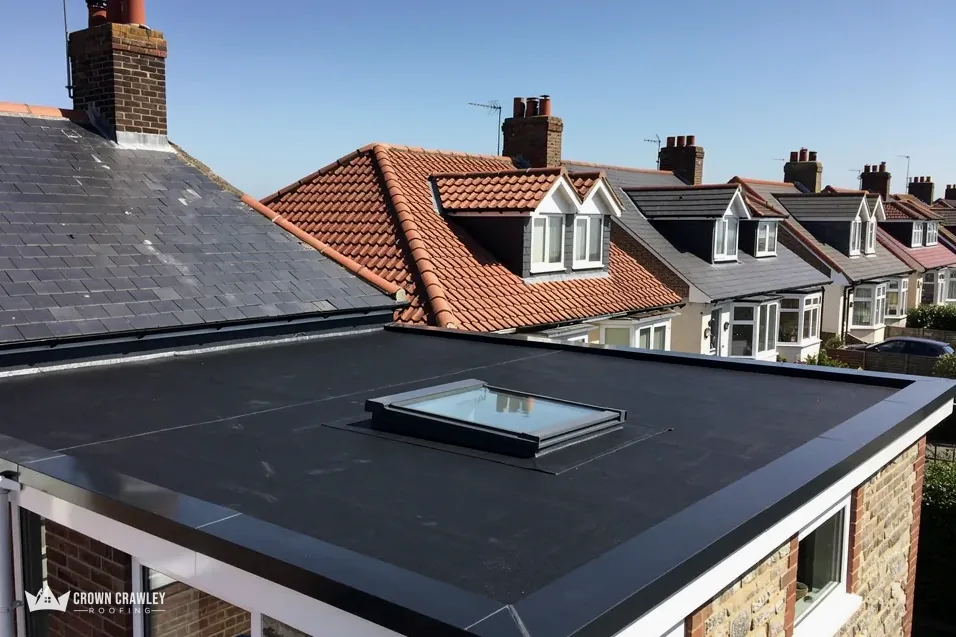
Croydon's first council high-rise blocks went up in these two roads in 1957. Few residents ever see a tall block's roof, so we report what we find up there and who it belongs to.
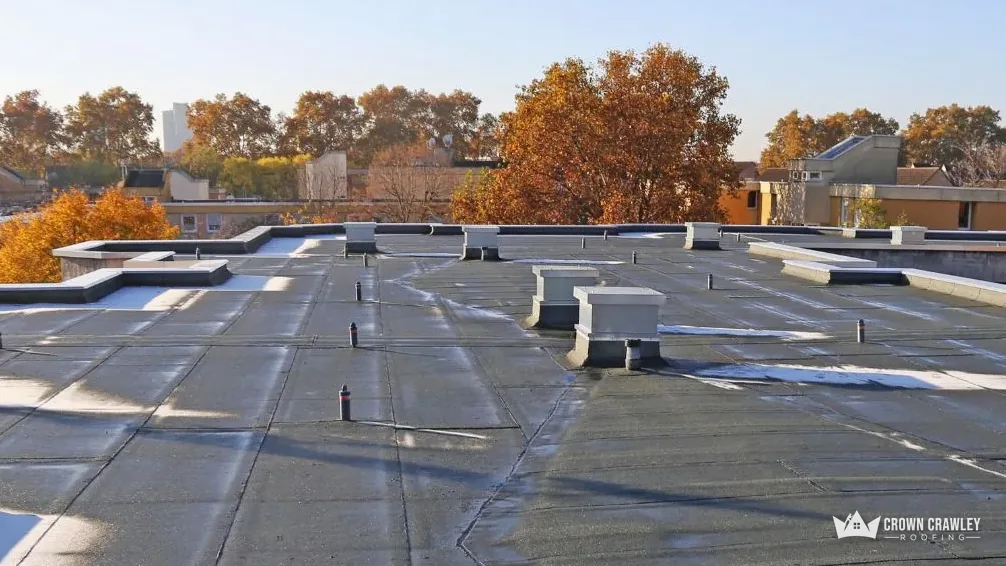
Flat roof on a residential block
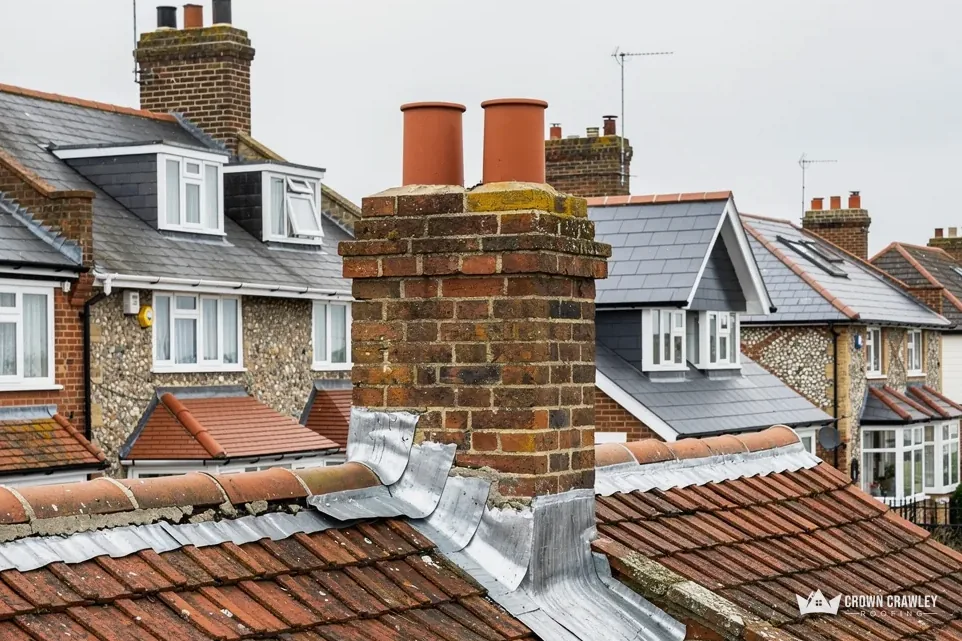
One street on a large estate can include freeholders, leaseholders and tenants. Tenure decides who may order roof work, so that is our first question, before any price is written.
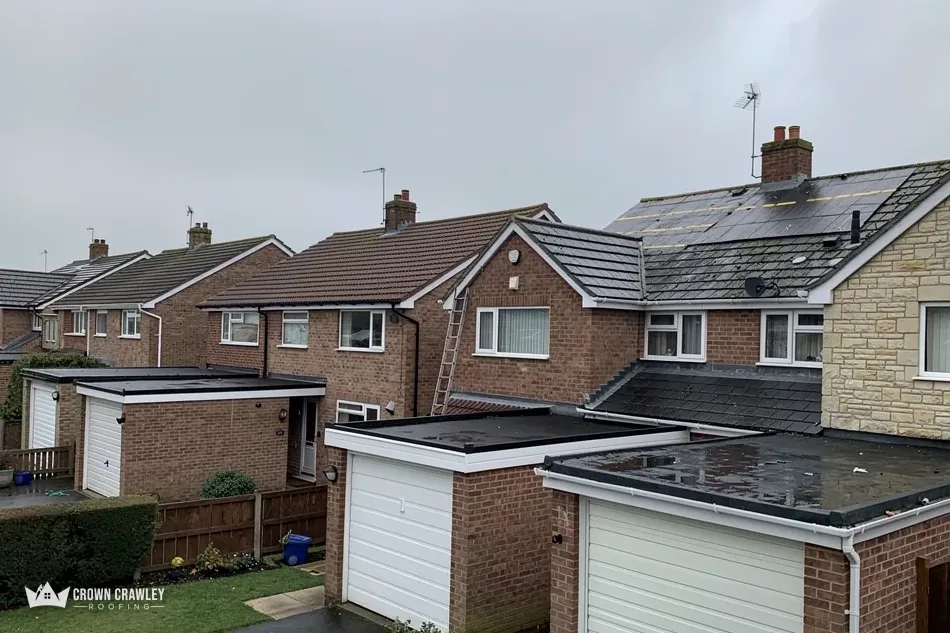
Terraced homes with shared rooflines
Map of New Addington and the neighbourhoods around it, with Crawley for reference.
New Addington is a large council-built estate in the south-east of the London Borough of Croydon, in the old parish of Addington.
Up on the New Addington estate
Three chapters: how an estate built in phases is surveyed, who answers for a roof over several homes, and what Croydon publishes about scaffold.
Stage 01 · First look
An estate begun in 1948 and extended over the years cannot have a single roof, so we survey the one above you.
Croydon Council's account of a century of council housing says its post-war estate at New Addington was begun in 1948, and that the borough's first high-rise blocks, in Lodge Lane and Violet Lane, followed in 1957. A large estate is rarely finished in a single season. A place built across years, by different teams, can change from one street to the next, and a patch made a decade ago may not match its neighbour. For that reason we arrive without assumptions about what is on your house.
We begin at ground level, noting the pitch, the covering and how the ridge and verges are finished. Then we climb and look closely, because tiles of one colour can hide different profiles, and underlay can be felt or a breathable membrane. Everything gets photographed, from the covering to the nails and battens, and the pictures come to you. The aim is for you to see your own roof, instead of a generic description of roofs from the period. If a covering can be matched, we tell you so. If a match is hard, you hear that before you commit to anything.
The New Addington roof check
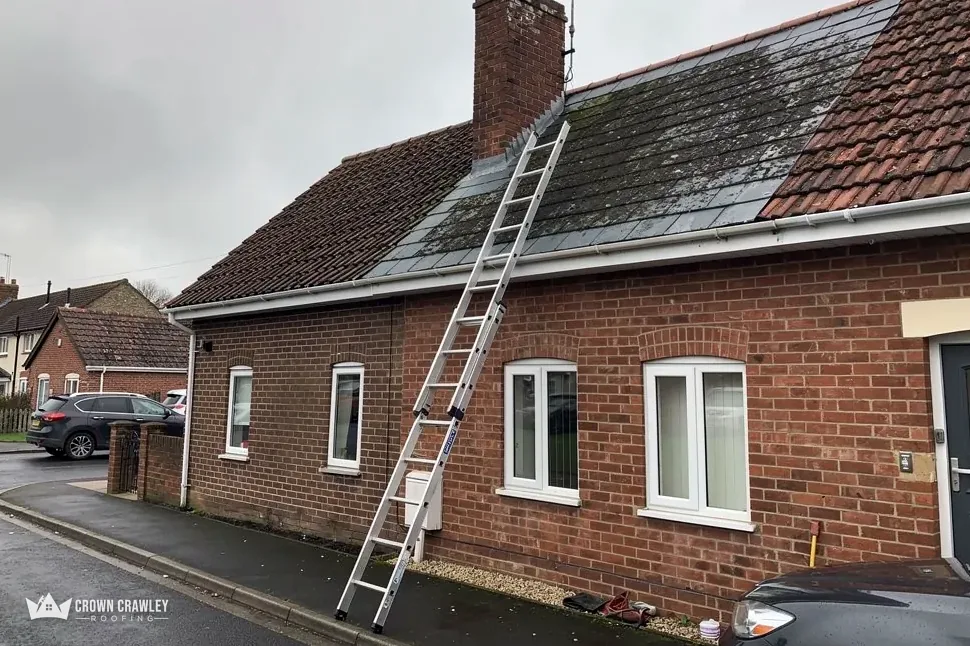
No. Age is a starting point, nothing more. Marley's figure for concrete tiles is around 60 years, with a caution that no tile comes with a promise. The parts that give up first are usually the edge details: ridge and verge mortar, tired underlay at the eaves, or a gutter that has been weeping into the fascia. Those are repairs. Our gutters, soffits and fascias page explains how each of the boards is mended or swapped when they are the problem.
The loft earns a visit of its own. We check for chinks of light through the covering, stained timbers and insulation packed into the eaves, where it can choke the air gap a roof relies on. Opening that gap is a small job with a long payoff. Where only part of a slope is repaired, we carry a spare tile from a hidden side and hold it against the front in daylight, because a shade that looks right in the van can stand out from the road. Joins with a chimney or a party wall get a separate look, as the lead and the mortar fillet there tend to open long before the field tiles do. Afterwards you receive the photographs and a single total price covering what we found, and the next step stays yours.

Stage 02 · Ownership
On a block, the opening question is who is responsible for the roof, and the answer sits in the tenure, not in the leak.
The estate started as a council scheme, and in 1957 Croydon built its first high-rise blocks, in Lodge Lane and Violet Lane. That history shapes how we behave here. We do not know who owns your particular home and we will not assume. What we do know is that a roof over several homes belongs to the building, not to whichever flat shows the stain.
It turns on the lease or the tenancy. A council or housing association tenant reports the leak to the landlord, who looks after the structure. A leaseholder usually reports it to the freeholder or the managing agent, who handle the roof and spread the bill through the service charge. Our answer on leaseholder roof repairs and who pays covers the common set-ups. If you hold the freehold of your own house, you can instruct us yourself, and a written price with photographs is a useful record to keep, whether for your own files or for a lender or buyer later.
Who is who on a block roof
A ceiling stain starts the conversation; the lease or tenancy says who must answer it.
Blocks and garage courts often have flat or low-pitched roofs, and those fail in their own way. Water lingers instead of running off, so a split seam, a choked outlet or a cracked upstand can let it into the building. We track the leak to its entry point, which may be well away from the stain, and photograph it. EPDM, GRP and felt each have different typical lives, and sometimes a patch is the better buy. Our flat roofing page explains how we weigh up the options.
Where several households are affected, we give a single price to whoever places the order and share the photographs with the others, so everyone sees the same evidence and nobody has to take our word for it. We map the scaffold route past shared paths, parked cars and the bin store. Each household hears when the scaffolding arrives and leaves, and we agree a time to enter the loft with whoever holds the key. Nobody is surprised, and the job is done once rather than three times over. Along a terrace the ridge crosses the line between two owners, so mending your half can mean touching the neighbour's slope. We explain that beforehand and leave both halves watertight.
Stage 03 · Permissions
Croydon is the planning authority and the council that licenses scaffold on its roads, and its published terms are specific.
A roof repair that keeps the building looking as it does today needs very little paperwork at New Addington. Croydon can confirm whether a conservation area touches your road on the estate. The rules start to bite once a repair swells into a re-roof, or once the scaffold has nowhere to stand except the road.
Croydon's own page says no licence or consent is required for scaffolding that stands on private land. On the public highway one is needed, and the council says the minimum period is one month. The published charge is £488 per four weeks for each elevation, with a higher £610 figure for lengths over 10 metres. The council will not hand over a licence until it has visited the site, and renewing means asking at least seven days before expiry. Nothing on the council's page names the applicant, which is why we ask, settle the split of tasks with the scaffolder and plan the dates from there. Space on your own frontage sidesteps the matter. We also plan the route that tiles, battens and rubbish take between roof and skip, because a clear path matters as much as the poles. On a block, the managing agent may have a view on where the scaffold stands, and we ask for that in writing.
Croydon, before a roof job
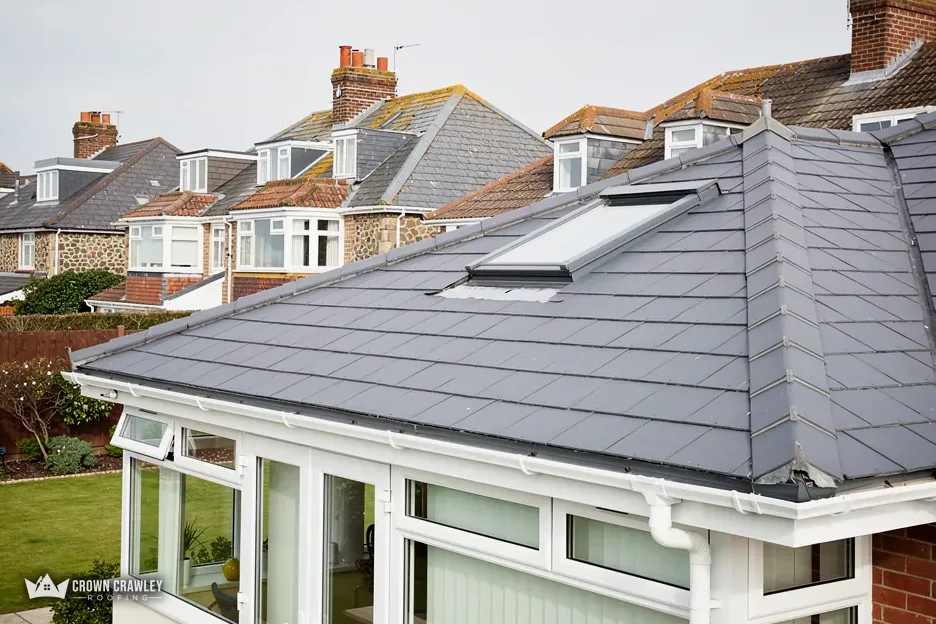
The borough runs its own building control team. Under the Planning Portal's national measure, building control approval is generally not needed where less than 25 per cent of the building envelope and less than 50 per cent of the roof are touched by the work. Approval is needed for a new covering at least 15 per cent heavier than the old, or one whose fire performance is significantly different. On anything larger than a repair we raise the question with the council before fixing a date and record its answer in the written price. Our roof replacement page lays out a whole re-roof in the order it happens.
Roof repairs also touch wildlife law, since government guidance lists them among works that can affect protected bats. Signs in the loft mean we stop that area and talk with you before going on. The first step is simple: attach a picture of the trouble spot to an email, add your postcode, and if you live in a flat, the name of whoever manages the block.
Read your lease or tenancy first. Tenants report leaks to the landlord, who looks after the structure. Leaseholders usually go to the freeholder or managing agent, who organise roof work and share the cost through the service charge. Owners of a freehold house can instruct us themselves and get photographs plus one total price in return.
For a first application the council gives no lead time. It does say a licence is issued only once a site visit has happened, that the minimum period is one month and that the charge is £488 per four weeks for each elevation. We ask the council about timing when your job is planned, and the scaffold is booked only when the dates are confirmed.
Not usually. Work that leaves the roof's appearance unchanged is the simple case; for conservation area status, ask Croydon about your street. Should you want a different look overhead, or live in a block, ring the London Borough of Croydon planning team before ordering materials, as other rules may then apply to you.
Often it can. Marley gives concrete tiles around 60 years and notes that is no promise, and ridge, verge and eaves details usually need work before the tiles do. Our photographs show whether mending will hold or whether a whole slope has reached its end, and the single total price covers whichever route you choose.
Picture the part of the roof, flat or pitched, that worries you, email it along with your postcode, and a survey day follows.
Message us on WhatsApp