The room under a roof window is often the nicest one in the house: a landing, a bedroom in the loft, a bathroom with a slope. It has been decorated with care, the blind fits the window exactly and nobody wants plaster dust over it. So when the window starts to leak, fog between the panes or refuse to close, the first question is usually whether it can be replaced without wrecking the room.
The honest answer has two halves. A roof window is fixed from the outside, because its frame is flashed into the tiles or slates, so the replacement cannot be done wholly from the inside. But a like-for-like swap, with a new frame matching the old frame, leaves the inner lining and the plaster splays in place, and the inside work is limited to taking out the sash and the blind and putting them back. This guide covers how to identify the window you have, what happens on the roof and inside the room, what can still need decorating afterwards, and what to check before you agree a price. It also says when a same-size swap is the wrong plan and the opening should change.
What working from inside can and cannot do
People often hear that a roof window can be changed from inside and picture someone standing on a stepladder with a screwdriver. Part of that is true, and part is not.
What can be done from the room?
Some jobs are inside jobs. A sash, which is the opening part of the window, can sometimes be unclipped and lifted off its hinges. A pane of glass in some designs can be changed as a unit, and blinds, covers and trims can be taken down and refitted. When only the glazing has failed, a new glass unit in a sound frame can be the cheaper route, so ask about it.
What has to happen on the roof?
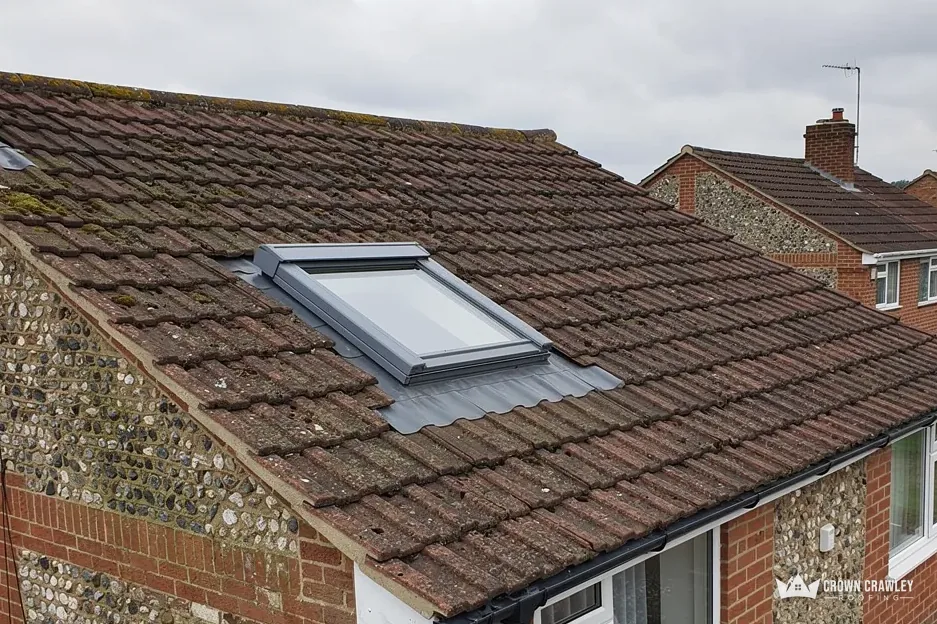
If the whole window is being replaced, the frame has to come out of the roof. It is held by brackets fixed to the rafters, and the flashing around it laps under and over the tiles. Those parts are reached from outside, with tiles lifted around the opening and the flashing renewed. Putting a new frame into an old flashing is how leaks begin, so a replacement window normally comes with a new flashing kit. Our guide to flashing kit types shows the options for tile, slate and flat profiles.
So the practical answer is a split job. The outside work is done from a roof ladder or scaffold, and the inside work is kept as small as possible. The aim of a good like-for-like swap is that your ceiling, your paint and your lining are never cut.
Finding out which window you have
A same-size swap starts with knowing exactly what is in the roof. Measuring the visible glass is not enough, because the frame is bigger than the glass and part of it is hidden under the tiles.
Where is the size written?
Most roof windows carry a maker's label, often on the inner edge of the sash or on the frame when the sash is opened. It gives a type and a size code. Photograph it with the window open, and write down the date if the label shows one. With that code the supplier can say whether the same model is still sold, and what has replaced it if not. If the label has gone, a roofer can measure the frame from the roof and match it to a current size. Our guide to roof window sizes lists the common ones.
What else is worth noting down?
Write down how the window opens: whether it swings from the top, from the middle or from the side. Note the type of glazing, any blind or shutter, whether it opens by hand or by motor, and the roof covering around it. If the roof is tile, slate or flat, the flashing will be different. The pitch of the roof matters because a window has a lower limit for the slope it suits, so check the maker's minimum pitch for your size.
Armed with the code, the pitch and the roof covering, a supplier can quote a matching frame and flashing without a visit. That is a starting price only. The written total follows a look at the roof, since rotten battens or a damaged rafter around the opening change the job.
The order of work, step by step
Knowing the sequence helps you protect the room, and it tells you what a quote should include.
What happens inside first?
Clear the area and cover the floor, bed or furniture beneath the window with dust sheets. Take the blind down and keep its brackets and fixings together. The sash is removed so that the frame can be reached, and any inner lining trim is released only if it has to be. Where the old window was installed well, the lining can stay put. The aim is a clean working space under the opening before any tile is lifted.
What happens on the roof?
Tiles or slates around the window are lifted, sorted and stacked. The old flashing comes off. The frame is unscrewed from its brackets and lifted out of the opening, and the battens and underlay around the hole are inspected. This is the point where hidden rot shows. If the timber is sound, the new frame goes in on its brackets, with a new collar of underlay dressed into the gutter flashing at the base. The new flashing is built up from the bottom, tile by tile, so that each piece laps over the one below it. The covering is relaid around the new frame and the sash goes back in.
What is the last step inside?
The sash is checked for opening, closing and the seal, the blind is refitted and the dust sheets come up. Water is run over the flashing if the weather has not tested it. Ask that the weatherproofing is finished each day, so a wet night does not find an open hole above your bed.
Protecting the decoration
Most of the damage to decoration comes from dust, knocks and the lining being disturbed, not from the roof work itself. A little planning removes nearly all of it.
How do you keep dust out of the room?
Tape polythene across the opening before the old frame moves, sealing it to the surrounding wall and ceiling lining so that falling debris stays outside it. Lay dust sheets beneath, and move small items out. Close the door of the room, and if the work is on a landing, close the nearby doors too. Ask the roofer to vacuum rather than sweep when each visit finishes.
Will the plaster splay need redecorating?
The splay is the angled plaster or board lining that runs from the window frame to the ceiling and wall. A same-size frame sits in the same position, so the splay is not disturbed and may need nothing. Even so, a hairline crack at the junction of frame and lining is common when an old frame is cut out and a new one set in, because the two meet along a line that has moved over the years. A tube of flexible decorators' caulk and a coat of paint tidies it. If the lining has been damp for a long time, it may need to be dried out and repaired first, and that is a different job from the window swap.
Where a new frame is a different size from the old, the lining is cut and remade, and the decoration around it has to be redone. Plan that into the price and the dates if you are choosing a larger window. Our roof windows and skylights page shows the other jobs that go with a change of size.
Rules, bats and when a same-size swap is wrong
A like-for-like replacement is the simplest case, but a few checks still apply.
Does a replacement need Building Regulations approval?
The answer turns on the work and on which body handles it. Approved Document L, Table 4.2, sets targets for new or replacement elements in existing homes: 1.4 W/m2K for a window, or Window Energy Rating Band B as a minimum, and 2.2 for a rooflight. Ask your building control body which line applies to your unit and whether the swap must be notified. In Crawley that is Crawley Building Control, whose list of approval work includes new window openings in roofs. A same-size swap leaves the opening as it was, but the question is theirs to answer, not ours or the window maker's. Planning is a separate matter, and a listed house or one in a conservation area needs a conversation with the council's planning team first.
Could the roof space hold wildlife?
Bats get strong legal protection under GOV.UK guidance, which counts roof repair and replacement as activities that may affect a roost. Mention any droppings in the loft or bats seen near the eaves before tiles come up, and leave a nesting bird alone until the young have gone.
When is a same-size swap the wrong plan?
If the roof around the window is tired, replacing the window alone can mean lifting the same tiles again in a year or two. If the frame is below the slope's minimum pitch, or the old hole was cut badly, a fresh opening may be the better answer. A roofer who has seen the roof can say which.
Price ranges and the written quote
Prices vary with the size of the window, the roof covering and the access, so only a national guide can give a range before a visit.
What are the typical UK figures?
Checkatrade's window fitting guide, in its October 2026 table, gives an average of £1,025 to replace a roof window and £1,250 for a new one. Its Velux repair guide, dated July 2026, puts repairs at £165 to £1,050 and complete replacement with the same model at £1,000 to £2,500. Treat these as national typical ranges and add VAT at 20% where a quote leaves it out; your own figure comes after a roof survey. Scaffold, where needed, is extra: Checkatrade's fascia and soffit table quotes £300 to £600 a week for one elevation.
What should the written price say?
Ask for one total. It should name the window by its maker's code, the flashing kit, the roof covering to be relaid and the making good of the inside. Check that VAT and access are in the figure. Ask what happens if the battens or rafters around the opening turn out to be rotten, because that is the likeliest change after the tiles come up.
How do you start?
Send a photo of the label, a photo of the window from the room and from the garden, and a note of any leak marks on the lining. We look at the roof first, show you what is there and then put one total in writing. If the leak is the reason you are reading this, our answer on a leaking roof window helps you tell a worn seal from a failed flashing before anyone visits.
Part of our Velux Roof Windows & Skylights in Crawley
Swapping a roof window
Can a roof window be replaced entirely from inside the room?
No, not the whole window. The frame is fixed to the rafters and flashed into the roof covering, so the tiles and flashing are dealt with from outside. Parts such as the sash, a glass unit or the blind can often be changed from inside. A photo of your window's label helps us say which applies.
Will the ceiling and paintwork need redoing after a same-size swap?
Often not. A frame of the same size sits where the old one did, so the lining and plaster splay can stay. A hairline crack at the joint is possible and a dab of caulk and paint usually covers it. Protect the room with sheets and polythene before work starts.
How do I find out what size my current window is?
Open the sash and look for the maker's label on the frame or the edge of the sash. It carries a type and size code. Photograph it and send it with a picture of the roof outside. We can then match a frame and flashing, and confirm the measurements when we look at the roof.