Fitting a roof window means cutting a hole in the one part of the house that must keep all the rain out. That makes it the most likely place for a pitched roof to start leaking, and the reason is rarely the glass. Water gets in through the junction: the flashing that joins the frame to the tiles, the felt lapped under it, or the seal on the sash. When those are right, a roof window will sit quietly for decades. When one is wrong, a brown ring on the ceiling a few weeks later is often the first sign.
This guide covers both halves of the job. First, what a good installation looks like when the old tiles are lifted and the frame goes in, so you know what to expect and what to ask. Then the routine care that follows: cleaning the glass, keeping seals and hinges working, clearing vents, dealing with condensation and spotting trouble early. It takes the place of an earlier post here that said little about the roof around the window.
What a well-fitted roof window looks like
Good fitting starts before anything is cut. The roofer checks where the rafters run, because the opening has to be framed between them and the frame needs solid timber to be fixed to. They also check the pitch against the maker's data sheet, since every roof window is designed for a range of slopes and the flashing is only tested within it. If either check fails, you hear about it beforehand, with no surprise once the tiles are off.
What happens on the day?
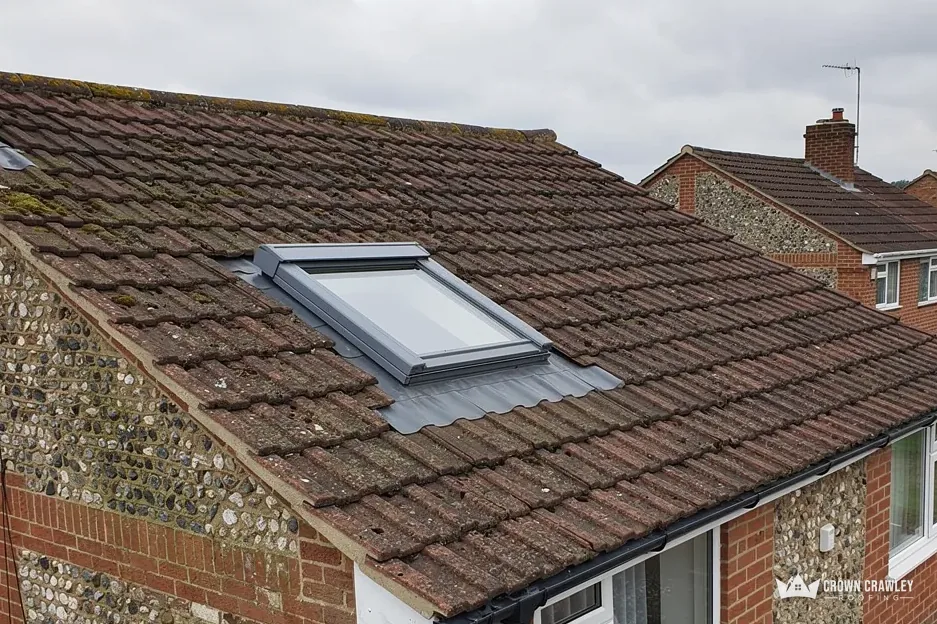
Tiles or slates are stripped from the area around the opening and set aside for reuse. The battens are cut back and the rafters trimmed or doubled up to make a framed opening. A lining then goes in around the edge of the opening, with a vapour seal to the ceiling side and insulation packed around the frame, so there is no cold gap for condensation to find. The frame is fixed to the timbers with the brackets the manufacturer supplies. Only then do the flashings go on, working from the bottom edge upwards so that each piece overlaps the one beneath and water always runs over the top of the joint.
What should you ask before work starts?
Ask which flashing kit is going in and whether it suits your tiles, who is fitting the blinds and the internal finish, and how the roof will be covered if rain arrives half way through. An opening that is sheeted over before anyone leaves is the sign of a tidy site. Ask, too, whether the quote is one written total that covers the flashing kit and the making good inside. Our roof windows and skylights work begins with a survey, so these questions have answers before any price is written down.
The flashing kit and why it must match
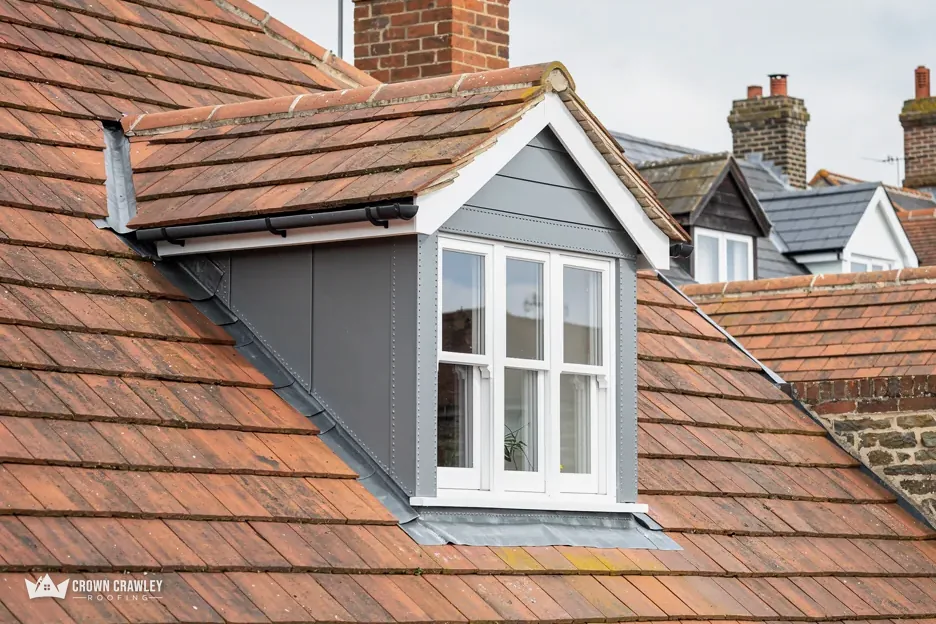
Flashing is waterproof material in strip form, closing the gap between the window frame and the roof covering. On a roof window it is usually supplied as a kit of pieces: a bottom apron, two side pieces, and a top piece that tucks up under the tiles. Each is shaped to the profile of the covering, which is why a kit made for flat plain tiles will not seal properly on a deep-profile interlocking tile, and why a kit for slate is different again.
Does the kit have to be the maker's own?
In practice, yes. The frame, the kit and the fixings are designed as a set, and the manufacturer's installation instructions assume you use them. Mixing parts invites a gap that nobody has tested. If you are fitting a window into a roof with an unusual covering, ask the roofer how the kit will be adapted and what is lapped where. If lead is involved, for example on a heavily patched older roof, it is worked into the courses as soakers or as flashing, and the lead work page explains how that is done.
How do you spot a tired flashing?
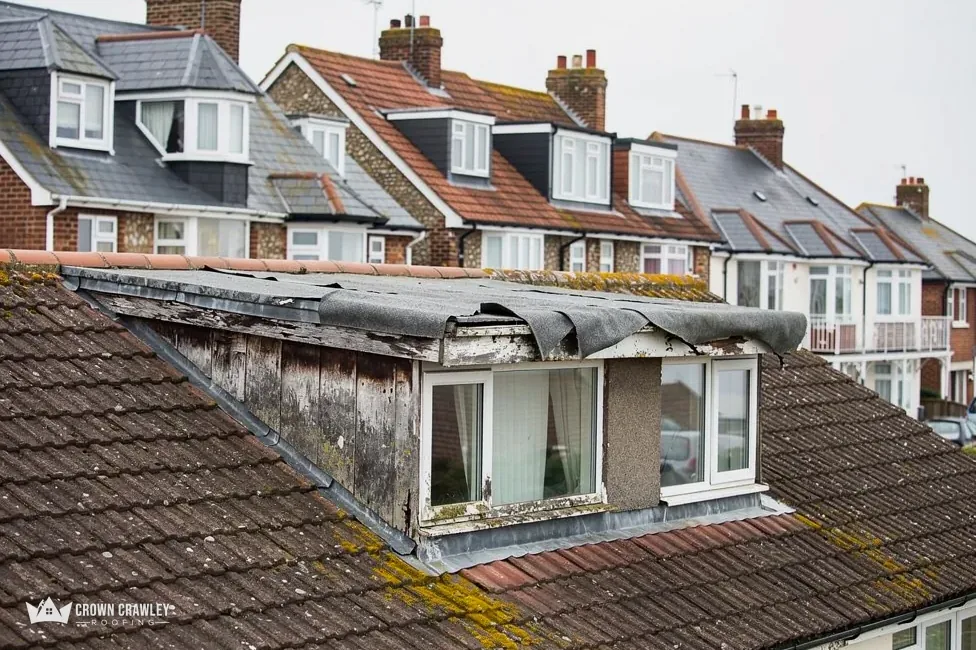
From the ground or the loft you can often see more than you think. Look for tiles around the frame that have slipped out of line, a bright gap or crack at the edge of a side piece, or sealant used as a patch where metal or the lap should be. Sealant has a place as a finishing touch, yet it cannot stand in for a well-made lap. If you can see daylight round the frame from the loft, or a stain running down from the top corner, ask for a roofer to look at the flashing before the next wet spell.
Seals, hinges and the parts that move
Once the frame is weatherproof, what wears is whatever moves. A roof window opens and closes hundreds of times in its life, and the seals and hinges take the strain. Both are cheap parts compared with the window, and both can usually be dealt with without touching the roof covering.
What should you look at on the seals?
Run a finger along the rubber or foam seal between sash and frame on a dry day. It should feel springy, continuous and clean. Signs of age are flattened sections, hard or cracked rubber, a gap at a corner, or a seal that has come away from its groove. On a window that whistles in wind or lets in a draught round the edge, the seal is the first thing to check. Replacement seals are made for each window type, so note the model number on the label on the frame or the sash edge before you order anything.
Do hinges and handles need attention?
A window that is stiff to open or does not close square is telling you something. Dirt in the hinge, a loose fixing or a handle that has worked slack will each stop the sash pulling tight onto its seal, and a sash that sits a few millimetres out will leak even when the seal is perfect. Wipe the moving parts clean first. If the maker recommends a lubricant, use only that, sparingly, and keep it away from the rubber, since the wrong product can soften a seal. Check the stay or restrictor on windows that open outwards, because it is a safety part and should not be left loose.
None of this involves climbing onto the roof. If a repair means leaning out of the window to reach the outer frame, leave it to someone with proper access.
Cleaning glass, frames and vents
Cleaning is the part most owners do themselves, and it is worth doing properly because grime holds moisture against the seals and frame. Choose a dry, overcast day so that cleaner does not dry in streaks, and work from inside wherever the design allows.
How do you clean the outside pane safely?
Many roof windows pivot or open far enough for you to reach the outer glass from inside. Use warm water with a little washing-up liquid, a soft cloth or sponge, and then a clean cloth or squeegee. Avoid abrasive pads, solvents and strong household cleaners, which scratch the coating on the glass and attack the seals. Our guide on how to clean a Velux window goes through a step-by-step method. For a window you cannot reach, do not lean from a ladder onto the slope. A roofer with proper access can clean it while doing another job, and we do not use high-pressure washers on glass or tiles.
What about vents and drainage channels?
Many roof windows have a ventilation flap along the top of the sash. It lets a little air through when the window is shut, and it usually has a mesh or filter that collects dust, pollen and insects. Check the flap opens freely and wipe the filter according to the maker's guidance. Similarly, many frames have a small channel or hole where water that gets past the seal is meant to escape. Blocked with debris, it holds water against the frame. Clear any visible dirt with a soft brush, not a pin or wire.
Outside, leaves and moss tend to collect against the upper edge of the frame, where the slope above brings debris down to meet it. That small dam holds water against the top flashing. A gentle brush with a long handle, used from a safe position, clears it.
Condensation, damp and when to repair or replace
Droplets on the inside of the glass are not always a fault. A room full of steam from cooking, showers and drying washing has moisture that finds the coldest surface, and glass in a roof is often that surface. The test is whether the moisture appears on the room side of the pane, and whether it clears when the room is aired. That is condensation, and better ventilation usually deals with it. Our page on condensation on a Velux window explains the causes in more detail.
When is it a leak and not condensation?
Moisture trapped between two panes of a sealed unit means the seal has failed, and that glass will need replacing. A damp patch on the lining, a stain that grows after rain, or wet insulation round the frame points to water coming in from outside. Look at the pattern: condensation appears after a steamy morning, a leak appears after a storm, and the two can easily be mistaken for each other when the weather is changeable.
Is it better to repair or replace?
Many faults are small: a seal, a hinge, a flashing piece. These are repairs, and they cost far less than a new unit. Checkatrade's July 2026 guide puts a typical UK range for repairing a Velux-type window at £165 to £1,050, and swapping the whole unit for a matching one at £1,000 to £2,500. Treat them as national figures and not as ours. Your own price turns on the window size, how we reach it, your roof covering and anything the survey uncovers. A swap means taking the old unit out and refitting the flashing, and our written price follows the survey.
Rules and paperwork to check around fitting
A new roof window is building work, so it is worth knowing which rules might apply before the scaffold goes up. We are not a substitute for the council, and we say plainly when something needs checking with them.
Do you need planning permission?
Many roof windows on a house count as permitted development under Class C of the General Permitted Development Order, which sets limits on how far a window may stand proud of the slope and on its height. Extra conditions apply to windows on side-facing slopes, and our roof windows hub sets them out. Listed status and any Article 4 direction, which some conservation areas carry, can change the position, so raise it with your council's planning team before ordering. The building regulations for roof windows page covers the other side of it.
Does Building Regulations approval come into it?
It can. Crawley Building Control counts new window openings made in a roof among the domestic jobs needing approval, so on Crawley jobs we check with them first. Elsewhere, speak to your own building control body, which may be the council's team or a registered private approver. If the loft is becoming a bedroom, the window may also have to serve as an escape route, with minimum opening sizes and a maximum height above the floor that your building control body will confirm.
Keep any paperwork from the job: the manufacturer's installation instructions, a completion certificate if one was issued, and the date the window went in. It helps with a later sale, and with a warranty claim on the window itself.
Part of our Velux Roof Windows & Skylights in Crawley
More about roof window care
How often should a roof window be checked?
A look from inside after winter, and another after the leaves have fallen, is a sensible routine. Check the seals, the sash alignment, the vent and the lining for stains. Look at the tiles round the frame from the garden. After a severe storm, check earlier. Small problems found early are usually small repairs.
Can a roofer fix a leaking roof window without replacing it?
Often, yes. The cause is frequently the flashing, a slipped tile beside the frame or a worn seal, and each can be put right without a new unit. A sealed unit with moisture trapped between the panes is different, because that glass cannot be repaired. We look at the leak first, then tell you which case you have.
Is a skylight on a flat roof maintained the same way?
The cleaning and seal checks are the same, but the weather detail is different. A flat rooflight sits on a raised kerb, with the waterproofing turned up and over it. Check that the covering has not lifted at the kerb and that the surface drains away from it, with no puddles standing against the frame.