Painted or coated, a metal roof can look and perform much better than one left to weather. Steel and aluminium sheets roof garages, workshops, barns, porches and the occasional house or extension, and many of them reach a point where the finish fades, rust blooms at the laps and a repaint starts to look attractive. The short answer is that it is possible. The longer answer is that paint is only as good as the metal and the preparation under it.
This post covers the questions in the order they come up. Is it actually metal? Is the roof sound enough to coat? How should the surface be prepared? Which kind of coating suits? How do you apply it safely? And when should you stop and replace the sheets instead? We explain the trade terms as they appear. The first is the lap, the overlap where one sheet sits over the next and where leaks and rust tend to start.
Is it really a metal roof?
Before anyone opens a tin of paint, be sure what the roof is made of. Corrugated sheeting on an old garage or farm building is often assumed to be metal when it is not, and the difference is serious.
How can you tell metal from asbestos cement?
Try a magnet. Steel sheets attract it; aluminium does not, but it feels light and rings when tapped, and it dents easily. Asbestos cement sheeting is a grey, rigid and brittle material that feels like a thick tile, and it chips instead of denting. Look at how the sheets are fixed, how thick the edges are and whether there are manufacturer stamps. If you are in any doubt, do not scrape, sand or wash the surface. Fibre cement and plastic sheets are further lookalikes, and each takes a different coating or none at all.
Why does it matter?
Anything built or refurbished before 2000 should be treated as containing asbestos, per HSE. Its guidance calls roofs of asbestos cement fragile without exception, and once a sheet begins crumbling and shedding dust, the work becomes notifiable. Disturbing it with a wire brush or a pressure washer is the way to do exactly that. A roof that might be asbestos cement needs to be identified by someone qualified before any cleaning, and we cover this in our answer on the asbestos survey before re-roofing. Once you know the sheets are metal, the next question is their condition.
Is the roof sound enough to paint?
A coating hides a worn surface for a while. It does not rebuild the metal. So the survey of the roof comes before any decision about paint.
What does surface rust look like, and what does serious rust look like?
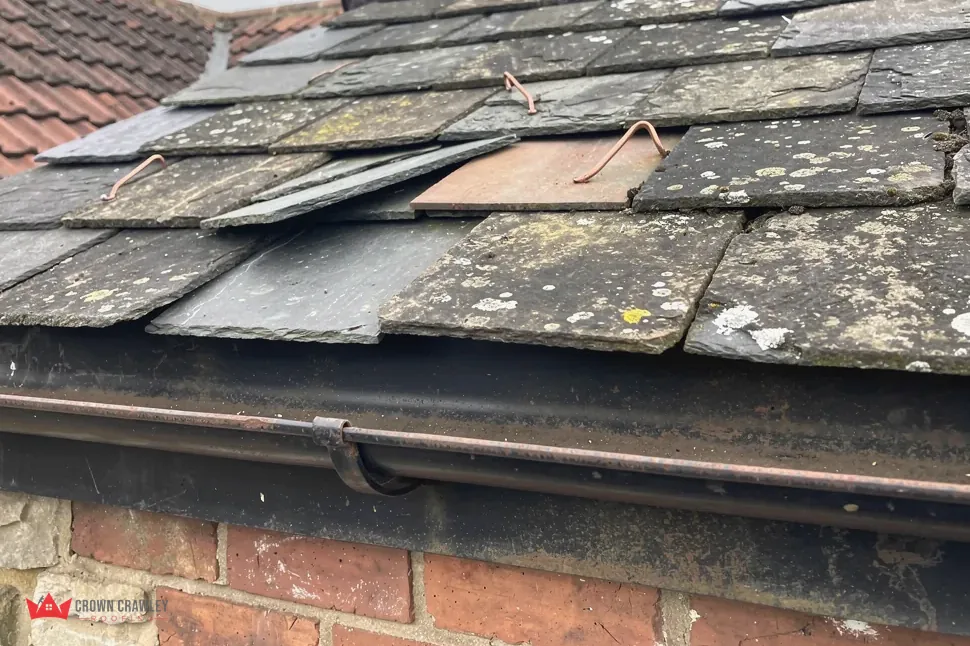
Surface rust is a rusty orange bloom on the paint face, usually starting at the laps, around fixings and along the cut edges. It can be brushed back and treated. Serious rust has eaten into the sheet: you will see pitting, flaking layers, soft or crumbling metal around screw holes and tiny holes through which daylight shows from inside. A screwdriver tip pressed on the metal will tell you; sound steel resists, and rotten steel gives.
What else should you check?
Look at the fixings, the screws or bolts that hold the sheets to the purlins, which are the horizontal beams carrying the roof. Missing or loose ones let sheets lift in wind. Check the laps for gaps and the ridge for loose capping. See whether sheets sag between supports and whether water pools. Inside, look for drips, stained timber and condensation on the underside. Condensation, which forms when warm air meets cold metal, is not a fault of the paint and no coating will cure it. Fixing that means insulation and airflow, not another coat.
Where the sheets are in good order and the faults are few, repair and a coat make sense. If rust has gone through in several places, skip ahead to the last section.
Preparing the surface properly
Most failed paint jobs on metal fail because the surface was not ready. Paint sticks to a clean, sound, dry surface. It does not stick to dirt, grease, loose rust or old flaking coating.
What does proper preparation involve?
Start with a wash to remove dirt, moss and chalky residue, using a cleaner suited to metal and a rinse at modest pressure. High pressure can force water into the laps and strip coatings that are still sound. Where biocide is used for moss or algae, follow the label, and remember that members of the public should not use products intended only for professionals. Then scrape and wire-brush off loose paint and rust until you reach firm material, treat bare rust with a rust converter or an inhibiting primer, and degrease the surface.
What about the fixings and laps?
Replace missing or rusted fixings, using the correct type with sealing washers. Seal open laps with a sealant made for metal roofing. Let everything dry fully before you coat. A damp sheet traps moisture, and the paint blisters. Work from the top of the roof downwards so that drips and dust fall onto bare metal you have yet to clean, not onto finished paint.
What about factory-coated sheets?
Many modern sheets carry a factory finish that behaves differently from bare galvanised steel. Some need a particular primer or a light abrasion before a new coat will grip, and the coating manufacturer's data sheet will say which. If the data sheet and the person selling you the paint disagree, follow the data sheet. A mismatched primer is the commonest reason a new coat peels off in sheets within a season or two.
Choosing a coating for a metal roof
Coatings for metal fall into a handful of families. Names vary between brands, so read the data sheet for the exact system and use the primer it asks for.
What are the usual choices?
An acrylic roof paint is the most common choice for outbuildings. It is easy to apply, can be brushed or rolled and cleans up with water, but it generally needs a sound base. A polyurethane or other flexible coating can bridge small hairline gaps and copes better with movement as the metal heats and cools. Bitumen-based paints are cheap, but they are dark and tend to be used on rough outbuildings where looks matter little. A zinc-rich or etch primer under the topcoat helps on bare galvanised or aluminium sheets, which resist paint unless prepared for it.
Does colour matter?
It does, in two ways. Dark colours absorb more heat, which makes the metal expand more, and light colours reflect it. And a big change of colour on a house can matter to the council. Repainting to match is maintenance, not development, but a house in a conservation area, or a listed building, deserves a call to the council's planning team before any marked colour change.
Is a coating a substitute for a new roof?
Only on sound sheets. A coating is a skin. If the metal under it is failing, the skin fails with it.
Applying it safely
A metal roof is among the more dangerous to work on. Wet or dewy sheets are slippery, painted sheets can be slick, and old sheets can be weaker than they look, particularly near the ridge and the eaves.
Why is a ladder not enough?
Because you need to be on the roof for a long time, with tools and a bucket, and a fall from a garage or outbuilding roof can do real harm. Proper access means edge protection or a scaffold, a roof ladder or crawling boards across the sheets, and not stepping between fixings. Walk on the lines of the purlins, not on the unsupported centre of a sheet. If the roof is fragile, or you are not sure, do not go on it.
What about weather?
Choose dry, mild days with no rain forecast, no frost overnight and no strong sun on the sheets, because paint applied to hot metal can dry too fast. Follow the coating's data sheet for the number of coats and the gap between them. Two thin coats beat one thick one, because a thick coat dries on the outside first and can trap solvent beneath. Keep wet paint away from the roof edge and gutters, and cover plants and cars below before you start.
When is a roofer the better choice?
When the roof is high, large, a house roof or in any way fragile. We survey first and share the pictures, so rust, laps and fixings are as visible to you as they are to us. The written price follows the survey. If you tell us the size of the roof and what it covers, we can say before we visit whether coating looks likely to be enough.
When replacement is the better choice
Paint buys time on a roof that is basically sound. It cannot make a worn roof new, and at some point money spent on coating would be better put into new sheets.
What signs point to replacement?
Rust that has gone through the sheet in more than a few spots, fixings that no longer hold because the holes have rotted out, sheets that sag or have lifted, laps that leak however often they are sealed and a coating that has already been renewed and failed again. A roof that needs recoating every few years is costing you time and money, and a new one may come out cheaper over the life of the building. On a house or an extension, where the roof is part of the living space, repeated leaks also damage the ceilings and timber beneath.
What would a new roof involve?
Options include new metal sheets, insulated panels or a different covering altogether. Our answers on metal roofing sheets for houses and replacing metal roof sheets look at both sides. An uninsulated metal roof on a heated building will also tend to drip with condensation, so a replacement is the time to deal with insulation and ventilation properly. Our roof replacement service starts with a survey of the existing structure.
Does a new roof need approval?
It can. Building Regulations apply to larger re-roofing jobs, and the Planning Portal sets the national test as less than 25 per cent of the building envelope and less than 50 per cent of the roof affected. Your building control body can confirm what applies to your building. A coating needs no such approval.
Part of our Roof Replacement & New Roofs in Crawley
More on painting metal roofs
Should I paint straight over rusty metal?
Not without treatment. Loose rust has to come off, and any bare rust should be treated with a rust converter or an inhibiting primer before the topcoat goes on. Paint over loose rust lifts away within a season. If the metal is pitted or holed, painting only hides the problem. Replace those sheets instead.
Do I need permission to repaint a metal roof?
Repainting in a matching colour is ordinary maintenance. A large change of colour on a house in a conservation area, or any work on a listed building, is worth checking with the council's planning team first. A listed building needs listed building consent for any work that changes its character.
Can I paint a corrugated cement sheet roof?
Not until you know what it is. HSE advises assuming that a building put up before 2000, or refurbished before then, contains asbestos, and asbestos cement roofs are always fragile. Scraping or brushing could release dust, so have the material identified by a specialist first. Tell us roughly when the building went up and we will point you to the next step.