Roofers in Bromley

Roofs in an old Kent market town, now a London borough.

Bromley grew from a market granted to the bishop of Rochester and now sits at the centre of a London borough. Each roof is checked against its age and its rules, then priced in writing.

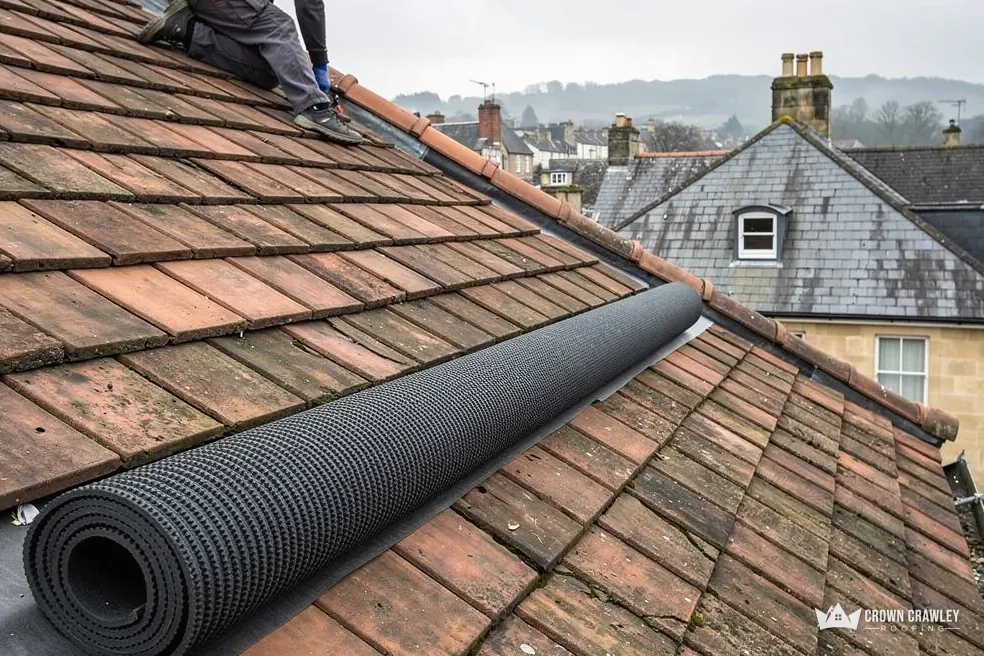
Roll of roofing membrane lying on a clay tiled roof

Roofs around the college and the high street

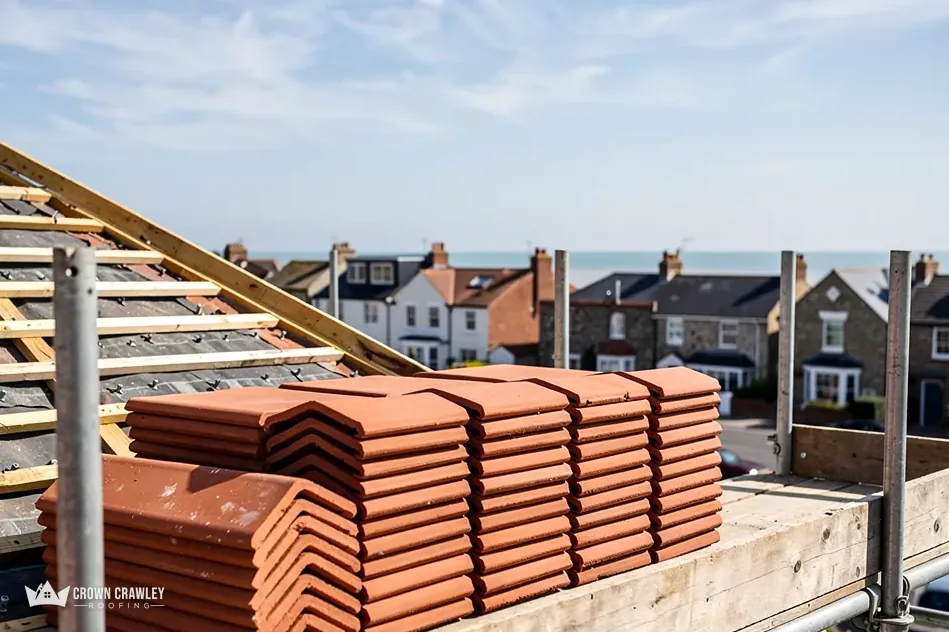
Stack of new clay tiles on scaffold beside roof timbers

Near Bromley College

Bromley College was founded by John Warner, bishop of Rochester, who died in 1666, and it is listed Grade I. Close to a building like that, we ask the council about consent before any roof work is planned.

Old brick building with chimneys

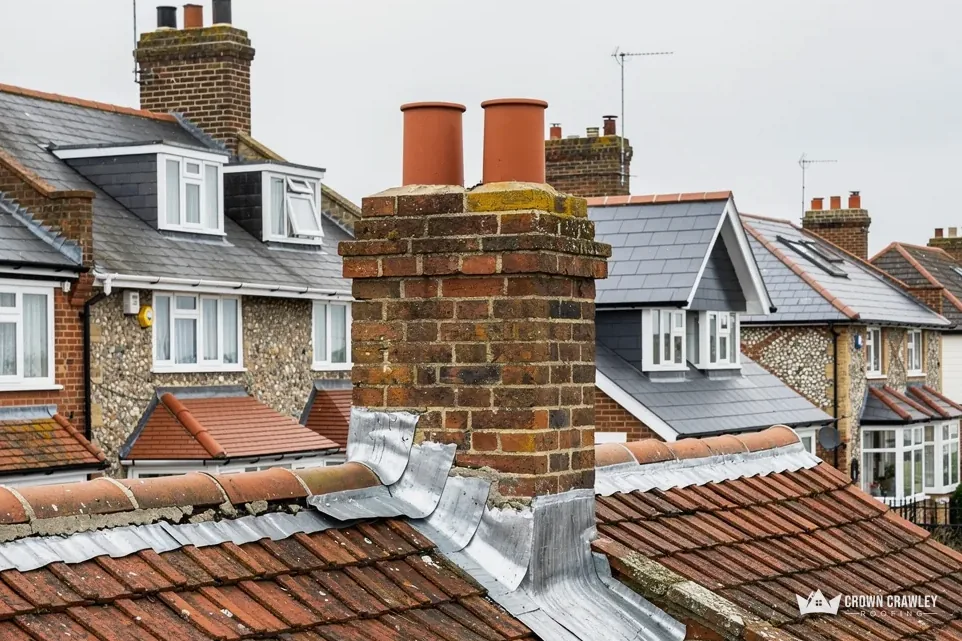
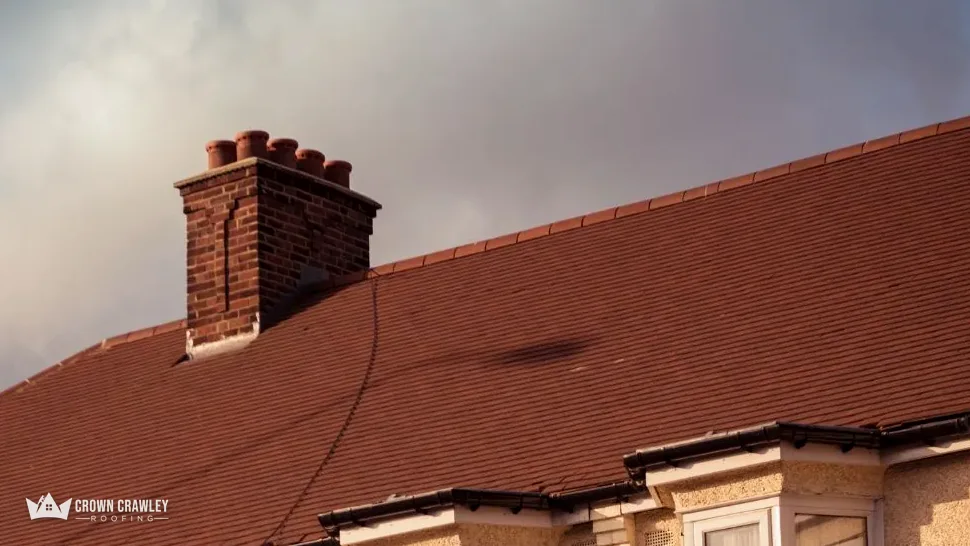
Chimney stack with orange pots and lead flashing among tiled roofs

Inside the town centre boundary

Part of Bromley lies in the Bromley Town Centre conservation area. If your roof falls inside the line, we put any change of covering or appearance to the borough's planning team before we price it.

Tiled roofs along a town street

Brick chimney with lead flashing on a clay tiled roof

Brick where the palace stood

Hasted noted in 1797 that the bishops' old palace had been replaced by a small neat brick edifice. Wherever brick buildings carry chimneys, we look hard at the stacks, flaunching and flashings.

Brick chimney stack with lead flashing

Bromley, north-east of Crawley

Map of Bromley and the neighbourhoods around it, with Crawley for reference.

Bromley is a market town on gravelly soil in north-west Kent, now the centre of a London borough, reached by road from Crawley.

Distance
28.8 road miles from Crawley, to the north-east
Drive
About 48 minutes
Council
London Borough of Bromley (London borough; Greater London Authority above)
Planning authority
London Borough of Bromley
Conservation area
Bromley Town Centre
Listed examples
Bromley College, Grade I; Church of St Peter and St Paul, Grade II*
Get a free quote

Diary of a Bromley roof

A bishop's market town seen from the ridge

Three short chapters on how the old town shapes our survey, what its listed buildings and conservation area ask of a roof, and the borough's own rules for a bigger job.

Stage 01 · Background

A market town with roofs from many periods

Bromley was a bishop's market long before it joined London, so each roof is surveyed for what is actually there.

Bromley began life as a market. Hasted, writing about Kent in 1797, records that the market was granted to the bishop of Rochester in the reign of Henry VI, and that in his own day it was much used for selling corn, live cattle and provisions. He describes a parish soil much inclined to gravel, and Bromley College as a home for twenty clergy widows with a chaplain. Two centuries on, it is the centre of a London borough, with buildings from several periods standing along the same streets.

What does a history book tell you about one roof?

Almost nothing. Records say who founded a college and what changed hands at the market stall. They cannot say whether the tiles above your landing went on in a single season or were patched across five decades. So we arrive without a theory. We go up and study the covering slope by slope, then the ridge along the top, the verges at the gable ends, the valley gutters that collect water between two slopes and the flashings that seal each joint, and we photograph every part. You see those pictures before any price reaches you.

On a Bromley survey

Covering
Tile, slate or other, noted per slope
Chimneys
Pointing, flaunching and flashings
Valleys
Lead or mortar, still watertight
Gutters
Joints, falls and brackets
Loft air
Eaves gap clear for ventilation
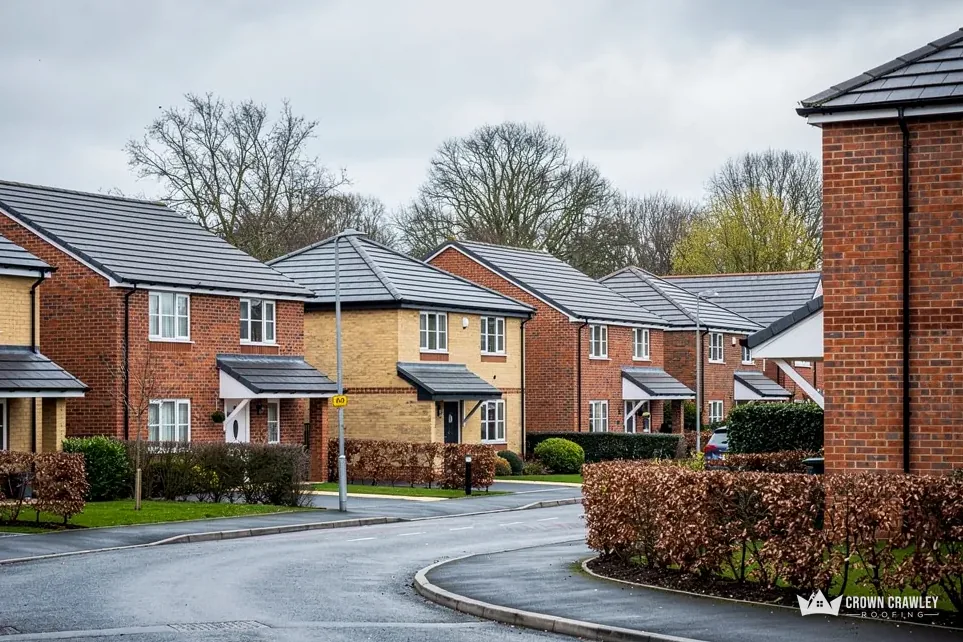
Modern estate road with brick houses and grey roof tiles

Why do roofs with many repairs need slower reading?

Older streets gather work from many hands. One slope might carry newer tiles bedded in cement beside courses that are still original, and a chimney may have been repointed twice by different people. A roof with a long record of repairs is not a poor roof; it is one whose story we have to read before choosing a fix. We note the tile profile, the colour and the fixings, so that a replacement matches and a repair follows the style around it. Below the tiles we look at the underlay, the sheet that lies beneath them, particularly where it runs into the gutter at the eaves, and we check the loft timbers for dark patches of damp. Air movement counts as well. With non-breathable felt, Marley's guidance under BS 5250 wants a continuous air gap at the eaves, and insulation stuffed into that gap leaves moisture condensing on the battens, the timber laths that carry the tiles.

A roof's history sits in its repairs, and the survey reads every one of them.

Chimney stacks stand exposed above everything else, so they get their own check: the pointing, the flaunching (the mortar collar holding each pot) and the lead where the stack meets the slope. Our chimney repairs page sets out how we repair or rebuild one, and what the survey looks at first. Gutters get the same attention, because a blocked or sagging run at the eaves can push rainwater up beneath the lowest tiles.

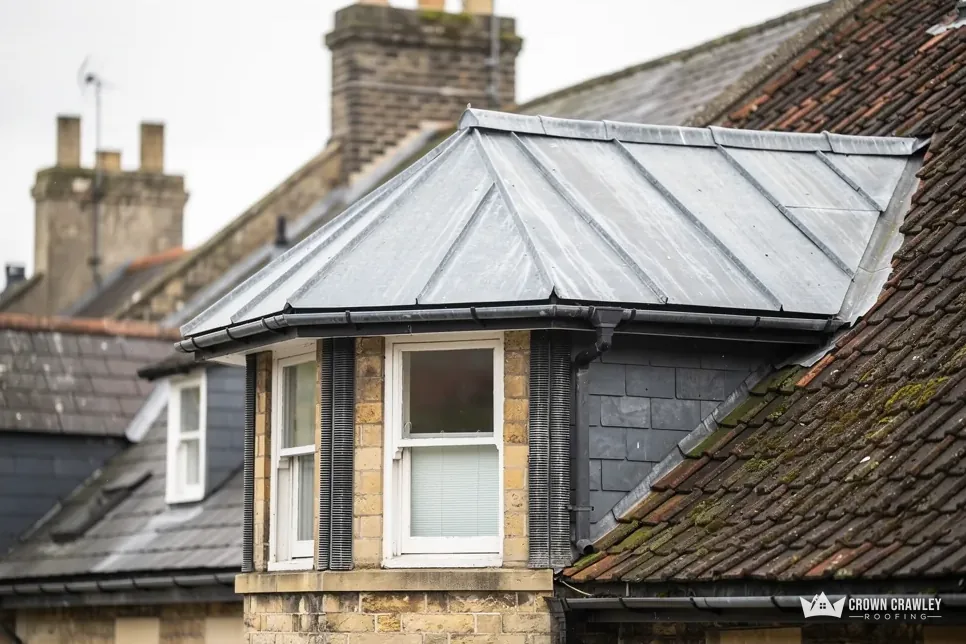
Lead-covered bay roof and chimney stack on a slate and tile roof

Stage 02 · Consents

Bromley College, the gateway and the conservation line

Bromley has listed buildings of high grade and a town centre conservation area, and both change who we speak to before roof work starts.

The protected buildings give some Bromley roof jobs an extra step. Bromley College, founded by John Warner, bishop of Rochester, who died in 1666, is listed Grade I, as is the gateway at the college. The Church of St Peter and St Paul is Grade II*, and the First Church of Christ Scientist is Grade II. Part of the town also lies in the Bromley Town Centre conservation area, with boundaries supplied by the council.

Can a listed roof be repaired without asking first?

Not safely. Listed building consent covers any alteration or extension that would affect a listed building's character, and whether a given roof repair does so is for the council to say. Before anyone touches a listed roof, even to swap one tile for another, renew a lead flashing or rebuild a stack, ask the London Borough of Bromley's planning team. We supply survey photos and a plain description of the intended repair, which usually shortens the exchange. Our lead work page explains the flashings and valleys that older roofs rely on. If you look after a listed building for a trust, a parish or a group of owners, we write the findings so that every decision-maker can follow them without a site visit.

Words you may meet

Listed building
Protected for its special interest
Conservation area
Area where the council guards local character
Listed building consent
Permission for work affecting listed character
Faculty
Church of England's own consent route

Who approves work on a church roof?

For a Church of England church that is in use, the ecclesiastical exemption applies, and repairs go through the faculty system instead of the council's listed building consent. The council's planning permission still governs anything that changes the outside of the building. Other denominations have their own routes, or use listed building consent. Which route applies depends on who owns and uses the building, so the church or its architect confirms it, and we quote the roof work afterwards.

What about a house within the town centre boundary?

Putting back the same tiles in the same pattern leaves the roof's character where it was. Changing the covering, adding a roof window or altering a chimney is where the planning team will want to look first. Our guide to re-roofing in a conservation area walks through the steps, and the survey photos give the council what it needs to reply quickly. Keeping the replies, the photos and the written price together in one folder also helps if you sell the house later.

Stage 03 · Permissions

What a London borough asks of a re-roof

Bromley is a London borough under the Greater London Authority, so questions of planning and building control go to the borough's own teams.

Most small jobs need little paperwork. A handful of slipped tiles, a rebedded ridge or a renewed valley changes nothing you could see from the pavement. Questions only begin once a job grows to cover a big part of the roof, once the covering itself changes, or once the access plan involves the road.

How large can a Bromley roof job grow before approval comes in?

The London Borough of Bromley runs building control itself. As a starting point we use the Planning Portal's two tests: approval is not normally required where less than 25 per cent of the building envelope is affected and under 50 per cent of the roof is touched. A replacement that adds 15 per cent or more to the roof's load needs approval too, or would perform unlike the old one in a fire, and the Planning Portal's advice is that a surveyor or structural engineer should look at the loading first. When the survey points to stripping a big area, we contact Bromley's building control before fixing dates, and the written price records that. Our roof replacement page follows a whole re-roof from scaffold to sign-off.

Before a bigger job starts

Planning
London Borough of Bromley
Approvals
Run by the borough itself
Scaffold
Needs a licence on the highway
Weight
Heavier covering needs checking first
Wildlife
Work pauses if bats appear
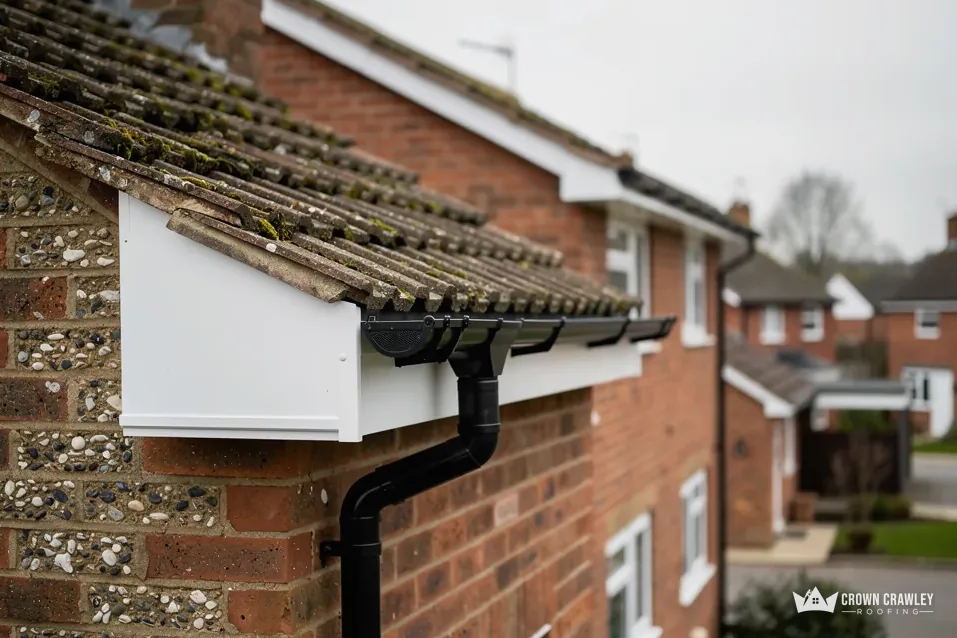
White fascia and black downpipe on the eaves of a brick house

Where does the scaffold go?

A scaffold that blocks any part of the public highway is licensed by the highway authority, a rule that comes from section 169 of the Highways Act 1980. On a private forecourt or in a garden that licence does not arise. Where the pavement is the only space available, we organise the licence with the scaffolding firm, and our start date follows the authority's notice period. We also walk the side access, since materials and waste need a clear route that does not cut across a neighbour's path. Before work begins you get a plain outline of the days ahead: when the scaffold goes up, which slopes come first, how the waste leaves the site, and when the scaffold comes down.

Roofs can hold bat roosts, and the government's bat guidance includes roof repair or replacement among the work that may affect them. Evidence of roosting seen at the survey stops the job until you and we have settled how to proceed. Start with a photograph of the tiles, chimney or lead in question, shot from the street or garden, together with your Bromley postcode.

Bromley listings, scaffold and approvals

Will a new tile colour near Bromley's high street need the council's view?

Ask first if you are near the centre. Part of Bromley lies in the Bromley Town Centre conservation area, which the national planning dataset maps from boundaries the council supplies. The borough's conservation pages show the line, and its planning team can check a single address for you. Inside the boundary, speak to the team before altering the covering or the appearance of the roof, and keep any repair in the existing materials.

Which Bromley roof renewals go to the borough's building control?

Bromley runs its own building control service. We begin with the Planning Portal tests, which treat anything under 25 per cent of the building envelope and 50 per cent of the roof as not normally needing approval, and then consult the borough on larger jobs. A covering that would be 15 per cent or more heavier needs approval. Your written price states what the job involves.

How can I tell if my Bromley house is listed?

The London Borough of Bromley's planning team can say whether a house is listed and at what grade. Bromley College is Grade I and the Church of St Peter and St Paul is Grade II*. Listed building consent applies to work affecting a listed building's character, so ask the team before a repair that alters the tile, the lead or the chimney.

What goes in my first message for a Bromley roof price?

Attach one clear photo of the area that concerns you, taken from the street or garden, and add your postcode and a line on when you first noticed the problem. We arrange a survey, go up, photograph the roof and give one written total price. Mention any listing or conservation area in your message, and we raise it with the council from the start.

A written price for your Bromley roof

Send a picture of the tiles, chimney or lead giving you trouble, with your street name and postcode, and a survey date follows from us.

01293 974253

10-year workmanship guarantee, in writing.

Call Get a free quote