Plenty of houses still wear the timber fascias and soffits they were built with, and plenty of those boards are tired. The paint has lifted, the corners have gone dark and the gutter has started to lean. At that point the choice is between painting, patching and replacing, and it is worth knowing what a replacement actually buys you before you decide.
The fascia is the board that runs the length of the eaves and is fixed to the ends of the rafters, the roof's own sloping beams. The soffit is the panel underneath it, closing the gap back to the wall. When both are replaced in uPVC, which is a rigid, factory-finished plastic, the house gains a roofline that needs washing rather than painting, boards that do not soak up water, soffits built to let air into the loft, and a firm backing for the gutter. The rest of this post takes each of those in turn, with the limits alongside, so you can judge whether new boards suit your house. We also say where timber or another material is the better answer, because that is sometimes the case.
Why painted timber boards give up
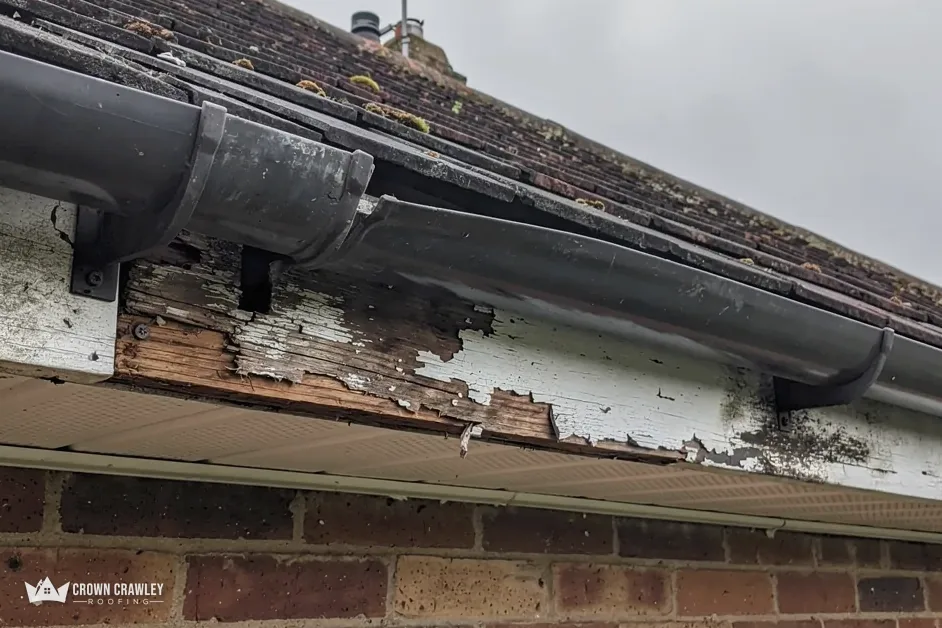
Timber is a fine material for a roofline when it is kept sealed. The trouble is how much it asks for. The face of a fascia needs repainting or recoating on a regular cycle, and every missed cycle lets water in at the joints, the screw holes and the cut ends. Wood that stays damp for long enough rots.
Where does the rot start?
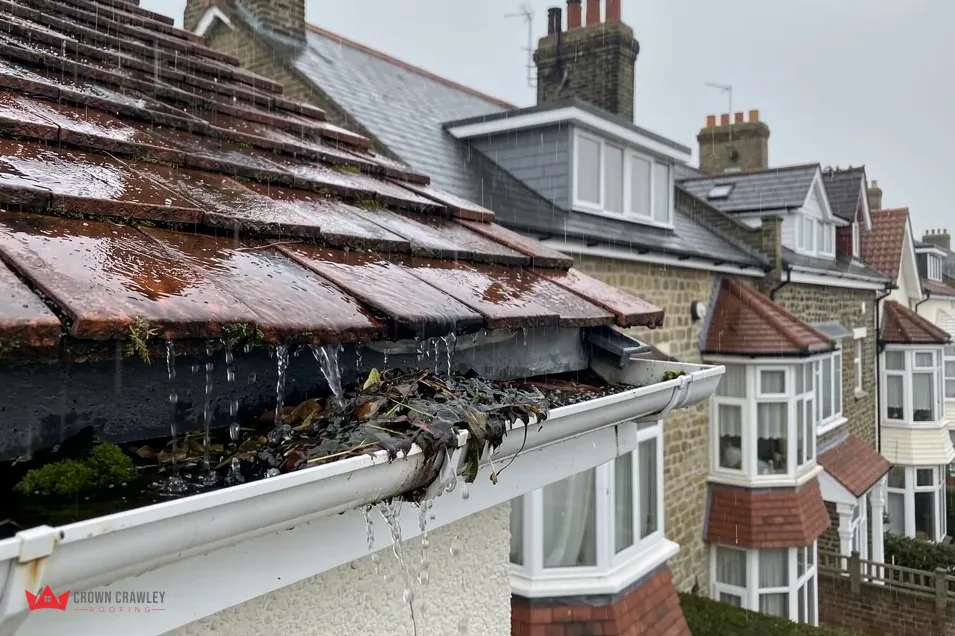
Usually at the bottom edge and at the corners, where water sits. A gutter that overflows keeps a fascia wet from the front, and felt that has rotted away at the eaves sends water in from behind. Once the paint film is broken, the board takes up water through its end grain like a sponge, then swells and splits. By the time the surface looks bad, the board behind can be much worse.
Is painting still worth doing?
On sound boards, yes. A good clean, a sound primer and two coats of exterior paint will hold a healthy fascia for a good while. But painting does not cure a board that is already soft, and it does not stop a leaking gutter wetting the wood. If a screwdriver tip sinks into the board, paint is only hiding the problem. Probe it with a screwdriver tip from the ground or have a roofer do it before you spend anything on paint or on new boards.
A house that has been repainted repeatedly can also carry a thick, cracked build-up of old coats that traps moisture, which is another reason replacement can make more sense than another repaint.
No painting: what low maintenance really means
This is the benefit that draws buyers to uPVC. uPVC is coloured all the way through or finished at the factory, so it has no paint film to fail. Maintenance comes down to washing the boards once or twice a year with warm water and a soft brush, and clearing the gutter above them.
How long do uPVC boards last?
One retailer's guide puts the life of a uPVC fascia at between 20 and 40 years. That retailer sells the boards, so read it as a rough range rather than a promise, and remember that a guarantee period tells you something different from a lifespan. Position, sun, the fixings and the quality of the product all play a part. Our answer on how long uPVC fascias last covers what shortens that figure.
Are there downsides to going plastic?
A few. White boards can yellow with age, and cheap, thin boards can warp or sag between fixings. Scratches do not repaint as neatly as timber does, and a damaged length has to be swapped rather than patched. Thermal movement also matters: the boards expand and contract with temperature, so a good installer leaves a small allowance at the joints and fixes them in the right places. Boards fixed hard against each other can buckle in hot weather.
None of these is a reason to avoid the material. They are reasons to ask what thickness and finish a quote includes and how the joints are made.
A look at what hides behind the boards
Here is a benefit the new boards do not supply themselves. Taking the old ones off exposes the rafter feet, the cut ends of the roof timbers, the felt edge and the top of the wall. That is the only moment when all of it can be inspected properly.
What does a roofer check at this point?
Whether the rafter feet are dry and solid, whether the felt reaches the gutter, whether any timbers need cutting back and treating, and whether the timber wall plate lying on top of the brickwork, which the rafters rest on, is sound. Small repairs here cost little while the boards are off and a lot if they are found after the new ones are on.
Photos of what is found are part of the survey and the job, so you see your own roof edge rather than taking our word for it. If the rafter feet are rotten, the quote needs to cover repairing them, and that is something the survey should establish before the price is fixed.
Do you need to check for asbestos?
Houses from before 2000 need a check first. HSE names external soffits as a location for asbestos insulating board, and those boards look much like safe ones. Nobody should drill into or snap an old soffit board to find out; have it identified before anything is cut.
Ventilated soffits and a healthier loft
A loft needs a path for air. Without one, warm damp air drifting up from the house meets the cold roof covering and turns to water, which soaks the timbers and the insulation. Condensation of this kind can look like a roof leak, which is why it is often mistaken for one.
How do vented soffits help?
A vented soffit has slots or a continuous strip cut into it, so air flows in at the eaves and out through the roof space. Marley's summary of BS 5250 is that, under non-breathable felt, a cold roof wants a continuous opening at the eaves: 25mm up to 15 degrees of pitch, and 10mm above that. Many modern boards are made with this airflow in mind, and the vents carry a fine mesh so insects cannot walk in.
Can new soffits make ventilation worse?
Yes, if the installer fits plain boards where vents used to be, or if loft insulation is later pushed hard against the eaves and blocks the gap. When boards are replaced, say what ventilation the old ones gave and ask that it is kept or improved. A mismatch is a common reason a freshly done roofline is followed by damp patches in the loft.
Vents should also keep birds out. Occupied nests must be left alone, and bat roosts carry strict legal protection, so take advice before disturbing anything you find.
A firm fixing for the gutter
Gutter brackets bite into the fascia, or through it into the rafter feet. Every litre of rain a gutter carries pulls on those fixings, so a board that is soft, split or too thin lets the gutter sag. Once it sags, water stops running to the downpipe and starts to stand or spill.
What should a replacement fascia offer the gutter?
A flat, firm face that holds screws, and fixings that reach solid timber behind. Many people replace the gutter at the same time, because the brackets have to come off anyway and the old gutter is rarely worth refitting. It is also the moment to set the fall correctly. Brett Martin's installation guidance gives 1mm of fall for every 600mm of gutter, and a fascia that is level and straight makes that easy to achieve.
Fitting a new gutter on the old, wobbly boards would waste the benefit. If your gutters need renewing, the same visit can usually cover both jobs.
What about the felt at the eaves?
Fresh boards are the best time to make sure the felt drapes properly into the gutter. Where it is torn or has rotted back, an eaves tray guides water to the gutter rather than behind the new fascia. Without that, even a brand new board can end up wet from behind.
Looks, colour and the rules worth checking
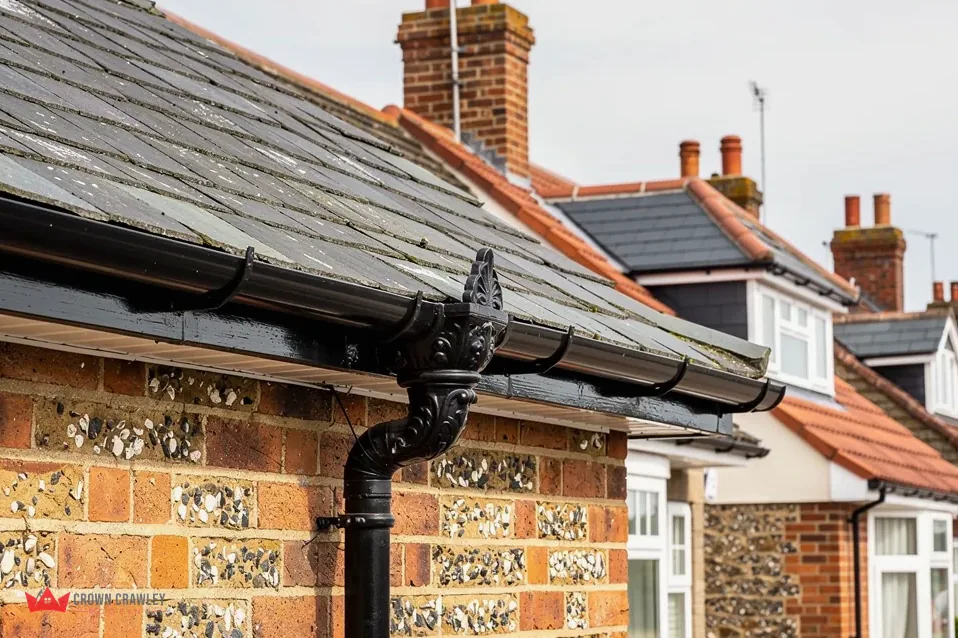
New boards lift the look of a house more than you might expect, because the roofline frames everything below it. White is the common choice, but anthracite, black, brown and wood-effect finishes are all made. The colour should sit well with your windows and doors, and our short guide on fascia and soffit colours helps you pick one.
Is permission required before the boards are swapped?
For most houses, replacing like for like does not need planning permission, because the Town and Country Planning Act 1990 puts works that leave a building's outside look materially unchanged outside the meaning of development. If it is a listed building, stands in a conservation area, or sits where the council has withdrawn some rights, a new material or colour may need consent. Ask your council's planning officers first, before ordering boards.
Is timber ever the better choice?
Sometimes. On an older house with period joinery, or where the council wants timber, a painted board is the right answer. Elsewhere, uPVC trades some character for a lighter workload. Our gutters, soffits and fascias page lists all our roofline work, in timber as well as plastic, so a survey can weigh the options for your house rather than push one. A fair survey also tells you if your existing boards are worth keeping, because a sound set of painted timber boards with a good gutter on them can have plenty of life left.
What will it cost?
In Checkatrade's September 2026 guide, a small semi averages £2,750, built up from about £150 per linear metre of board. That is a national figure, not ours. Our price is one written total, produced once the survey is finished. Before you accept any quote, ask whether VAT and the scaffold sit inside the total. Length of roofline, access height and the state of the rafter feet all move the final number. Our answer on fascia and soffit replacement cost explains what moves the figure.
Part of our Gutters, Soffits & Fascias in Crawley
Common questions on replacing roofline boards
Is white uPVC the only choice of colour?
No. White is the most common, but several colours and wood-effect finishes are made. Dark colours and woodgrain suit some houses better than white. A woodgrain board looks closer to timber, which helps on traditional homes, and it hides small marks better than a plain white face does. Ask to see a sample board in daylight before choosing, because small swatches can mislead.
Can you fit new boards over old fascias?
It can be done, and it is called capping. It suits boards that are sound but worn on the face. If the old timber is rotten, capping hides the problem and it carries on behind the new cover. A survey that looks at the board from the back and the rafter feet will tell you which route fits.
Do new soffits and fascias go in as one job?
They usually do, because the two boards meet and removing one tends to disturb the other. Doing both together also means the gutter is refixed once, the scaffold goes up once and the rafter feet are checked in one visit. It is worth asking whether a quote covers both.