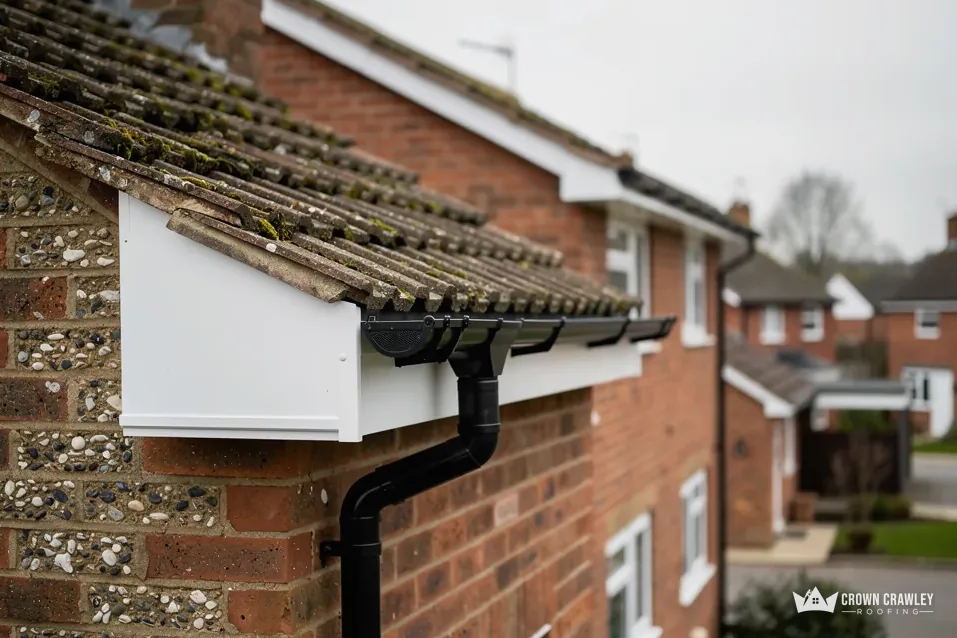
Walk round the house and look at where the roof stops, and you meet two boards. The fascia is the board you see from the garden, fixed across the ends of the rafters, and the gutter is normally fixed to it. Under the overhang sits the soffit, a flat panel that closes off the space between wall and fascia. Add the bargeboards at the gable ends and you have the roofline. These boards shield the rafter ends from weather, support the gutter and, where the soffit is vented, let air into the loft.
They also sit exactly where rain, sun and green growth hit hardest, so they are among the first parts of a house to look tired. A lot of that tiredness turns out to be surface dirt. This post sets out a care routine for a roofline you already have: how to clean uPVC without damaging it, what algae on the boards means, how to check timber properly, what to look for in the vents, and the signs that cleaning has stopped being the right answer.
Know what your roofline is made of
Before you pick up a brush, find out which material you have, because the care differs. Houses that have had the roofline replaced in recent decades tend to have white, brown or woodgrain-effect uPVC. Older houses, and many built before plastic became common, have painted timber. Some have timber boards with uPVC capping fitted over the top, which hides the original board from view.
How can you tell timber from plastic?
Tap the board lightly with a knuckle. Timber sounds dull and solid, and uPVC sounds hollow and slightly brittle. Look at the end of a board or the corner joint: plastic has a smooth, extruded profile with a thin wall and a clean cut, while timber shows grain and often peeling paint. Capping gives itself away by an overlap lip at the edges and by the nail or screw heads you can see through a gap at the back.
Why does that matter for care?
Plastic does not rot, but it stains, fades and cracks. Timber does not crack from sun in the same way, but it rots when water sits on it and the paint fails. Capping can make a rotting board look perfect while the timber behind carries on decaying out of sight. You need to treat each differently, and we cover timber checks in their own section below.
One more thing to note is age. A retailer's guide gives uPVC fascia boards a life of 20 to 40 years, and the source is a seller with a stake in it, so read it as a ballpark, not a pledge. Sun, shade, the quality of the plastic and how well the boards were fitted all move the figure. Still unsure which you have? A picture of the roof edge lets us give a first answer, and the survey settles it.
Cleaning uPVC fascias and soffits properly
Cleaning upvc fascias and soffits comes down to warm water, a mild detergent, a soft cloth or brush and patience. The harder you scrub, the more you scuff the surface, and a scuffed surface holds dirt more easily next time.
What do you need and how do you do it?
Fill a bucket with warm water and a small squirt of washing-up liquid. Use a soft cloth, a sponge or a long-handled soft brush. Work from the soffit outwards and from the top down so dirty water runs over areas you have not yet done, and wipe each section before it dries. Rinse with a hose on a gentle setting. Wash on a dry, overcast day, because strong sun dries the soap before you can rinse it and leaves streaks.
What should you avoid?
Avoid abrasive pads and powders, which scratch the glossy skin. Avoid strong solvents, which can dull or soften the plastic. Avoid pressure washers: a jet forced into the joints can push water behind the boards and into the roof edge, and it can lift the seals on soffit vents. The same goes for roof surfaces generally. The tile maker Marley advises against high-powered jet washing of slate or tile, as it can harm the surface and shorten its life.
Working at height is the real risk. A soffit is above head height, so you either reach it with a pole and brush from the ground or you use a ladder with a stand-off and someone footing it. If a pole will not reach safely, leave it. A roofer can clean the roofline alongside gutter work, since the access is already in place.
Do not use products you cannot identify on the boards. For stubborn dark staining on white plastic, a cleaner sold for uPVC and used according to its label is a safer route than improvising with household chemicals.
Algae, moss and stains on the boards
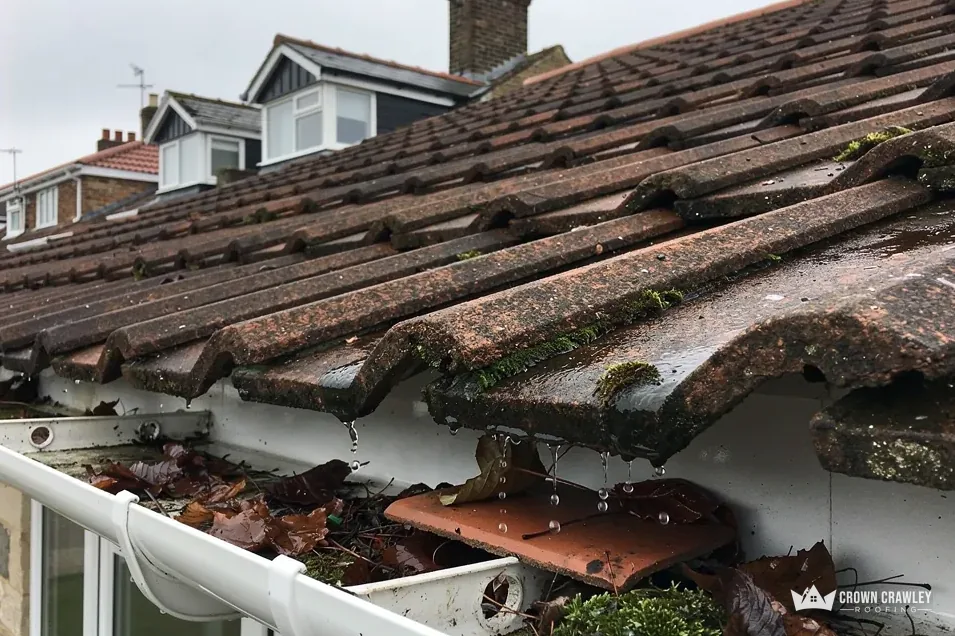
Green or black patches along the boards are common, especially on north-facing sides and under trees. Algae is the usual cause, sometimes with moss and lichen, and it thrives where the board stays damp. A thin green film is a cosmetic issue. A thick growth is telling you something about where the water sits.
Is algae harming the boards?
On plastic, algae mainly spoils the look, though a heavy coat holds moisture against the surface and traps dirt. On painted timber, the same growth can sit on a failing paint film, which is the point where water starts to reach the wood. So the question is less about the green itself and more about what lies underneath and why it is wet.
Should you use a biocide?
Be careful here. The HSE is clear that products made only for professional use cannot be bought by members of the public, and that professionals need specific certification for some of them. If you use a treatment from a shop, follow the label to the letter, keep it off plants and away from drains, and never mix products. Under the Biocidal Products Regulation, products must be used in line with their authorisation. A plain wash with warm water and detergent removes most surface growth without any of that, and if a stubborn patch remains, ask a roof cleaner to deal with it.
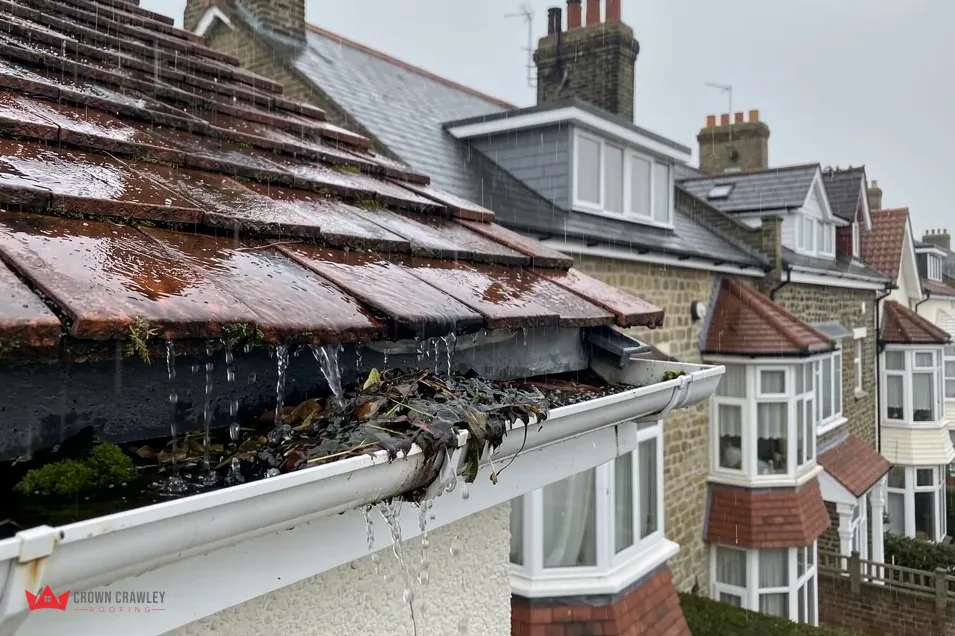
Look at why the board is damp. A gutter that overflows down the face, a blocked drain running onto the wall or a tree dripping onto the boards will bring the growth straight back. Fix the cause and the cleaning lasts. For moss on the roof itself, our roof cleaning and moss removal service covers the tiles and the gutters along the same edge.
Checking timber for rot and failing paint
Painted timber fascias, soffits and bargeboards are fine if they are looked after, and they are looked after by catching paint failure early. The enemy is water getting into bare wood, which then swells, softens and rots from the bottom edge and the ends first.
How do you test timber?
Start with a look. Flaking or bubbling paint, dark patches, open joints at the corners, splits along the grain and any sagging of the board all mean attention is due. Then test the wood with a screwdriver. Press the tip into the underside and the ends of the board, away from any paint you want to keep. Sound timber resists. Rotten timber is soft, crumbles or lets the tip sink in with little force. Check the corner joints and the board behind the gutter brackets particularly, because that is where water collects.
What can you do about minor decay?
Small patches where the wood is only slightly soft can be cut back to sound timber, treated, filled with a suitable wood filler and repainted. Strip failing paint to bare wood, apply primer and undercoat to all faces including edges, and finish with an exterior gloss or microporous paint. Do this in a dry spell. Paint over damp timber and you seal the moisture in.
If the decay runs the length of a board, goes right through its thickness or has reached the rafter ends, cutting back is not the answer. That calls for new boards, and the rafter ends need checking. Our guide to the signs of a rotten fascia board lists what to look for in order.
Be wary of asbestos too. Some older soffits are made from sheet material, not timber. The HSE names external soffits as a place asbestos insulating board turns up, adds that it is hard to tell apart from non-asbestos equivalents, and says to assume asbestos is present if the building dates from before 2000 or was refurbished before then. Do not drill, sand or scrape an unidentified soffit board. Read the asbestos soffit boards answer before you touch one.
Vents, wildlife and when care stops working
Cleaning and painting suit a roofline that is basically sound. At some point, though, the boards have had enough, and the sensible thing is to stop maintaining and start replacing.
What should you check in the vents?
Some soffits have small vents or a continuous vented strip that lets air into the loft. Check they are not blocked by paint, dirt, a bird's nest or loft insulation pushed hard against the eaves. Never seal a vent to stop a draught. The answer on soffit vents, birds and bats explains the wildlife side. If birds are nesting, wait until the nest is empty, since the Wildlife and Countryside Act 1981 makes intentional damage to an active nest an offence. Bats are covered too. GOV.UK says every bat species is protected, together with its breeding and resting places, and it lists roof repair among the activities that can affect them. Found bats? Stop and take advice.
When has cleaning stopped working?
Stop and plan a replacement when boards are cracked through or warped away from the wall, when plastic has gone brittle and snaps at the corners, when joints have opened so you can see daylight or the rafter ends, when timber is soft over a long stretch or when a stain returns within weeks of cleaning. Staining behind a board often means the problem is under it.
What does replacement cost?
A Checkatrade guide updated for September 2026 puts fascias and soffits at around £150 per linear metre, with a small semi averaging £2,750. Capping costs less, at £85 per linear metre, but it covers the existing board and does not mend it. Whether capping or replacement suits you depends on the board underneath. Scaffolding, access and the length of the roof edge drive the real price, and after the survey the quote we write is one total.
Before the survey, take dated photos of the worst boards from the garden and note the length of roof edge involved. Our gutters, soffits and fascias team can then tell you what we expect to find, and what we check first.
Part of our Gutters, Soffits & Fascias in Crawley
Roofline care questions
Can I paint over faded white uPVC fascias?
You can, but it is a cosmetic fix that needs proper cleaning, a key for the surface and paint made for plastic. It will not help boards that are cracked or warped. If the plastic has gone chalky or brittle, replacement is the longer-term answer, and a photo of the worst board helps us judge which route suits.
How often should fascias and soffits be washed?
There is no fixed interval. Wash when dirt or growth shows; sides in shade or under trees will need it sooner. Washing also gives you the chance to look closely at the joints, corners and vents, which is the real value of the exercise. Note anything that looks different from last time.
Is it worth repairing timber fascias that keep rotting?
Small patches of decay can be cut out and filled. If rot returns year after year, runs along the board or has reached the rafter ends, repairs only delay the job. A survey tells you which it is, and we show you photos of the affected timber before giving one written price.