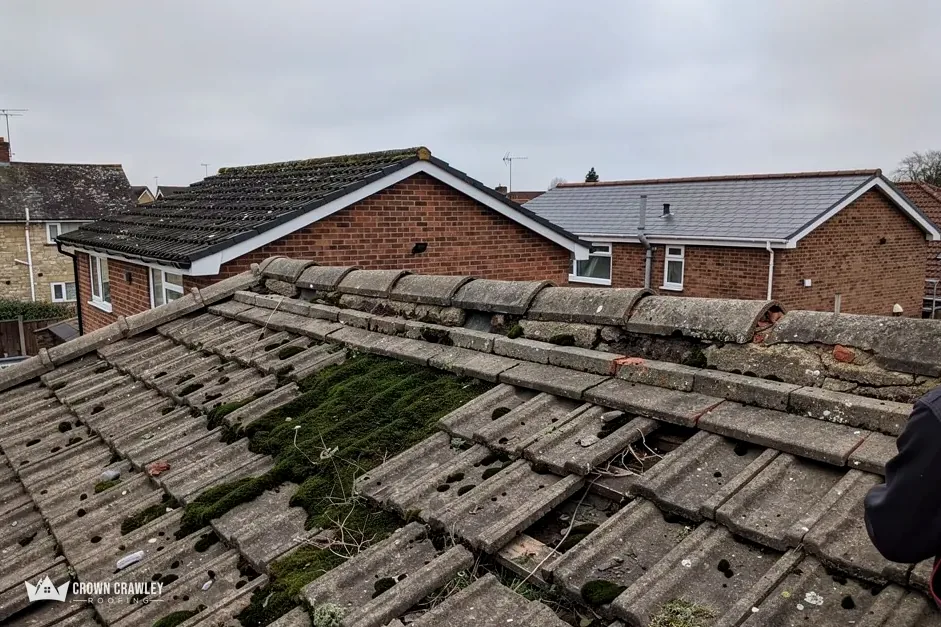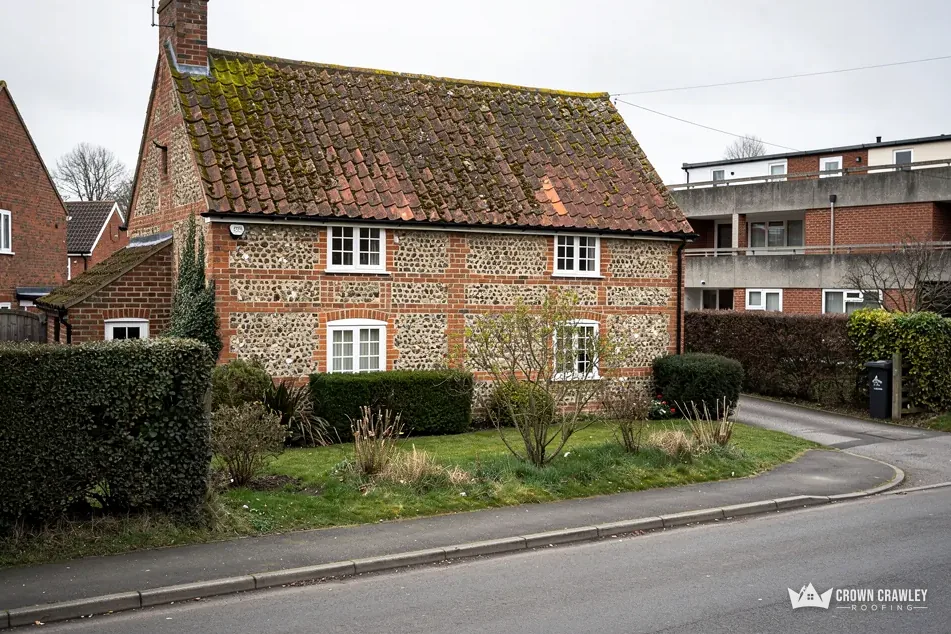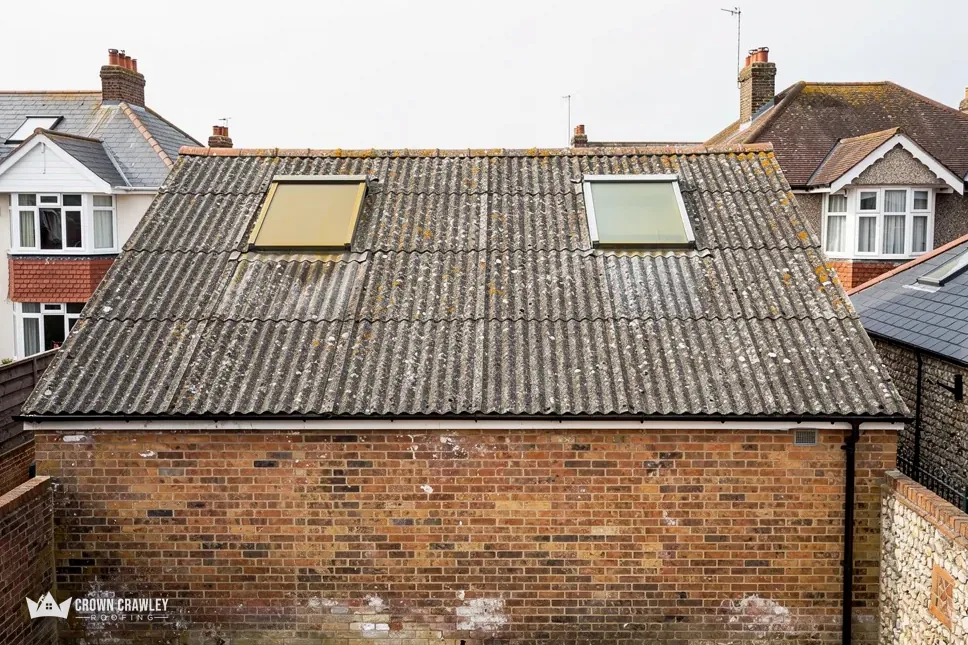
A video can show you a face and a van. It cannot show you what happens on the day someone comes to look at your roof, which is the part you probably want to know about. So we have put the film at the top of this page, where it loads only when you press play, and written the rest of the story underneath.
The idea behind how we work is simple. We look before we price. What we find is shown to you in photos of your own roof. The price is one total, put in writing. And the site stays safe and tidy while the work goes on. None of this is complicated, but it is easy to promise and harder to check, so the sections below say what each stage involves and what you can ask to see. Treat them as a checklist for any roofer you are thinking of hiring, ourselves included. We cover Crawley's neighbourhoods and the places within about 30 road miles, and the job below is the same wherever the roof is: a detached house in Pound Hill or a flat-roofed garage block in Bewbush.
Before anyone climbs a ladder
A job starts with a conversation. You describe what you have noticed: a brown mark on the ceiling, a tile on the lawn, a gutter running over, a ridge that looks uneven. We ask where it is, when it started and whether it changes in wind or only after long rain. That is enough to book a survey, and it points us to the part of the roof to look at first. If the leak is active, we talk through making it safe in the meantime.
What is worth sending us?
Photographs taken from the ground are plenty. A wide shot of the whole roof, a close shot of the problem if you can see it, and one of the ceiling or wall inside. Mention roughly when the house went up, if that is known. In Crawley that matters, because the street usually tells us the era, and the era suggests the covering and the details we are likely to find. We keep to sourced local facts about estates, and we will say plainly when we are working from an informed guess.
Phone, WhatsApp or the form?
Any of them. The number is 01293 974253, WhatsApp works for photos, and the enquiry form on every page sends the same details. Our quote page lists exactly what to include so the first visit is not wasted.
Do not go up on the roof yourself to take pictures. Wet tiles and loose pieces make it a dangerous place, and the ground view is enough to start with.
The survey and your photos
The survey is where the job is decided. We look at the roof from the ground first, then close up from a ladder or from the access the roof allows, then in the loft if there is one. In the loft we look for chinks of light, stained timber, damp insulation and torn or slack underlay, the sheet under the battens that catches whatever the tiles let through.
Why do we photograph your roof?
Because you cannot see the roof from where you stand. A photo of the cracked tile, the rotted batten end or the lifted flashing turns an opinion into something you can look at on your own screen. You get the pictures. You can show them to a neighbour, to a builder, or to another roofer, and if our reading does not match theirs, you should trust the roof, not either of us. Our page on what happens at a roof survey goes through the visit step by step.
What if the roof is fine?
Then that is what you hear. Some faults are a repair, and a few need nothing more than the gutters clearing. Some roofs need nothing more than clearing the gutters. A survey that finds a small job is a good survey, and a repair that fixes the cause is better value than a new roof that does not need to exist.
Sometimes a roof is in better shape than the stain suggests, and the water is getting in at a junction such as a chimney or a wall, which makes for a smaller job than a whole slope.
One written price
After the survey you get the price as one total, in writing. It names the work and the covering, and it gives a single figure. We do not break the quote into a list of separate charges, and we do not give a price over the phone before we have seen the roof, because a price without a survey is a guess.
What sets the price?
Four things matter: how difficult the roof is to get to, how big the area is, which covering is going on, and what the survey finds underneath. A steep roof over a conservatory needs different access from a bungalow with a low eaves. Slate costs more than concrete tile. A roof with sound battens costs less than one with rotten ones. The figure stays put unless the roof proves different from what we saw, and then you hear from us before the work carries on.
How should you compare quotes?
Do not compare totals alone, because two figures can describe two quite different jobs. Make sure each one describes the same work, the same covering and the same area. Check whether it includes VAT and whether it includes scaffolding. The standard VAT rate is 20%, which on a large job is a real sum, so it pays to know which way each quote is written. Our page on how many roofing quotes you should get explains why more than one is sensible. For typical national price ranges, with sources and dates, see our costs page.
Access, scaffolding and the council
Most roof work above a single storey needs safe access, and for a re-roof or any job on a large slope that usually means scaffolding. Scaffolding is how work at height is made safe for the people on it and for everyone below.
Does scaffolding need a licence?
Where a scaffold blocks the pavement or the road, section 169 of the Highways Act 1980 means applying for a licence through the highway authority. For Crawley that body is West Sussex County Council, and it wants at least 10 working days between application and erection. Ask whoever quotes you who applies; with us the arrangement is made with the scaffolder. Inside your own boundary there is nothing to apply for, although the road outside may still need a parking suspension. Tell the scaffolder about any dropped kerb, shared drive or narrow lane when you get the quote, because those details change how the scaffold is set out and how long the paperwork takes.
What about the neighbours, and the road outside?
Tell them. A scaffold can block a drive or a shared path, and a short word in advance avoids arguments. We explain to you what will happen on which days, so you can pass that on. If a neighbour shares a party wall or a chimney stack with you, mention that to us at the survey, because it can change how the work at that junction is planned.
On site: tidy, safe and explained
Once the work starts, the standard we hold ourselves to is that you should be able to live in the house without worrying about it. That means access set up properly before anyone steps on the roof, a clear space for materials, waste taken away and not left to build up on the drive, and a plain explanation each day of what is happening and what comes next.
What should you see each day?
Someone who knows where the job has got to and can show you. Work follows the only order that makes sense: strip the failed area, look at what is underneath, repair or renew timber, fit underlay, batten the slope, lay the covering, then finish with the ridge, the verges and the flashings. The finishing details are where a roof is either sealed against the weather or left with a weak point, so we spend time on them. If the roof reveals something the survey could not see, such as a rafter softer than it looked from the loft, we stop, show you and settle the next step together first.
What can you do to help?
Move cars off the drive, and take anything fragile or valuable out of the loft or off the walls of the top-floor rooms, because roof work shakes a house more than people expect. Keep children and pets indoors while work is above the garden. Tell us about anything you are worried about, from a conservatory roof with a known weak spot to a neighbour who works nights.
If the weather turns, we make the roof safe before we leave, even if that means covering a stripped slope and coming back. A half-finished job left open to rain defeats the point of doing it at all.
Sign-off and what to keep
When the roof is finished, we walk round with you, or send photos if you are out, so you can see the completed work. The check covers the ridge, both verges, the flashings, the gutters and the ground below, and then the last of the debris goes.
What should be in your paperwork?
A copy of the written quote, any written changes agreed along the way, the final invoice and any guarantee the roofer gives you in writing. Ask any roofer what a guarantee covers, how long it lasts, who gives it, and whether you need to do anything, such as keeping the invoice, to hold on to it. A warranty is not a lifespan: it is a promise about the workmanship or materials for a set period, and the roof will last as long as it lasts.
What about your rights?
Signing at your own kitchen table after a survey makes the deal an off-premises contract, and the legislation gives a consumer 14 days from the day it is entered into to cancel a services contract. A visit you specifically requested for an urgent repair is treated differently, so read the cancellation notice you are given. Under the Consumer Rights Act 2015, services must be carried out with reasonable care and skill. If you are unhappy with any roofer's work, Citizens Advice runs a consumer helpline.
Last, keep the photos. They are the record of what the roof looked like before, during and after. For the wider picture, start at our Crawley roofing homepage. If you want to see how to choose between one roofer and another, our post on finding the right roofing service sets out the questions to ask.
Part of Roofers in Crawley: the full guide
More about how a Crown job runs
Does anyone need to stay indoors while you survey?
It helps, because you can point out what you have seen and ask questions as we go. If you cannot be there, tell us where access is, such as a side gate or a loft hatch, and we send photos afterwards. The quote still follows the survey, whether you were in or out.
Is the business video the only place to see how you work?
No. The video introduces the business, and the pages on this site explain the detail. Our survey page, our costs page and the services pages each cover a part of the process, and the quote form lets you ask a question before any visit is booked.
What if the roof proves worse than the survey suggested?
We stop and show you what we have found, with photos, before doing anything beyond the written scope. Some surprises, such as soft battens or tired underlay, only show once tiles come off. You then decide how to proceed, and any change is agreed in writing before the work continues.