A gutter has one job: catch the water that runs off the roof and carry it to a downpipe and a drain. Everything else, the colour, the curve, the metal, is a question of how well it does that job on your particular house, and for how long. The choice is bigger than it was a generation ago. Plastic is now the usual default, but iron, aluminium, steel and zinc are all still made, and each suits a different kind of building and budget.
This post looks at the five materials a roofer is likely to put on a quote, then at the shapes they come in, and then at what to check before you commit. It deals with choosing, not upkeep. Cleaning, clearing and checking have their own post, linked further down. The figures quoted are national typical ranges from published guides, not Crown prices, and nothing here replaces a survey of your own gutters, which is where a real recommendation has to start. Any price we give is one written total, issued once we have surveyed the house.
Fit and flow come before the material
People shop gutters by appearance, but the best metal in the world will overflow if it is laid wrongly. Three things decide whether a system works: the size of the channel against the roof area it serves, the number and position of downpipes, and the fall along the run.
How big should a gutter be?
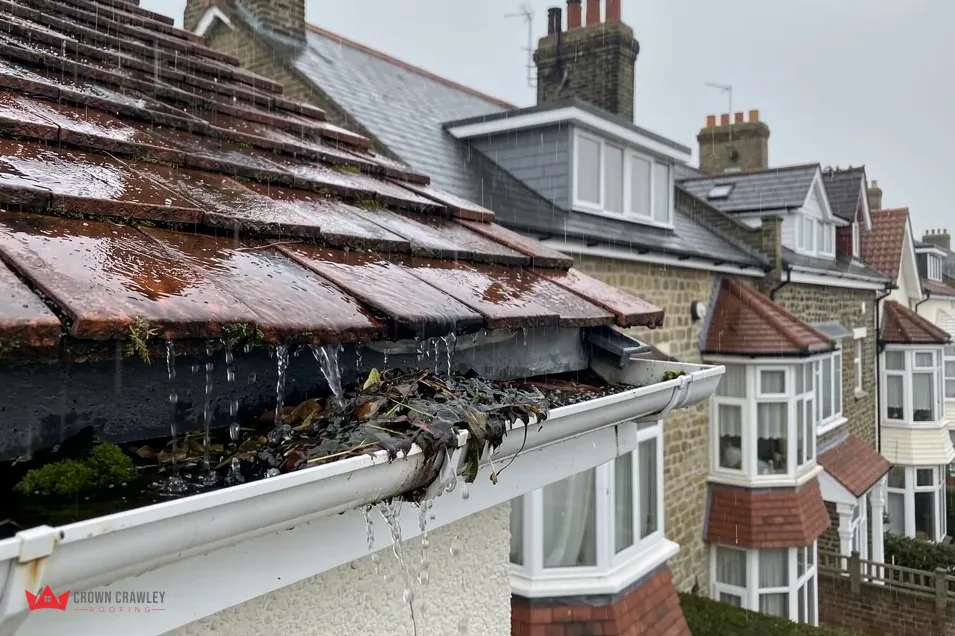
Designers size roof drainage with BS EN 12056-3, which covers layout and calculation. On an ordinary house you do not need to run the sums yourself, but you should know that capacity depends on the roof area draining into each run and on where the outlets are. A long, wide roof with a single downpipe at one end is asking for overflow in a heavy shower, whatever it is made of. Replacing gutters is the moment for a roofer to check the entire run and judge whether the old layout was sound.
What fall do gutters need?
Manufacturer guidance from Brett Martin is 1 mm for every 600 mm of run, so a gutter laid dead level will hold water and one tipped too steeply will look wrong and spill at the corners. A small fall is enough. Brackets matter just as much, because a gutter that sags between them will pool. Our answer on gutter fall per metre goes through it. Get these right and almost any material will perform. Get them wrong and none will.
Downpipes deserve a second thought as well. A long run of eaves with one outlet at the far end has to carry every drop of water the whole length collects, and that is when a gutter that looked fine in drizzle brims over in a storm. A second outlet, or moving the existing one nearer the middle, often does more than a larger gutter would. Where the downpipe lands matters too, so check that it reaches a drain or a soakaway rather than the foot of a wall.
uPVC: the everyday choice
uPVC is the plastic gutter, found on houses of every age. It is cut in lengths, clipped together with seals and sold in white, black, brown and grey.
What are its strengths?
It is light, so it goes up fast and puts little load on the fascia. It does not rust, it needs no painting, and the parts are on the shelf at every builders' merchant. It is also the lowest-cost route for most houses, and for a straightforward replacement it is the sensible first quote to ask for.
Where does it fall short?
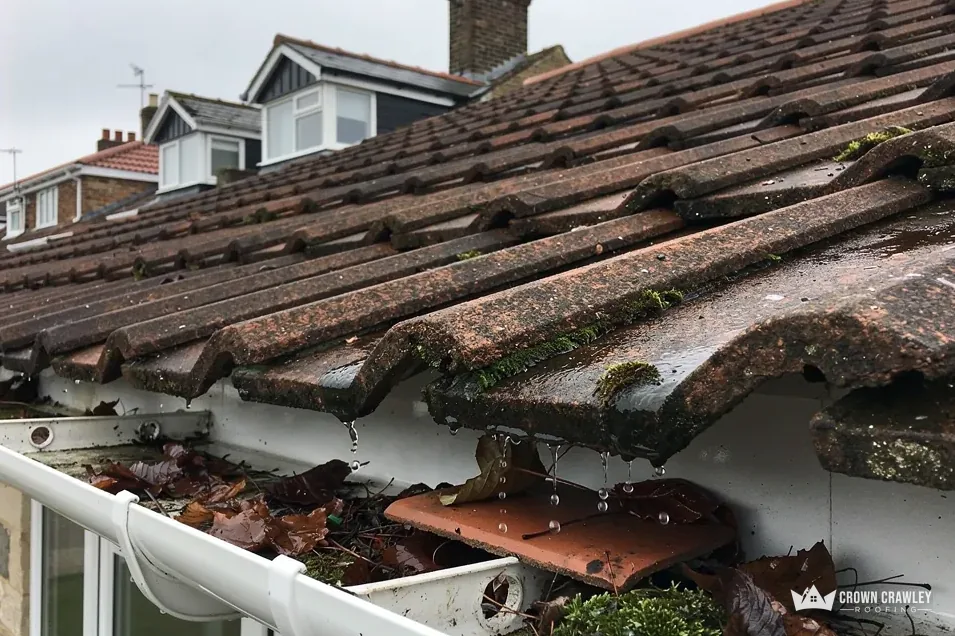
Sunlight and age make plastic pale and brittle, and a cold knock can crack an old length. The joints rely on rubber seals that eventually harden and weep, which is a frequent fault in a plastic gutter and often the only one. Plastic also expands and contracts with temperature, so the run must be fitted with room to move. White uPVC can discolour unevenly, and cheap profiles can sag between brackets in heat if they are spaced too wide.
On price, In its October 2026 cost guide, Checkatrade shows £650 to £1,700 as the spread, averaging £1,000, for 15 to 20 m of gutter with three downpipes. That covers all materials, so a plain plastic system usually sits in the lower half of that spread and a metal one climbs higher. A side-by-side look at aluminium and uPVC shows how the two compare in more detail.
Colour is worth a thought. Black and dark grey hide dirt and sit well on slate and dark tile. White shows every streak but matches white fascias and windows. Brown is the traditional pairing with a timber-effect board. Whatever you choose, match the fittings to the run, because mixing makes for awkward joints.
Cast iron and cast aluminium: the traditional look
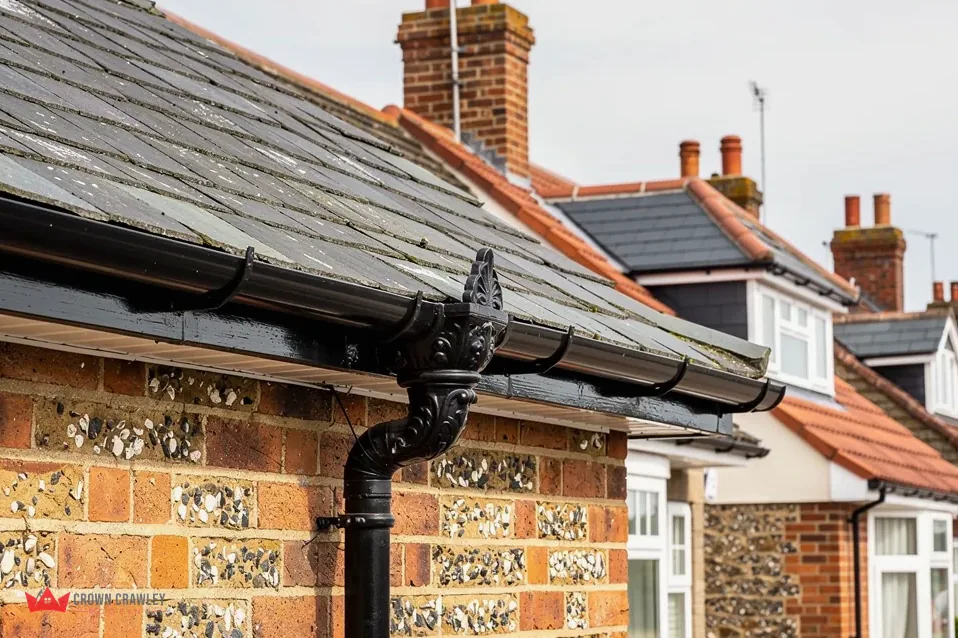
Cast iron is what Victorian and Edwardian houses were built with, and it is still made for period homes, listed buildings and anyone who wants the original profile back. Each length is heavy, thick and bolted together with a sealed joint.
Why do people still choose it?
Looks and substance. A cast iron half-round or ogee on a brick terrace matches the house in a way that plastic cannot, and conservation officers often expect it on older buildings. It is strong enough to take a ladder leant on it by mistake and, kept painted, it will serve for a very long time. Cast aluminium offers the same moulded lines without the weight and without the rust, and is a common modern alternative for the same job.
What does it ask in return?
Iron rusts when paint fails, usually at the joints and the underside, where water sits. It needs repainting from time to time, and the bolts and putty or sealant at each joint need to be checked. It is heavy, so the brackets and the fascia behind have to be sound, and on an old roofline a rotten board will not carry it for long. Installation costs more, since the lengths are awkward to lift. A cracked section or a leaking joint can often be repaired rather than replaced, and our answer on cast iron gutter repair explains when. On a listed house, or in a street covered by a conservation area, ask the council's planning team whether swapping the material needs consent first.
Aluminium, steel and zinc: the metal options
Beyond iron there are three metals worth knowing. Each comes in a range of finishes and each costs more than plastic.
How does pressed aluminium compare?
Aluminium is light, does not rust and comes pre-coated in a choice of colours, so it needs little painting. Seamless gutters can be formed on site in a continuous length, which removes joints along the run. Its weak points are denting under a ladder or a ball, and the cost, which is above plastic. The coating can mark, and a chipped edge is worth touching up.
Where does steel fit?
Galvanised or coated steel is strong and often found on commercial buildings, outbuildings and some modern houses. Its zinc layer and paint protect it, but a scratch or a cut end can let rust start, so edges and fixings need watching, particularly in damp or coastal-style conditions. It is a good choice where strength matters more than looks.
Is zinc worth the money?
Zinc weathers to a soft grey and has a long reputation for durability. One zinc maker, VMZinc, points to a Building Research Establishment environmental declaration that gives 100 years for its product. That figure belongs to the maker, not to every installation, and the quality of the soldered or sealed joints counts for as much as the metal. Zinc is a specialist job and the price reflects it. It tends to suit architect-led or high-end projects rather than the typical semi.
Capacity differs by shape, too. A deeper or wider channel carries more water than a shallow one on the same fall, so a bigger profile can suit a large roof area. The sizes and flow ratings are in each maker's data, and the fitter should check them against your roof, not guess from the look of the old gutter. Ask for the profile and size in writing so that you can compare like with like.
Half-round, ogee, square and box: choosing a profile
The profile is the shape of the channel seen from the end. It changes how the gutter looks and how much it holds, and not every shape is made in every material.
What does each profile suit?
Half-round is the classic curve: a simple semicircle that sits well on Georgian, Victorian and cottage-style houses and works in plastic, iron and aluminium. Ogee, sometimes called moulded, has a decorative front with a stepped, curved face; it is the moulded shape you see on many later houses. It sits flat against the fascia and suits a boxy roofline. Square or box profile, sharp-cornered and modern, fits contemporary houses and extensions and is easy to pair with a flat fascia.
What are Finlock and box gutters?
Not every gutter hangs from the fascia. Concrete Finlock-type gutters were built into the eaves of some 1950s houses, and a box gutter is a lined channel set into the roof or between two slopes. The RICS defects record says leaking Finlock joints have badly damaged many of these gutters, but it adds that only a close inspection shows which ones need major replacement and which stay serviceable if looked after. Taking them out is not an automatic answer. If you have one of these, read our answer on Finlock gutter lining before anyone tells you it must come out.
If you are swapping gutters and the boards behind them are tired, the sensible time to deal with both is together, because the old gutter must be unhooked to reach the fascia, and access is already set up. Our gutter replacement cost answer shows what moves the total.
Matching material to your house
Put the pieces together and the decision gets simpler. Start with what you have, then ask what the house and the budget need.
Which material for which house?
A 1960s or later estate house with a plain fascia is well served by uPVC, in a colour that sits with the windows. A Victorian terrace or a cottage often looks best in cast iron or cast aluminium, with a half-round or ogee profile to suit. A modern extension with a flat roof edge suits square aluminium. A school, a workshop or a commercial unit may call for steel. A heritage or architect-designed project might justify zinc.
What about the old gutters you are removing?
Check what they are made of before they come down. HSE names rainwater goods among its examples of asbestos cement products. Its advice is to presume asbestos is present in any house built, or refurbished, before 2000. Do not saw, drill, break or scrub suspect lengths. Have them identified first, because the way they are removed and bagged depends on the answer. Our answer on asbestos soffit boards deals with the board side of the roofline.
Which pictures help us most?
Photos of each elevation from the ground, the run length if you know it, and any spot where water spills or drips. That is enough to see which of these routes fits before the survey. Day-to-day care is covered in our gutter maintenance tips post, and the rest of our work on this part of the house is on our gutters, soffits and fascias page.
Last, keep the written price and the written specification together. It should state the material, then the profile shape, the colour finish and how many downpipes are included, so you know exactly what is going on the wall.
Part of our Gutters, Soffits & Fascias in Crawley
Choosing gutters, answered
Is uPVC or aluminium better for guttering?
Neither wins every time. uPVC costs less and is easy to fit, but its joint seals age. Aluminium holds its shape, takes a baked finish and costs more, though it can dent. For a standard house, the survey and the fascia condition usually decide the choice more than the metal does.
Can I change the gutter style without changing the fascia?
Often yes, because brackets can fix to the fascia or to the rafter ends, but a rotten or uneven board has to be dealt with first. Heavy iron needs a sound fixing. A roofer should check the board before quoting, and ask whether the shape suits the existing fascia.
Do I need permission to replace gutters on a listed house?
Like-for-like replacement may not need consent, but a change of material or profile can alter a building's character, so listed building consent might apply. Ring the council's planning team ahead of any order, and have photographs of the gutters as they stand today ready to send.