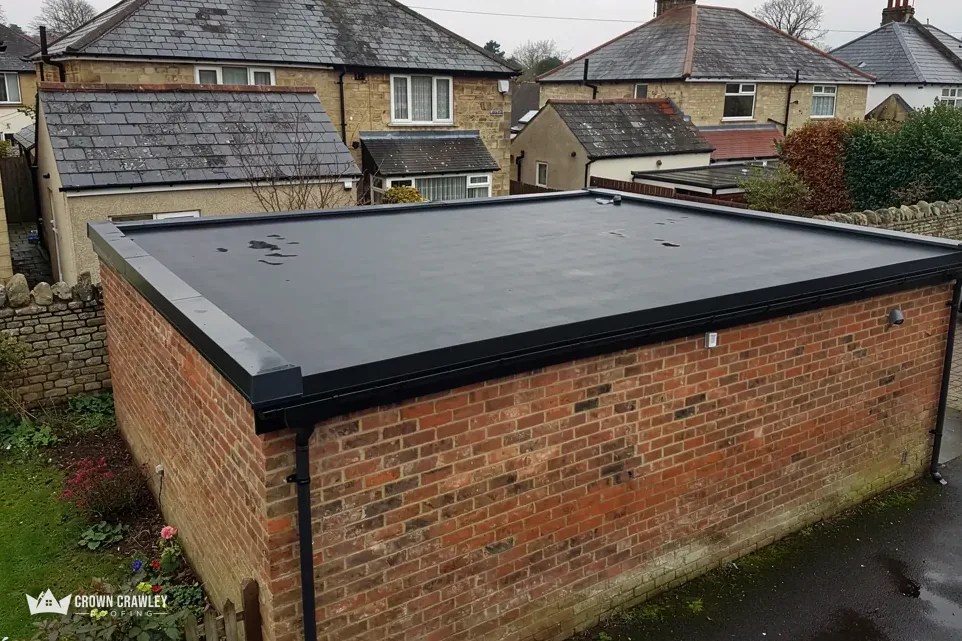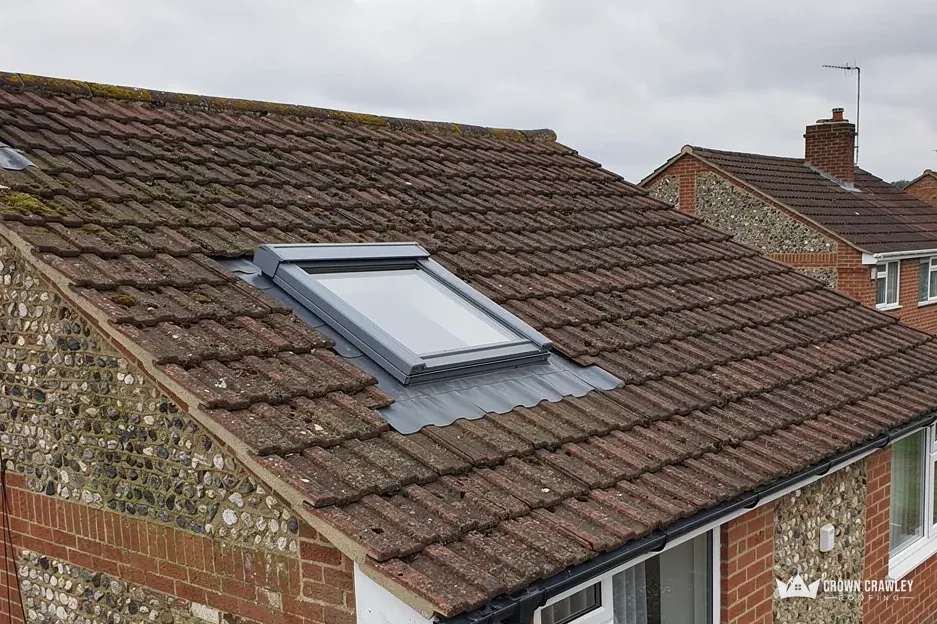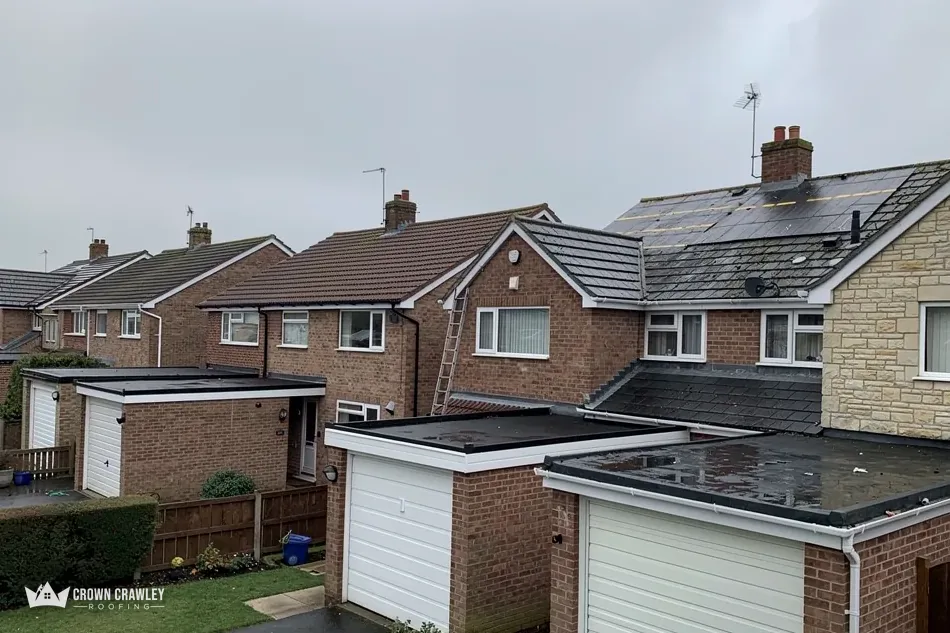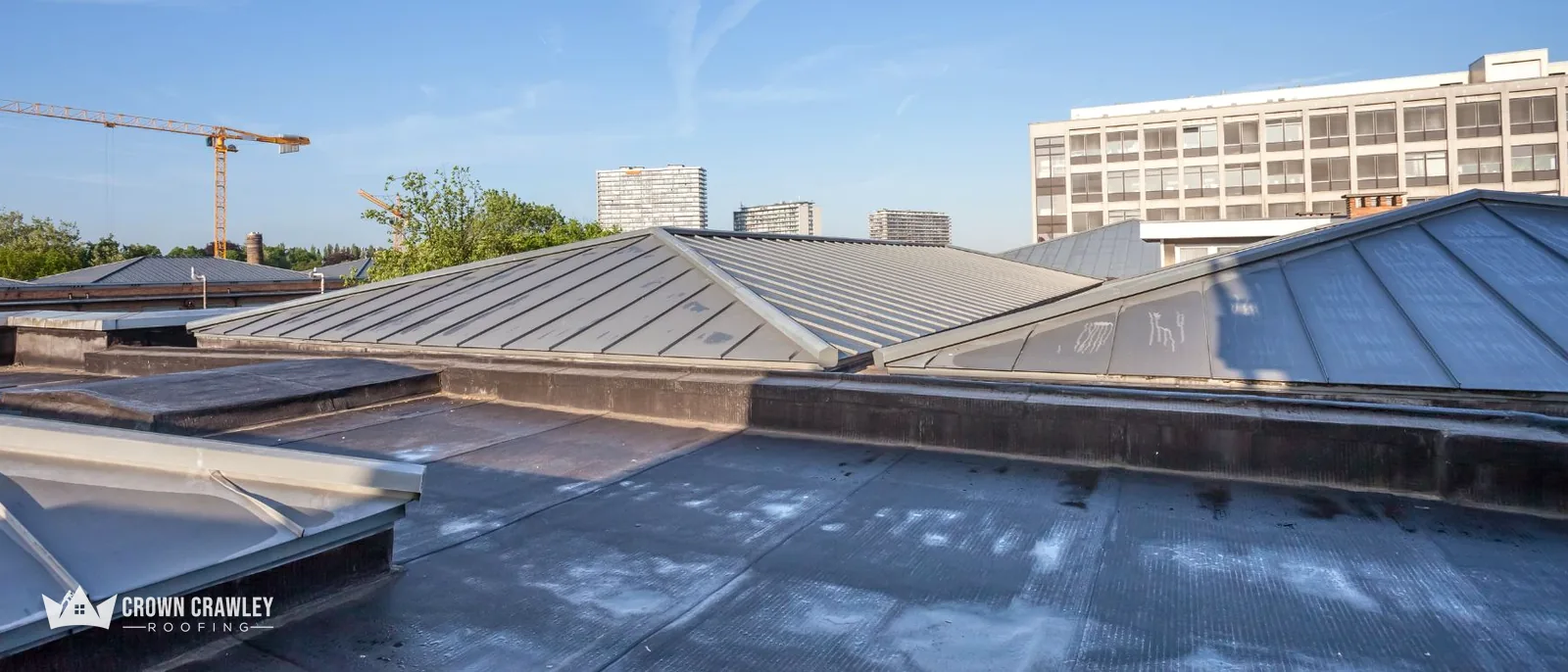
People tend to arrive at flat roofs in one of two moods. Either they have been told one is a problem waiting to happen, or they have been told it is a cheap and easy fix. Neither is fair. A flat roof is a design choice with clear strengths and clear weak points, and nearly all of the weak points can be managed if they are known in advance.
We are not trying to sell you a flat roof or talk you out of one, and our flat roofing surveys start from the roof you already have. Flat roofs on British houses often sit over extensions, dormers, porches and garages, where a pitched roof would be awkward, expensive or simply impossible, and the real question is how to get a good one. That question has a practical answer, and it is the one the second half of this post sets out. This post sets out what a flat roof does well, where it struggles, which rules of thumb come from published British standards, and how to tell when you have a sound roof that needs a little care rather than a failing one that needs replacing. An earlier version of this article quoted a statistic about commercial buildings that we could not stand behind, so it has gone, along with the advice borrowed from American roofing.
What a flat roof does better than a pitch
The first advantage is where it can go. A pitched roof needs height. Over a single-storey kitchen extension that would meet an upstairs window, or over a dormer, or over a small porch, there is no room for a slope, and a low-pitched covering would create an awkward junction with the wall. A flat roof sits neatly under the line you already have, and it can leave the first-floor windows clear of any slope.
Is a flat roof cheaper?
Usually, per square metre. Checkatrade's roof installation guide, updated in October 2026, shows pitched tiling at £120 to £275 per m² and flat roofing at £50 to £110 per m². Treat these as typical UK ranges rather than a like-for-like comparison, because a pitched roof includes rafters, battens and tiles while a flat roof may only be a deck and membrane. The gap is real but narrower than the headline suggests once insulation, trims and drainage are counted in.
What else does it offer?
Fewer materials mean a shorter build, and a plain rectangle is straightforward to cover. Because there is less structure to price, the saving shows up most on small, simple shapes. The roof can take rooflights, so a deep extension gets daylight in the middle of the plan. A strong deck can also carry a balcony or a service area, subject to the right approvals. And a flat roof has no hips or valleys to maintain. What a flat roof costs in practice depends on the area, the access and the insulation underneath, and the written quote issued once the survey is done settles it.
Think about the junction with the existing house too. Even a well-built flat roof can fail where it meets an old wall, because the wall and the roof move differently and the flashing has to cope with both. Ask to see how that junction will be formed before you agree to anything.
Where flat roofs lose points
The weaknesses are the mirror image of the strengths. A flat roof has little slope to shed water, and it asks more of the covering, the joints and the person who laid them. Understanding the common weak points is the quickest way to protect the roof.
Does a flat roof have a shorter life?
Generally, yes. Published lifespans for flat coverings are 20 to 30 years for EPDM (GreenSpec), 25 to 40 years for GRP and 10 to 20 for torch-on felt (Less, March 2026). Compare those with around 60 years for concrete tiles, according to Marley, who add that the figure offers no guarantee, or 100 years or more for well-maintained natural slate, as a roofing materials guide from CORC puts it. Slate and tile also shed water by gravity, which makes them forgiving in ways a flat membrane cannot be. A flat roof will probably be replaced at least once in the life of the house.
What about ponding and leaks?
Water that stands on a roof for days speeds up ageing and finds any weakness. It happens when the falls are too slight, when the deck has sagged or when an outlet is blocked. Ponding is the name for that standing water. Leaks tend to start at details not out in the open sheet: upstands, rooflight kerbs, edge trims, pipes and the junction with the house wall.
Is maintenance a burden?
Not a heavy one, but it is regular. Leaves block outlets, moss can build in the shade, and a look from the ground or a ladder at the edge once or twice a year catches problems early. Clear the outlets after autumn leaf fall, keep gutters running and note any new blister, split or lifted edge. The cost of ignoring it is paid later, in the form of a ceiling stain.
Falls and drainage: the rule that matters most
If one rule decides how a flat roof behaves, it is the fall. BS 6229 sets out the recommended practice for flat roofs covered with continuously supported flexible waterproofing. The current edition, BS 6229:2025, appeared on 16 December 2025 and withdrew the 2018 one. It applies up to a pitch of 10 degrees, and it retains a finished fall of at least 1:80 over the general roof areas and in internal gutters.
Why aim above the minimum fall?
A finished fall is what you have after the deck has settled and the covering has gone on. Timber deflects, and laying errors eat into the slope. IKO, writing about the 2018 edition, advises setting the design at 1:40 so that the finished roof still clears 1:80. In plain terms, the structure should be set up with a generous slope, and the finished roof should then measure at least the minimum.
How do you tell if the falls are wrong?
Look at the roof after a day of rain. A puddle that lingers well into the next dry day, a darker stain beside an outlet or a patch of moss growing in a dip all point to a low spot. Our page on the minimum fall for a flat roof explains how the figures work. A replacement is the moment to correct the falls with tapered insulation or new firring pieces, which cost little compared with the roof they protect.
What about outlets and gutters?
Outlets deserve their own thought. One outlet serving a wide roof leaves no margin if it blocks, so a second outlet or an overflow is worth discussing. Edge gutters must suit the roof area, and downpipes need a clear run to a drain, otherwise the best fall in the world just moves the puddle somewhere else.
Best practice that actually decides longevity
Standards matter, but so do small habits on site. A good flat roof is the result of several quiet decisions made in the right order.
What does a good build-up look like?
A sound deck, a vapour control layer to stop warm room air condensing in the roof, insulation sized to meet Part L, and a covering that is fully glued or fully supported. Details at the edges, around outlets and at upstands are formed to the manufacturer's instructions, not improvised. A warm roof, where the insulation sits above the deck, keeps the timber on the warm side of the building and is a common choice for new work. We compare the two layouts in warm roof versus cold roof.
Which questions should a roofer answer?
Ask what the falls will be and how they will be achieved. Ask what insulation goes under the covering and whether Building Regulations apply. Ask who deals with building control and how the roof will be protected between layers if the weather turns. Ask what the written guarantee from the roofer and the manufacturer covers, and if the quote has VAT and scaffolding in it. Look for specific answers rather than reassurance. A roofer who has thought about your roof will talk about the fall, the outlet and the edge. A roofer without one will talk about the weather forecast and the price.
Does best practice cost more?
A little at the outset, and far less than a second roof within a decade. The things that fail early are usually the things done quickly: poor deck preparation, flimsy trims, or a membrane laid over a wet deck.
Does the weather on the day matter?
It does. Adhesives, resins and bitumen all behave differently in damp or cold air. A roofer who covers the open roof at close of play each day and checks the forecast is protecting your ceilings, so ask what the plan is if rain arrives halfway through the job.
Repair, replace or leave alone?
Not every flat roof with a stain needs replacing. Many fail at one detail and are otherwise sound, and a repair is the sounder buy. Equally, a roof that has leaked in several places, that is soft underfoot or that holds water across a wide area has usually reached the end.
When is a repair enough?
When the damage is local, the deck is dry and firm, and the covering is within its normal life. A split along a seam, a lifted edge trim or a punctured patch can be dealt with in a visit. Checkatrade's June 2026 table, in its roof repair guide, puts GRP repairs at £130 to £180 per m² and EPDM repairs at £120 to £170 per m², ex VAT and up to 3 m². Those are typical UK ranges, and they show why a repair of a wider area can approach the price of a new covering.
When is replacement the better buy?
When water has reached the deck, when the insulation underneath is wet, or when the covering is past its expected life and the leaks are multiplying. Wet insulation does not dry out well, and stripping back to a sound deck lets you correct the falls and upgrade the insulation at the same time. Where replacement is on the cards, ask for photographs of the layers as they come off, because they show what failed and why. Read our page on repairing or replacing a flat roof for the checks we make during a survey.
Send us photos of the roof from above and of the ceiling below, with a note of when the stain first appeared. We will begin with the falls, then the outlets, then the oldest repair on the roof, and tell you plainly if the answer is a patch or a new covering.
Part of our Flat Roofing in Crawley
More about flat roof pros and cons
Do flat roofs always leak?
No. Leaks come from poor falls, damaged details and neglect, not from the shape. A well-built flat roof with clear outlets and a sound membrane can stay watertight for its expected life, which published guides put at roughly 10 to 40 years depending on the covering. Regular checks keep it that way.
Can I put solar panels or a terrace on a flat roof?
Possibly, but the structure, waterproofing and approvals must be checked first. A roof terrace usually involves planning questions, extra loading and guard rails, and panels need fixings that do not puncture the covering. Ask a structural engineer and your council's planning team before committing.
Is a flat roof worth having on an extension?
Often yes, because it keeps the extension height down and costs less per square metre than a pitch. The trade-off is a shorter covering life and a need for regular checks. Anyone staying put in the home for many years should budget for one replacement.