Most of us know the dark spot in our own house. It might be the hallway with no window, the landing at the top of the stairs, the bathroom tucked in the middle of the floor plan or the kitchen at the back of a deep extension. A roof window is the usual answer for a loft room, but it needs a sloping ceiling to sit in and enough headroom to be worth having. A hallway with a flat ceiling and a loft void above it offers neither.
That gap is the reason sun tunnels, flat rooflights and roof lanterns exist. Each brings daylight down through the roof in a different way, and each asks different things of the roof, the ceiling and your budget. This post compares them in plain terms, starting with the tube that gets people asking the question in the first place. We have rewritten an earlier piece that stayed in broad, glossy territory. What follows is practical: what each option does, which rooms it suits, what the loft above the ceiling has to offer and what a roofer checks before cutting a hole in your roof. If you have stood in a dark hallway at midday wondering whether a roofer could fix that, the answer is often yes, and the reasoning is below.
How a sun tunnel gets daylight down
Three parts make up a sun tunnel: a clear dome set into the roof, a reflective tube beneath it and a diffuser in the ceiling of the room you want lit. The dome catches daylight, the tube carries it, and the diffuser spreads it across the room. Nothing slopes and nothing needs a view of the sky from inside, which is why the idea suits rooms where a window cannot go.
What does the tube actually pass through?
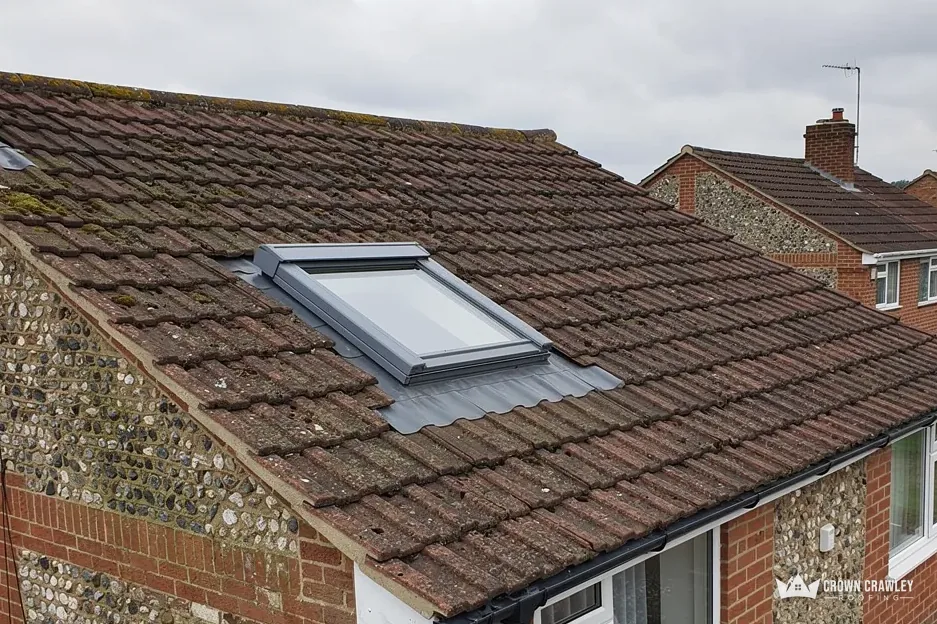
Everything between the roof and the ceiling. On a tiled roof the dome sits on a flashing, the shaped sheet of metal that lets water run round the opening rather than into it. Below that the tube crosses the roof structure, then the loft void, then the insulation, then the plasterboard ceiling. Some tubes are rigid and run straight. Others are flexible and can bend round a rafter or a ceiling joist, which helps when the direct line is blocked.
What kind of light do you get?
A soft pool of light, not a window. You will not see sky or trees through a sun tunnel, and most are fixed shut, so they add daylight without adding fresh air. If ventilation matters in the same room, ask whether the model you are looking at has a vent or a fan option, or plan separate ventilation for a bathroom.
The length of the run changes the result. A short tube from a shallow loft to a hallway ceiling loses little light on the way. A long, bent run through a deep void loses more. That is one reason a roofer wants to see the loft before quoting, rather than pricing from a photo of the hallway. Our own survey photos show you the route the tube would take, so you can see what it has to get past.
Sun tunnel versus skylight: the plain differences
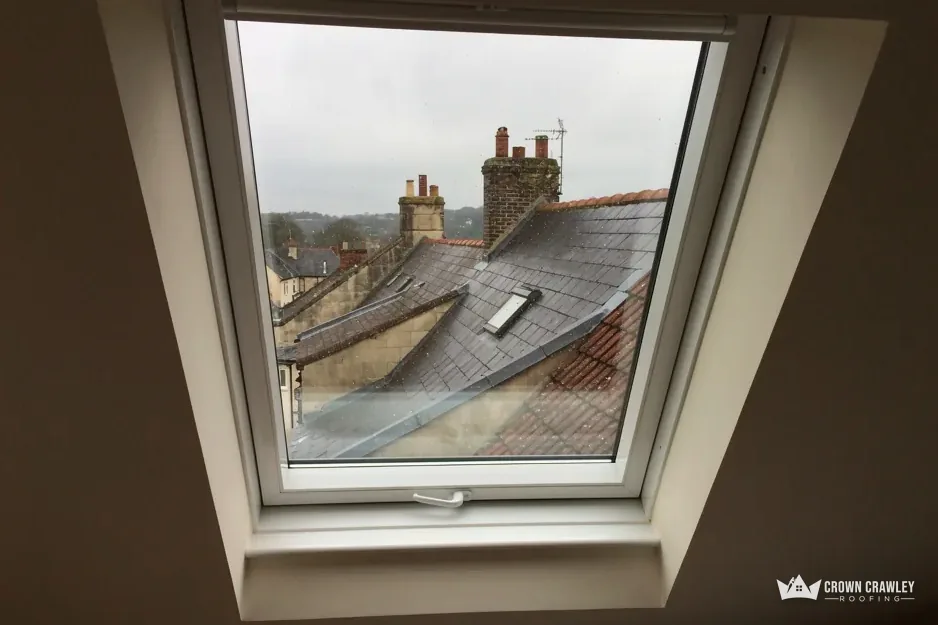
The word skylight covers a lot of ground. In everyday use it means any window set into the roof, from a pitched roof window to a flat rooflight over an extension. A sun tunnel is a different thing again, and the comparison is easier with the two side by side.
| Question | Sun tunnel | Skylight or roof window |
|---|---|---|
| Do you get a view? | No, only daylight | Yes, of the sky and the tops of trees |
| Can it open? | Usually fixed | Many models open, some by remote |
| What size is the roof opening? | A small round hole | A rectangle, often a good deal larger |
| What does the room need above it? | A route for the tube through the loft | A sloping ceiling or a light well to the room |
| Where does it suit? | Hallways, landings, bathrooms, cupboards | Loft rooms, kitchens, rooms with a sloping ceiling |
Which should you pick?
Pick the roof window when the room is directly under a slope and you want a view and fresh air. Pick the sun tunnel when there is a loft or void between the ceiling and the roof and a window would not reach. The two are not rivals so much as answers to different rooms. A house can easily need one of each.
If your hallway sits under a loft that has already been boarded or converted, the picture changes, because a tube has to find its way past new floors and walls. Our page on what sun tunnels cost covers what pushes the price up or down.
Hallways, landings and bathrooms
These three rooms are where sun tunnels get asked about most, and each has its own wrinkle.
Does a hallway really need roof light?
A hallway has doors on both sides and often no outside wall at all. Leave the internal doors shut and it is dark at noon. A sun tunnel over the middle of the hall puts daylight where the floor plan cannot, and light spilling from a landing can brighten the stairs below. Check what sits above the ceiling first. A landing under a pitched slope may suit a roof window better, as the slope gives it a natural opening.
What about bathrooms?
A bathroom adds moisture, privacy and ventilation to the list. A diffuser gives light without anyone looking in, which is a point in its favour on a bathroom where a clear window would need a blind. Steam is a separate matter: a sun tunnel does not extract it, so a bathroom still needs its fan. If the bathroom does sit directly under a slope and you would like a view, a roof window with obscured glass and its own opening vent is worth pricing alongside the tube. Either way, the bathroom fan stays, and the ceiling around the opening needs a moisture-resistant finish.
Where it is a poor fit
Where the run is long, crowded with pipes and cables, or ends in a room that is already bright. A sun tunnel is a fix for darkness. It is a poor way to add a feature to a room that already has plenty of light.
Flat rooflights and lanterns for flat roofs
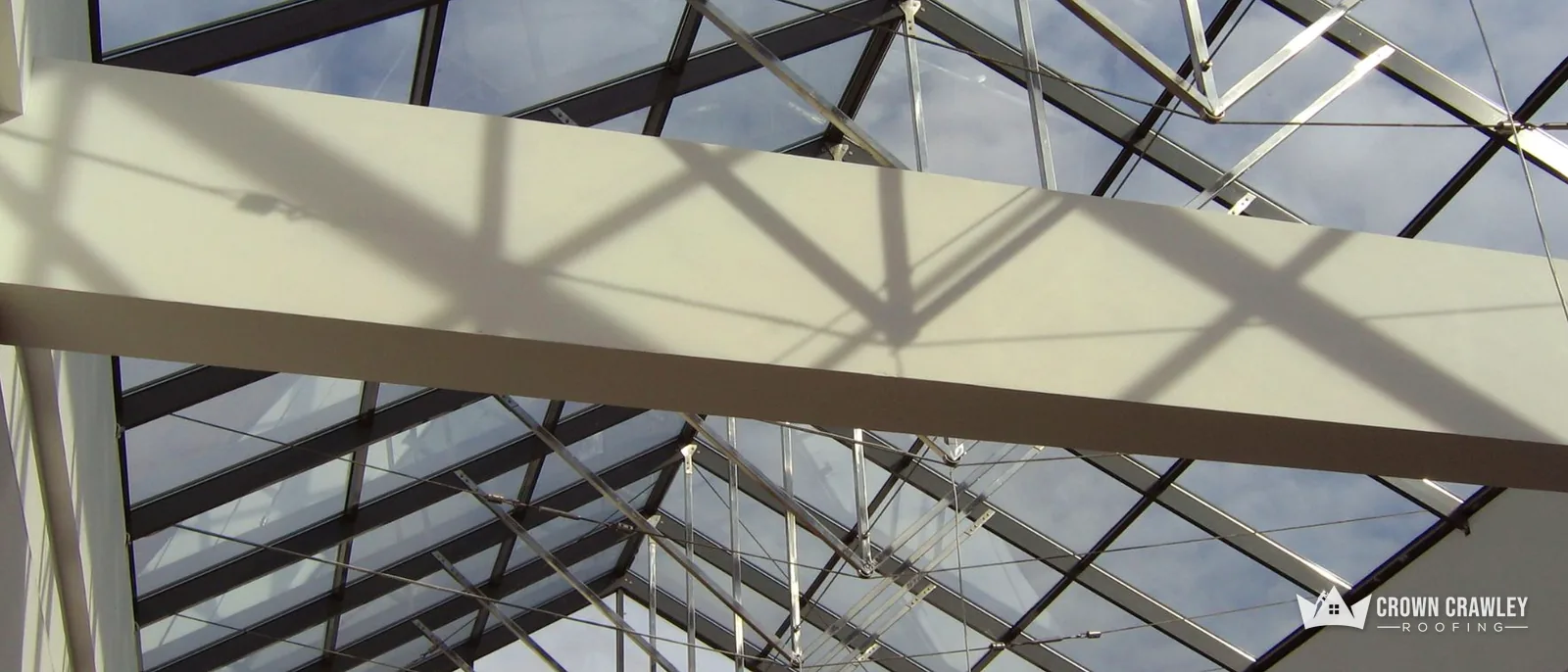
Flat roofs and extension roofs call for a different tool. A flat rooflight is a pane of glazing set on a raised kerb, the upstand, that stands up from the roof so water cannot sit against the frame. A roof lantern is a taller, multi-sided glazed structure that sits on the same kind of kerb and lets light in from several angles, much as a small glass roof would.
Rooflight or lantern?
A rooflight is simple and low. A lantern brings height and more light in the morning and evening, because its sides catch the sun at different times, but it needs a bigger opening, a stronger kerb and a larger budget. The choice comes down to the room's height, the span of the opening, how much light you want at different times of day and what you want to spend, and the survey, with a tape measure out, settles it.
What do the rules say about heat?
Approved Document L sets limits for new rooflights in existing homes. In the 2021 edition, Table 4.2 gives 2.2 as the figure for a rooflight, and 0.35 W/(m2.K) is the ceiling for any kerb made up on site. The 2026 edition takes effect on 24 March 2027 and keeps the same figures in its Table 3.2. A U-value measures how fast heat escapes, so a lower number means less loss. Ask the supplier for the rooflight's rating before you order, and ask your roofer how the kerb will be insulated, because a bare kerb can undo the good work of a well-glazed unit.
On a flat roof the upstand is part of the waterproofing, so the roofer who lays the covering should be the one who fits the kerb. Where one trade fits the rooflight and another the roof, the joint between them is where leaks tend to start. We prefer to price both together on a flat roof, so one team owns the whole detail.
What a roofer checks before cutting the roof
Cutting a hole in a roof is the easy part. The survey is about what the hole disturbs, and for a sun tunnel the list is short but specific.
What does the survey look for in the loft?
First, the line between roof and ceiling that avoids a rafter, a purlin or a run of cable. Next, how much insulation the tube has to pass, because it needs wrapping where it crosses cold air, or condensation can form on the cold tube. Then the roof covering. Interlocking concrete tiles, plain tiles and slates each need their own flashing, so the dome has to suit the covering around it. Boards and stored belongings in the loft get moved aside, and the run is photographed so you can see it.
Do you need permission?
Class C of the permitted development order, the general right for roof alterations to a house, stops an alteration standing proud of the original roof slope by more than 0.15 metres, measured at right angles to the roof surface. A shallow dome can meet that limit. A tall one may not, so check the dome height against the 0.15 metre figure. Flats, conservation areas and listed buildings follow different rules, and our planning permission guide covers them.
Building control is a separate question. Crawley Building Control says new openings for windows in roofs need approval, and other councils publish their own lists, so ask your building control body before work starts. Put the question to the council yourself, and keep the reply with the job papers.
Cost, timing and what to send us
A sun tunnel's price depends on a handful of things you can see for yourself: the length and shape of the tube run, the roof covering, the size of the dome and diffuser, whether the ceiling needs making good afterwards and whether scaffold or other access is needed. Once the survey is done, one total price arrives in writing, and the tube route we photographed is the basis for it.
Do roof windows cost more?
Usually, yes, because the opening is bigger and the work inside is greater. Checkatrade's guide, updated in July 2026 and checked in October 2026, gives a typical UK average of £1,250 to fit a new Velux window and £1,025 to replace an existing one. Scaffold is extra on many jobs: the same site's fascia table puts it at £300 to £600 a week per elevation. Whenever you set two figures side by side, ask if VAT and scaffolding are inside each, since a number that leaves them out is not comparable with one that includes them.
How do you decide?
Start with the room. If it sits under a slope, look at a roof window. If a loft void lies between ceiling and roof, a sun tunnel is likely the neater answer. If the roof is flat, price a rooflight or lantern with the roof covering. Our roof windows and skylights page lists everything we fit.
For a quote, send a picture of the ceiling you want lit, a picture of the loft space above it with the insulation showing and a line on what covers the roof. That is enough for a first view on whether a tube has a clear run before anyone climbs a ladder.
Part of our Velux Roof Windows & Skylights in Crawley
Sun tunnel questions
Can a sun tunnel work on a north-facing roof?
It can, though it will collect less direct sun than one facing south, so the room will be lit more softly. A longer tube loses more light, so a short run matters more than the compass point. A survey shows the roof angle, the loft depth and the route the tube would take.
Will a sun tunnel make a room cold?
Any hole in the roof is a point where heat can escape, so the tube needs insulating where it crosses the loft and the diffuser should be well sealed. A sun tunnel is much smaller than a window, so the effect is limited. Ask which glazing and insulation the model has.
Can I fit a sun tunnel on a flat roof?
Yes, on many flat roofs, using a version made for them. The dome sits on a kerb, called an upstand, that has to be waterproofed into the roof covering. Because the covering is continuous, we like the same team to fit the kerb and lay the roof so one set of hands owns the joint.